

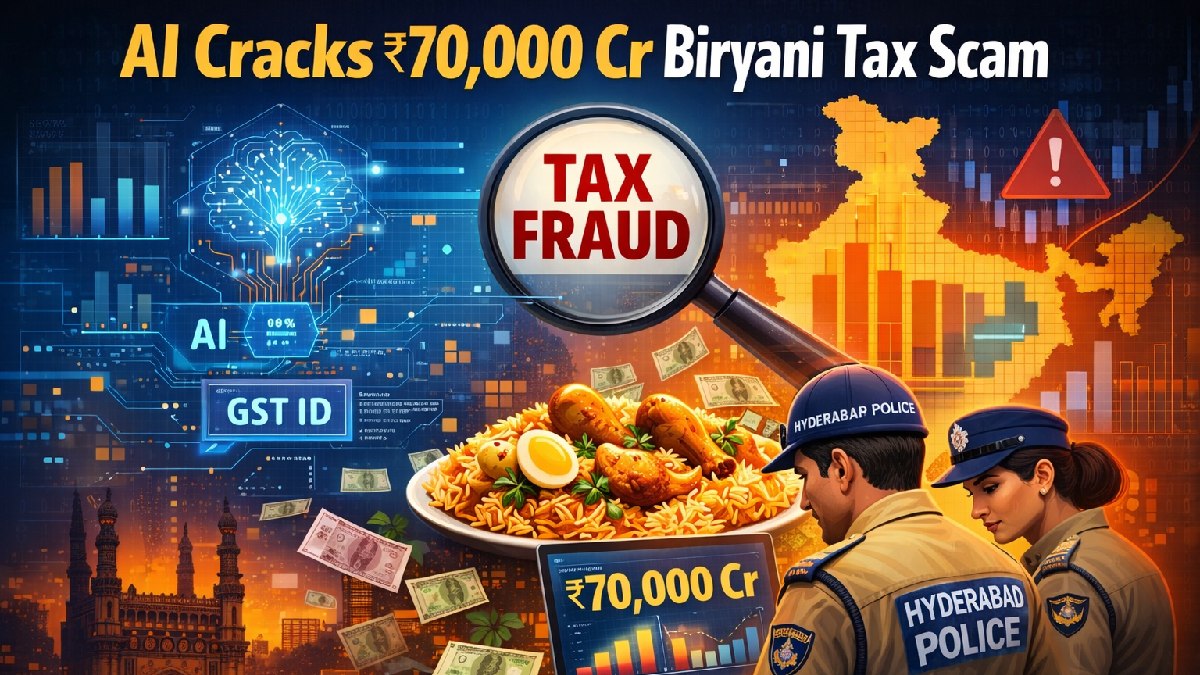
In a major development that has sent shockwaves through India’s hospitality industry, the Income Tax Department of India has launched a massive crackdown on restaurants and food chains allegedly involved in a ₹70,000-crore tax evasion scam. Officials say the investigation has uncovered a large network of restaurants that allegedly manipulated invoices, underreported income, and used shell companies to evade taxes.
The large-scale probe has triggered searches and investigations across several cities, targeting restaurant owners, food delivery partners, and financial intermediaries believed to be connected with the scam.
Authorities describe the case as one of the biggest tax evasion investigations in India’s restaurant industry, highlighting serious loopholes in the billing and reporting systems used by some establishments.
What Is the ₹70,000-Crore Restaurant Scam?
According to officials from the Income Tax Department of India, the alleged scam involves restaurants that manipulated financial records to avoid paying proper taxes.
Investigators claim that several restaurant operators:
-
Underreported daily sales
-
Generated fake invoices
-
Used shell companies to move money
-
Claimed fraudulent input tax credits
These activities allegedly helped businesses hide large amounts of revenue, resulting in an estimated ₹70,000-crore tax evasion.
Officials believe the scam may have been operating for several years before authorities uncovered irregularities in financial filings.
How Authorities Discovered the Fraud
The investigation reportedly began after financial intelligence units detected suspicious transaction patterns involving multiple restaurant businesses.
The Income Tax Department of India analyzed:
-
GST filings
-
digital payment records
-
bank transactions
-
food delivery platform sales data
Through data analytics and cross-verification, officials discovered major discrepancies between actual sales and declared income.
For example, some restaurants reported relatively low turnover in tax filings while simultaneously recording high sales volumes through online food delivery platforms.
This mismatch raised red flags and eventually led to a nationwide investigation.
Role of Food Delivery Platforms
Food delivery platforms such as Zomato and Swiggy have also come under scrutiny as investigators attempt to analyze restaurant sales data available on these platforms.
Authorities are examining whether some restaurants used multiple accounts or ghost kitchens to manipulate sales records.
Investigators are reviewing transaction data from these platforms to determine whether restaurants deliberately misreported their earnings while conducting large volumes of business online.
However, officials clarified that the delivery platforms themselves are not currently accused of wrongdoing, but their data may help investigators trace financial irregularities.
Searches Conducted Across Multiple Cities

The investigation has led to search operations in several major cities across India, including:
-
Delhi
-
Mumbai
-
Bengaluru
-
Hyderabad
-
Chennai
Officials raided multiple restaurant chains, corporate offices, and financial consultants suspected of helping businesses evade taxes.
During the searches, investigators reportedly seized:
-
financial documents
-
digital transaction records
-
laptops and accounting software
-
evidence of undisclosed income
Authorities say these documents could reveal the full scale of the alleged scam.
Use of Shell Companies
One of the most alarming aspects of the investigation is the alleged use of shell companies to hide profits.
According to investigators, some restaurant operators created multiple shell entities to move money between accounts.
These companies were allegedly used to:
-
generate fake invoices
-
claim fraudulent tax credits
-
hide real profits from authorities
Officials believe the shell companies played a crucial role in enabling large-scale tax evasion.
Impact on the Restaurant Industry

The crackdown has created widespread concern among restaurant owners across the country.
Industry experts say the investigation could lead to stricter compliance rules and increased scrutiny of restaurant finances.
Some possible impacts include:
-
tighter GST reporting requirements
-
stricter digital transaction monitoring
-
increased audits for restaurants
-
penalties for tax violations
The move could also push businesses to adopt more transparent accounting practices.
However, industry bodies have urged authorities not to penalize genuine businesses that comply with tax laws.
Government’s Stand on Tax Evasion
The Indian government has been intensifying its efforts to combat tax evasion and financial fraud.
Officials from the Income Tax Department of India stated that the crackdown is part of a broader strategy to improve tax compliance and ensure fairness in the business environment.
Authorities emphasized that businesses that evade taxes not only violate the law but also create unfair competition for honest taxpayers.
The government has been increasingly using data analytics, AI tools, and digital payment tracking to detect financial irregularities.
Possible Legal Consequences
If the allegations are proven, restaurant owners involved in the scam could face serious legal consequences.
Under Indian tax laws, penalties may include:
-
heavy financial fines
-
seizure of assets
-
cancellation of business licenses
-
criminal prosecution
Serious cases of tax evasion may also lead to imprisonment for responsible individuals.
Legal experts say the investigation could take months as authorities analyze large volumes of financial data.
Experts Call for Better Transparency
Financial experts believe the investigation highlights the need for stronger financial transparency in the hospitality sector.
They suggest several reforms such as:
-
mandatory digital billing systems
-
integration of GST and payment data
-
real-time sales reporting
Such measures could help reduce the risk of tax fraud and improve compliance across the industry.
Many experts also believe that greater use of technology-driven audits will help authorities detect irregularities faster.
What Happens Next?

The investigation into the ₹70,000-crore restaurant scam is still ongoing, and authorities are expected to question several restaurant owners and financial advisors in the coming weeks.
The Income Tax Department of India will continue analyzing seized documents and digital records to determine the extent of tax evasion.
More raids and enforcement actions may also be carried out if additional evidence emerges.
Officials say the investigation could eventually expose one of the largest financial irregularities in India’s restaurant industry.
Conclusion
The massive crackdown by the Income Tax Department of India on restaurants linked to the alleged ₹70,000-crore tax evasion scam marks a significant step in the government’s fight against financial fraud.
The probe has already uncovered suspicious financial activities involving restaurant operators, shell companies, and manipulated tax filings.
While the investigation is still underway, the case serves as a strong reminder that businesses must maintain transparency and comply with tax regulations.
As authorities continue their investigation, the outcome of the case could reshape financial compliance standards in India’s restaurant industry and send a powerful message to businesses involved in tax evasion.