

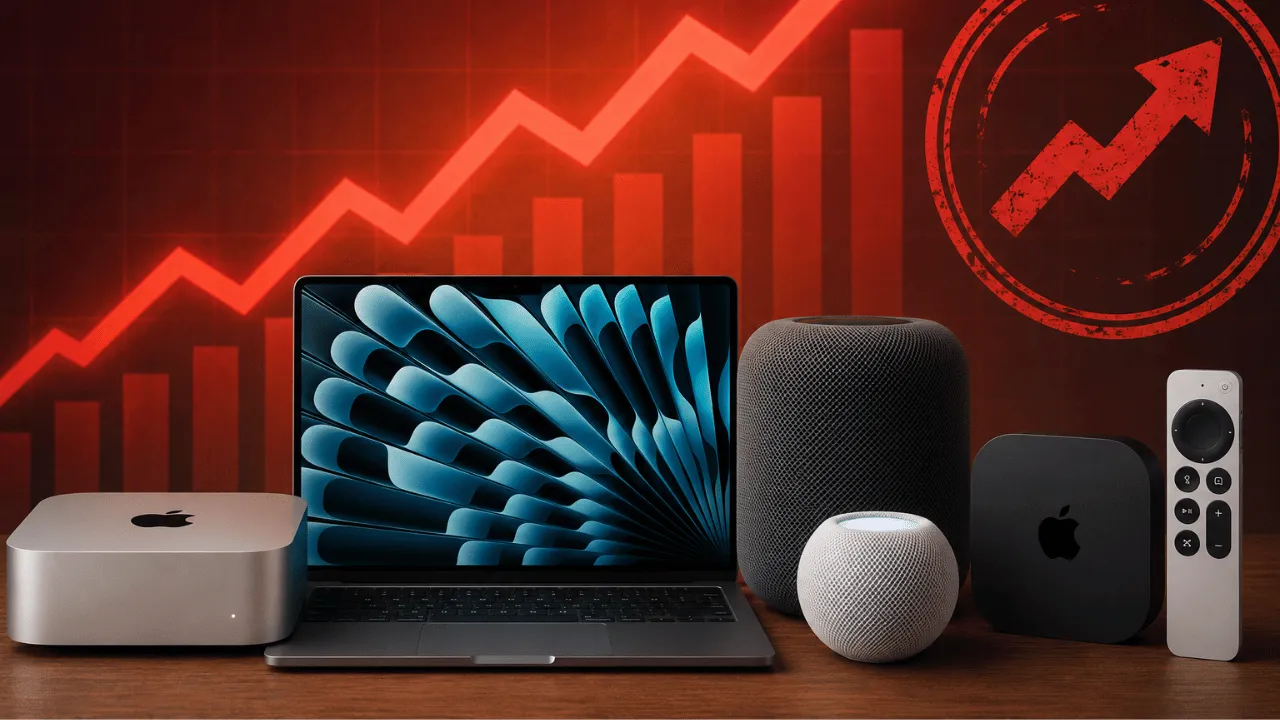
Apple MacBook Price Hike Explained: Why MacBook Prices Are Rising and What It Means for Buyers in 2027
Apple MacBook Price Hike: Premium Laptops Become More Expensive Amid Rising Costs
Apple’s MacBook lineup has long been regarded as one of the most premium laptop series in the world, combining sleek design, powerful Apple Silicon processors, exceptional battery life, and a seamless macOS experience. However, recent reports and market developments suggest that Apple MacBook prices are expected to increase across several markets, raising concerns among students, professionals, creators, and business users planning to purchase a new MacBook.
The anticipated Apple MacBook price hike comes at a time when global supply chain costs, semiconductor pricing, import duties, currency fluctuations, and manufacturing expenses continue to impact the technology industry. While Apple has not officially announced a blanket price increase for every market, analysts believe future MacBook models could carry higher price tags compared to previous generations.
Here’s everything you need to know about the latest MacBook price hike reports, the reasons behind rising prices, expected pricing trends, and whether buyers should purchase now or wait.
Why Are Apple MacBook Prices Increasing?
Several global factors are contributing to the expected increase in MacBook pricing. Unlike traditional inflation-driven price adjustments, the current situation reflects a combination of economic, technological, and geopolitical challenges.
1. Rising Manufacturing Costs
Apple continues to invest heavily in advanced manufacturing technologies and premium materials. The latest MacBooks feature aluminum unibody construction, high-resolution Liquid Retina displays, improved thermal systems, and increasingly powerful Apple Silicon chips.
As production costs rise, manufacturers often pass a portion of these expenses on to consumers.
2. Expensive Semiconductor Technology
Apple designs its own processors, but manufacturing advanced chips using cutting-edge fabrication processes has become significantly more expensive.
Future MacBook models powered by newer Apple Silicon processors are expected to utilize more advanced manufacturing nodes, increasing production costs while delivering:
- Better performance
- Improved AI capabilities
- Enhanced graphics
- Greater power efficiency
These technological improvements naturally come with higher development and manufacturing expenses.
3. Currency Fluctuations
One of the biggest reasons behind regional price increases is foreign exchange movement.
Since Apple prices many products in US dollars, fluctuations in local currencies can directly impact pricing in countries such as:
- India
- Japan
- Europe
- Australia
- Brazil
If local currencies weaken against the US dollar, imported electronics generally become more expensive.
4. Import Duties and Taxes

In several countries, import duties, GST, VAT, and other taxes influence retail pricing.
Even if Apple keeps US prices unchanged, buyers in international markets may still experience higher retail prices due to government taxation and customs policies.
5. Supply Chain Adjustments
Apple has diversified its manufacturing operations across multiple countries, including India and Vietnam, to reduce dependence on a single production hub.
While this strategy improves long-term resilience, expanding manufacturing infrastructure requires substantial investment that can influence overall production costs.
Which MacBook Models Could See Price Increases?
Industry analysts believe several MacBook models could be affected by pricing adjustments.
Expected models include:
- MacBook Air
- MacBook Air 15-inch
- MacBook Pro 14-inch
- MacBook Pro 16-inch
Future generations featuring upgraded Apple Silicon chips may launch at slightly higher prices than their predecessors.
Apple Silicon Continues to Deliver Premium Performance
Despite higher pricing expectations, Apple continues to push performance boundaries with its custom-designed processors.
Upcoming MacBook models are expected to feature:
- Faster CPU performance
- Improved GPU capabilities
- More powerful Neural Engine
- Better AI processing
- Enhanced machine learning performance
- Longer battery life
- Improved efficiency
These improvements make MacBooks increasingly attractive for:
- Software developers
- Video editors
- Content creators
- Graphic designers
- Students
- Business professionals
Will MacBook Prices Increase in India?

India remains one of Apple’s fastest-growing markets.
Several factors could affect MacBook pricing in India:
Exchange Rate
The Indian Rupee’s performance against the US Dollar directly impacts import pricing.
Local Manufacturing
Apple has expanded manufacturing operations in India, particularly for iPhones.
If MacBook assembly also increases locally in the future, it could help reduce pricing pressure.
Import Duties
Government taxation policies continue to influence laptop prices across the country.
Expected MacBook Price Range
While official pricing has not been announced, industry experts estimate moderate increases for future models.
Estimated pricing:
| Model | Current Range | Expected Future Range |
|---|---|---|
| MacBook Air | ₹1,00,000+ | ₹1,05,000–₹1,15,000 |
| MacBook Air 15 | ₹1,30,000+ | ₹1,35,000–₹1,45,000 |
| MacBook Pro 14 | ₹1,70,000+ | ₹1,75,000–₹1,90,000 |
| MacBook Pro 16 | ₹2,40,000+ | ₹2,50,000–₹2,70,000 |
These figures are based on market expectations and analyst estimates. Actual launch prices may differ.
How Will Buyers Be Affected?

Higher MacBook prices could impact several customer segments.
Students
Students may delay upgrading or opt for previous-generation MacBook Air models that often remain available at lower prices.
Professionals
Professionals who depend on macOS for productivity may absorb the additional cost due to long-term reliability and performance.
Content Creators
Creators working with video editing, photography, music production, and 3D design generally prioritize performance over price, making MacBooks a preferred choice despite rising costs.
Businesses
Organizations purchasing MacBooks in bulk may reassess budgets while benefiting from Apple’s long software support lifecycle.
Apple Still Offers Strong Value
Although MacBooks command premium pricing, they continue to offer several long-term advantages.
Key strengths include:
- Industry-leading battery life
- Excellent build quality
- Premium display technology
- Quiet and efficient Apple Silicon processors
- Regular macOS updates
- Strong resale value
- Tight integration with the Apple ecosystem
These factors often help justify the higher upfront investment.
Should You Buy a MacBook Now?
The answer depends on your requirements.
Buy Now If:
- You urgently need a new laptop.
- Current discounts are available.
- Existing models meet your performance requirements.
- You want to avoid potential future price increases.
Wait If:
- You want the latest Apple Silicon processor.
- AI-focused features are important to you.
- You are willing to pay a premium for upgraded hardware.
- Your current MacBook still performs well.
Competition Is Becoming Stronger
Apple continues to face increasing competition from premium Windows laptops powered by Intel, AMD, and ARM-based processors.
Major competitors include:
- Dell XPS series
- HP Spectre series
- Lenovo Yoga series
- ASUS Zenbook lineup
- Microsoft Surface laptops
Many competing devices now offer OLED displays, AI-powered processors, high refresh rate screens, and excellent battery life, making the premium laptop segment more competitive than ever.
What Analysts Expect

Technology analysts believe Apple is unlikely to dramatically increase prices overnight. Instead, future MacBook generations may introduce incremental price adjustments alongside meaningful hardware improvements.
Consumers may see:
- Better AI capabilities
- Faster processors
- Improved graphics
- More memory options
- Longer battery life
- Enhanced displays
Apple has historically balanced premium pricing with performance upgrades, helping maintain strong demand among loyal customers.
Final Verdict
The anticipated Apple MacBook price hike reflects broader trends affecting the global technology industry rather than a single pricing decision. Rising manufacturing costs, advanced chip production, currency fluctuations, taxation, and supply chain investments are all contributing to expectations of higher prices for future MacBook models.
For buyers, the decision comes down to timing and needs. Those who require a laptop immediately may benefit from purchasing current-generation MacBooks before any revisions occur, especially if attractive discounts are available. Meanwhile, users seeking next-generation performance, AI-driven capabilities, and the latest Apple Silicon innovations may find the upcoming models worth the premium.
Despite the possibility of higher prices, Apple’s MacBook lineup remains one of the strongest choices in the premium laptop market thanks to its outstanding performance, exceptional battery life, robust software ecosystem, and long-term value. As Apple continues to innovate, MacBooks are expected to remain a top recommendation for students, professionals, and creators looking for a reliable and future-ready computing experience.