

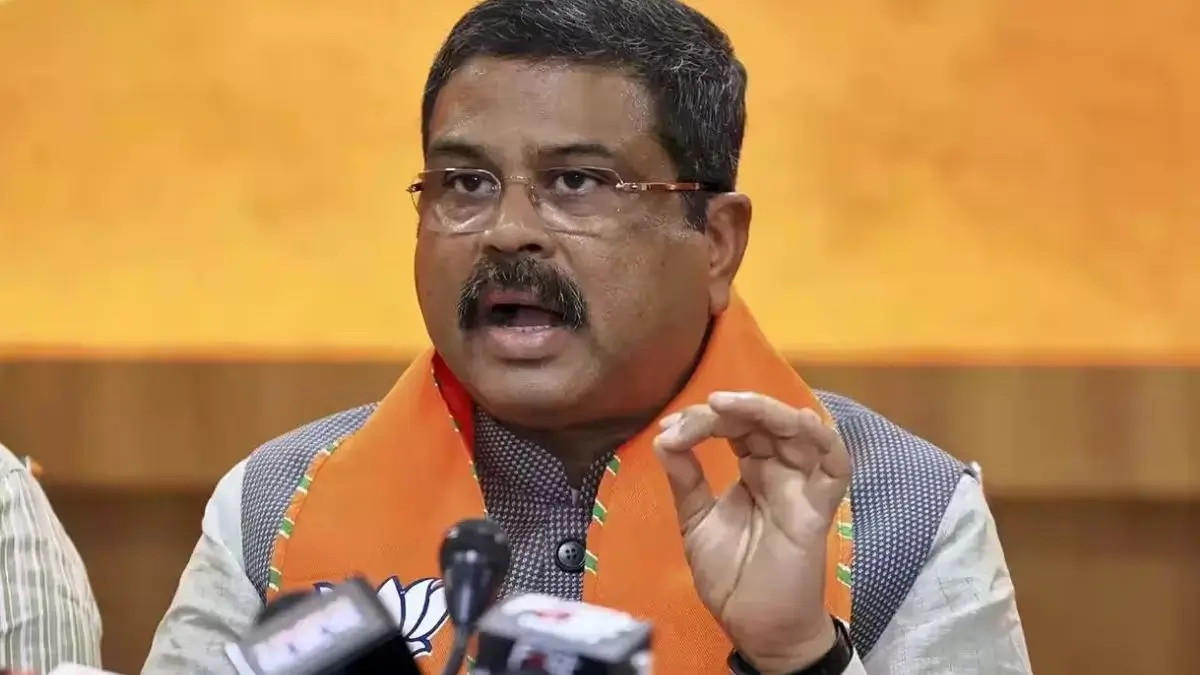
Dharmendra Pradhan Resigns as Union Education Minister Amid NEET-UG Row and Nationwide Student Protests
Dharmendra Pradhan Resigns: In a major political development, Union Education Minister Dharmendra Pradhan has resigned from his position amid growing pressure over the NEET-UG examination controversy and nationwide student protests. Pradhan submitted his resignation to Prime Minister Narendra Modi on Saturday, July 25, 2026, bringing an end to weeks of intense political pressure surrounding the country’s competitive examination system.
The resignation comes after sustained demonstrations by students and youth groups, along with demands for accountability over alleged examination irregularities. The controversy has placed India’s education and examination systems under intense public scrutiny, with students and parents demanding greater transparency and stronger safeguards against malpractice.
Dharmendra Pradhan Resignation: What Happened?
Dharmendra Pradhan announced his resignation on Saturday after weeks of protests and political pressure. According to reports, he sent his resignation to Prime Minister Narendra Modi and explained that his decision was guided by concerns about students’ futures and the wider situation surrounding the protests.
In his resignation communication, Pradhan said he had taken responsibility for the situation from the beginning. He also referred to the need to ensure that students do not become trapped in prolonged legal or political complications and can instead concentrate on their studies and careers.
The resignation represents a significant development in the ongoing debate over examination integrity in India. The Education Ministry is responsible for overseeing several important aspects of the country’s education framework, while national-level examinations affect millions of students every year.
Why Did Dharmendra Pradhan Resign?
The immediate backdrop to Pradhan’s resignation is the controversy surrounding the NEET-UG examination and alleged irregularities in the country’s competitive examination system.
NEET-UG is one of India’s most important entrance examinations, with students competing for medical education opportunities across the country. Any allegation of a paper leak or other examination malpractice can have serious consequences because candidates spend years preparing for the test.
The controversy triggered widespread anger among students and parents. Protesters demanded accountability and called for reforms to strengthen the examination system.
The resignation came after student-led demonstrations intensified, with protesters making Pradhan’s removal one of their key demands. Opposition parties also criticised the government’s handling of the issue, increasing political pressure on the Union government.
Reports from multiple news organisations said that the resignation followed weeks of protests linked to examination irregularities and the NEET-UG controversy.
NEET-UG Controversy and Examination Irregularities
The NEET-UG controversy has become one of the biggest education-related issues in the country.
For millions of students, entrance examinations such as NEET-UG are a gateway to professional education. Medical aspirants often spend several years preparing for the examination, making the integrity of the testing process extremely important.
The controversy has raised questions about examination security, paper handling, monitoring systems and the overall accountability of agencies involved in conducting high-stakes tests.
The issue has also highlighted the emotional and financial pressure faced by students and their families. Many candidates spend significant amounts on coaching and preparation, and uncertainty surrounding examination results can create additional stress.
The resignation of the Education Minister is therefore likely to intensify the discussion over how India’s competitive examination system should be reformed.
Student Protests Put Pressure on Government
Student protests played a central role in the latest political developments.
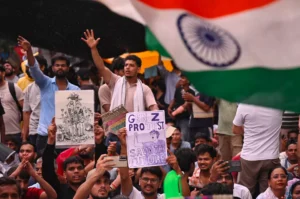
Demonstrations were held in Delhi and other parts of the country, with protesters demanding action over examination-related concerns. The movement reportedly expanded beyond the immediate NEET-UG controversy, with young people raising broader concerns about unemployment, educational opportunities and government accountability.
The protests also attracted the attention of opposition political parties, turning the issue into a major political debate.
According to reports, youth-led groups organised demonstrations and sit-ins, while some protesters demanded Pradhan’s resignation as part of a broader set of demands.
The resignation has been welcomed by protest leaders as a significant development, although some groups have indicated that their wider demands remain unresolved.
Dharmendra Pradhan’s Resignation Letter
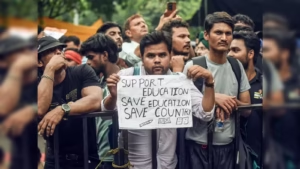
In his message to young people, Pradhan reportedly said that he had devoted decades to students, teachers and education reform.
He expressed concern about the events surrounding the controversy and said the situation was not a matter of personal prestige for him. His letter focused on the importance of protecting the future of India’s youth.
Pradhan also said that his decision was intended to prevent students from becoming caught up in prolonged legal complexities and political disputes.
He thanked Prime Minister Narendra Modi for his guidance and support during his tenure and also expressed gratitude to colleagues, ministry officials and staff.
The resignation letter has become an important part of the political discussion because it provides Pradhan’s own explanation for his decision to leave the ministry.
Who Is Dharmendra Pradhan?
Dharmendra Pradhan is a prominent Indian politician from Odisha and a senior leader of the Bharatiya Janata Party.
He has held several important portfolios in the Union government during his political career, including responsibilities related to petroleum and natural gas, skill development and education.
Pradhan became Union Education Minister in 2021 and played a key role in implementing and overseeing education policies during his tenure.
He is also a Member of Parliament representing Sambalpur in Odisha. His resignation is therefore significant not only for the national education sector but also for Odisha’s political landscape.
The development has attracted considerable attention because Pradhan has been one of the most visible leaders associated with the central government’s education policies in recent years.
What Happens to the Education Ministry Now?
One of the biggest questions following Dharmendra Pradhan’s resignation is who will take charge of the Union Education Ministry.
The government will need to decide whether another senior minister will be assigned the portfolio or whether a new full-time Education Minister will be appointed.
The next minister will inherit several important challenges.
The first priority will likely be restoring confidence in the examination system. Students and parents will want assurances that future examinations are conducted fairly and securely.
The ministry may also face pressure to introduce stronger mechanisms to prevent paper leaks, improve examination centre monitoring and strengthen the security of question papers.
Technology could play a bigger role in future reforms. Digital tracking, encrypted question-paper systems, artificial intelligence-based monitoring and improved verification procedures could become part of discussions around examination security.
Will NEET-UG and Other Exams Be Affected?
For students preparing for NEET-UG and other competitive examinations, the resignation raises questions about whether there will be changes to examination procedures.
However, the resignation of the Education Minister itself does not automatically change examination schedules, eligibility rules or admission procedures.
Students should continue to rely on official notifications from the relevant examination authorities and government departments.
Any changes to examination dates, eligibility requirements, results or admission procedures should be announced through official channels.
Candidates should also be cautious about unverified information circulating on social media, particularly during periods of political uncertainty.
A Major Challenge for India’s Education System
The resignation has once again brought India’s examination system into the national spotlight.
India has one of the world’s largest education systems, with millions of students appearing for competitive examinations every year. As competition for medical, engineering and other professional courses increases, the importance of maintaining examination integrity has also grown.
A single examination controversy can affect a huge number of candidates and create uncertainty for students who have spent years preparing.
The latest developments could therefore lead to renewed calls for structural reforms.
Experts and education stakeholders are likely to focus on improving examination security, strengthening accountability and creating faster mechanisms for addressing student complaints.
Political Impact of Dharmendra Pradhan’s Exit
The resignation is also expected to have political consequences.
For the opposition, the development is likely to be presented as evidence that the government was under pressure to respond to student concerns.
For the government, the immediate challenge will be to demonstrate that the education system can continue functioning effectively while addressing concerns about examination integrity.
The resignation could also influence the political conversation around India’s youth population, unemployment and access to education.
The protests have demonstrated that examination-related issues can quickly develop into broader youth movements when students believe their academic and career prospects are at risk.
What Students Should Do Now
Students should remain focused on their preparation and avoid making decisions based on rumours.
Those preparing for NEET-UG, JEE or other entrance examinations should regularly check official websites and government announcements for any changes.
Candidates should also preserve their examination-related documents and follow official instructions regarding applications, counselling and admissions.
The most important point for students is that a change in ministerial leadership does not automatically mean that all examination processes will change.
Conclusion
The resignation of Dharmendra Pradhan as Union Education Minister on July 25, 2026, marks a major development in India’s ongoing education and examination debate.
His resignation came amid weeks of student protests and political pressure surrounding the NEET-UG controversy and alleged irregularities in competitive examinations. The development has intensified questions about examination security, accountability and the need for reforms in India’s high-stakes testing system.
The immediate focus will now shift to the government’s next decision regarding the Education Ministry and the steps it takes to rebuild confidence among students and parents.
For millions of young Indians, the key demand remains clear: competitive examinations must be secure, transparent and fair. The next phase of the government’s response will determine whether the latest political development leads to meaningful changes in the country’s examination system.