

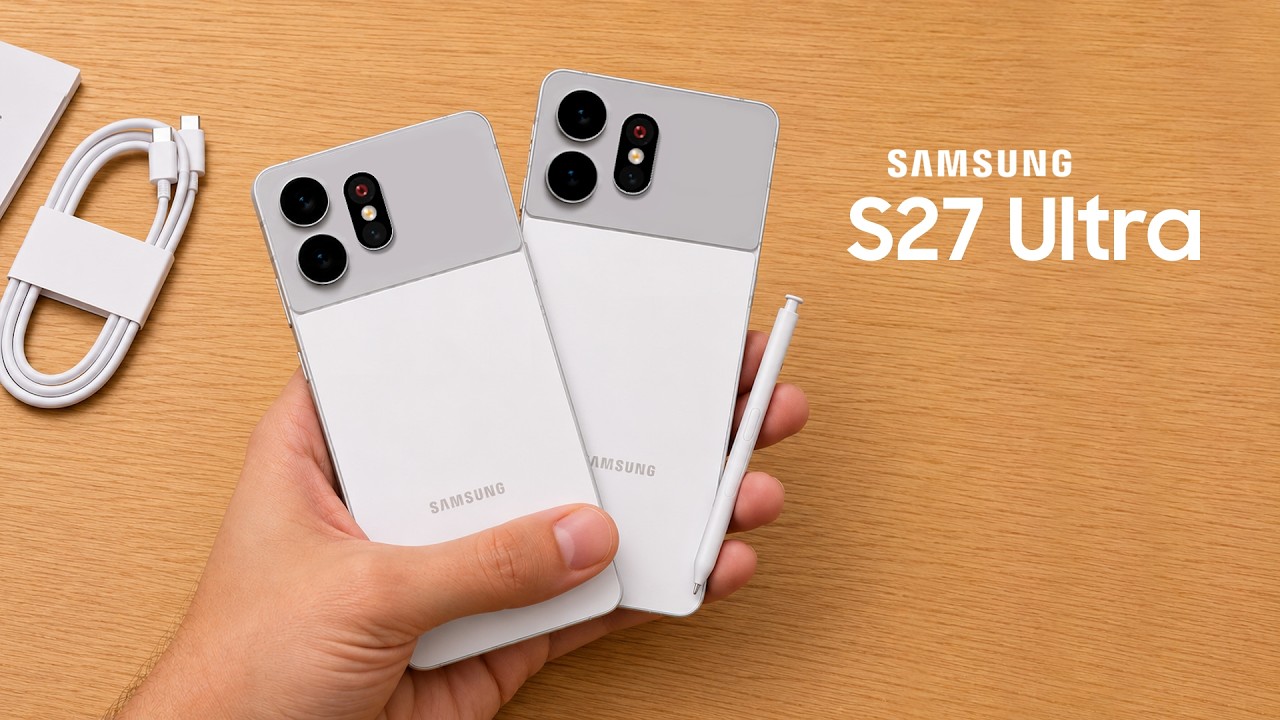
Galaxy S27 Ultra Is Getting Three Awesome Display Upgrades That Have Me Excited
Samsung Galaxy S27 Ultra Display Upgrades: Samsung could be preparing some major improvements for its next premium smartphone, the Galaxy S27 Ultra. According to recent reports and leaks, the upcoming flagship may receive three significant display upgrades: a new M16 OLED panel, improved dimming technology, and enhancements to its Privacy Display feature.
These changes could make the Galaxy S27 Ultra more appealing to users who want a premium viewing experience, better power efficiency, improved visual quality, and greater privacy when using their phones in public.
The existing Galaxy S26 Ultra introduced hardware-based Privacy Display technology, allowing users to restrict how much of their screen can be seen from certain viewing angles. However, reports of compromises involving brightness, viewing quality, and eye comfort have raised questions about the technology’s implementation.
Samsung may address some of these concerns with the next generation.
It is important to note that Samsung has not officially confirmed these Galaxy S27 Ultra display upgrades. The information currently available is based on reports and leaks, so the final specifications could change before launch.
Samsung Galaxy S27 Ultra Display: What’s New?
The Samsung Galaxy S27 Ultra is expected to arrive in early 2027, following the company’s traditional Galaxy S flagship launch cycle. Although the manufacturer has not officially announced the device, early reports suggest that its display could receive more substantial improvements than a routine annual refresh.
Here are the three reported upgrades that have attracted the most attention.
| Expected upgrade | Potential benefit |
|---|---|
| New M16 OLED panel | Improved efficiency, colour reproduction and display performance |
| DC-like dimming technology | Potentially more comfortable viewing for some users sensitive to display flicker |
| Improved Privacy Display | Better image quality and more flexible privacy controls |
These changes could improve everyday usability rather than simply increasing specifications on a product sheet.
1. Galaxy S27 Ultra Could Get DC Dimming Technology
One of the most interesting reported upgrades is the possible introduction of DC dimming technology.
Samsung’s premium smartphones have traditionally relied on pulse-width modulation, commonly known as PWM, to control OLED screen brightness. This method adjusts perceived brightness by rapidly switching the display’s light output.
Although PWM is widely used in OLED devices, some people are sensitive to display flicker and may experience eye discomfort, headaches, or fatigue during prolonged use.
DC dimming works differently. Instead of relying primarily on rapid light-output modulation, it adjusts the electrical power supplied to the display to control brightness.
According to a report published by PhoneArena on October 10, 2026, Samsung could introduce DC-like dimming on the Galaxy S27 Ultra. The implementation may use a hybrid approach rather than conventional DC dimming at every brightness level.
Why Could DC Dimming Matter?
For people who use their smartphones for several hours daily, comfortable viewing is an important consideration.
A suitable dimming implementation could potentially reduce the effects of flicker for some sensitive users, particularly when using the phone at lower brightness levels.
However, the results will depend on how Samsung implements the technology.
DC dimming can also affect colour accuracy at low brightness levels on OLED panels. Manufacturers must balance brightness control, colour reproduction, and display stability when designing these systems.
Therefore, it would be premature to conclude that the Galaxy S27 Ultra will completely eliminate eye strain.
The key takeaway: If Samsung introduces an effective DC-like dimming system, it could be a meaningful improvement for users who are sensitive to the flicker produced by certain smartphone displays.

2. Samsung Galaxy S27 Ultra May Feature a New M16 OLED Display
The second major rumoured upgrade concerns the display panel itself.
Reports suggest that the Galaxy S27 Ultra could use Samsung Display’s next-generation M16 OLED technology. The same panel generation has been associated with other upcoming premium smartphones, including the rumoured Galaxy S27 Pro.
The M16 panel is expected to offer improvements in several areas, including power efficiency, colour accuracy, and overall display performance.
Better Colours and Visual Quality
Display quality affects almost every activity performed on a smartphone.
Whether users are watching movies, editing photographs, playing games, reading articles, or scrolling through social media, accurate colours and consistent brightness can improve the overall experience.
A newer OLED panel could deliver better colour reproduction and more efficient light generation.
However, the final viewing experience will also depend on Samsung’s calibration, display settings, brightness management, and software optimisation.
Improved Power Efficiency
Power consumption is another important consideration.
A more efficient OLED panel could help reduce the energy required to illuminate the screen under comparable conditions.
This could be particularly beneficial for users who frequently stream videos, browse websites, play games, or keep their displays active for extended periods.
Nevertheless, a more efficient panel does not automatically guarantee longer battery life. Processor usage, mobile network conditions, screen brightness, refresh rate, and battery capacity also affect overall endurance.
Will the Galaxy S27 Ultra Have a Brighter Display?
That remains uncertain.
Although newer OLED technology may support improved brightness capabilities, reports suggest Samsung could prioritise Privacy Display functionality rather than pursuing the highest possible peak brightness figures.
A September 2026 report from Gadgets 360 noted that the Galaxy S27 Ultra could use an M16 LTPO OLED panel while potentially falling short of the 10,000-nit peak brightness associated with the panel’s reported capabilities in other implementations.
Consequently, buyers should not assume that the Galaxy S27 Ultra will reach 10,000 nits.
The more meaningful question is whether Samsung can deliver strong outdoor visibility, accurate colours, efficient power consumption, and consistent picture quality in everyday conditions.
3. Samsung Could Fix the Galaxy Ultra’s Privacy Display Problems
The third reported upgrade could be particularly important for people who frequently use their smartphones in public.
Samsung introduced its hardware-based Privacy Display feature with the Galaxy S26 Ultra. The technology adjusts the display’s viewing characteristics to make on-screen information harder for nearby people to see from certain angles.
This can be useful when accessing banking applications, reading private messages, entering passwords, or viewing confidential work documents on public transport.
Unlike a conventional privacy screen protector, Samsung’s implementation uses display hardware to control how visible different portions of the screen are from off-centre viewing positions.
However, the technology also raises questions about viewing quality.
Some users have reported concerns involving eye comfort, colour appearance, and image quality when using the Privacy Display feature.
Reports suggest Samsung could work on improving these aspects for the Galaxy S27 Ultra. The extent of the improvements remains unconfirmed.
Better Picture Quality With Privacy Display
One potential improvement would be reducing the visual compromises associated with privacy protection.
Ideally, users should be able to protect sensitive information without experiencing an unnecessarily noticeable reduction in image quality.
This could make the feature more useful for everyday activities rather than something users activate only occasionally.
Smarter Privacy Controls
Another reported possibility is expanded control over which portions of the screen remain private.
A separate report from Android Authority on September 24, 2026, discussed a rumoured split-screen privacy feature for the Galaxy S27 Ultra. This could allow users to protect one application window while keeping another visible during multitasking.
For example, someone could potentially keep a banking application private while using a browser in the other half of the screen.
Such a feature would be particularly useful for professionals, frequent travellers, and people who regularly handle sensitive information on their phones.
However, the split-screen functionality has not been officially confirmed by Samsung.
Galaxy S27 Ultra vs Galaxy S26 Ultra: Expected Display Differences
The Galaxy S26 Ultra introduced Samsung’s hardware-based Privacy Display, making screen privacy one of the standout features of the current generation.
The Galaxy S27 Ultra could build on that foundation with improvements to the underlying panel and dimming system.
| Feature | Galaxy S26 Ultra | Galaxy S27 Ultra |
|---|---|---|
| Display technology | M14 OLED material reported | M16 OLED material rumoured |
| Privacy Display | Available | Expected to receive refinements |
| DC-like dimming | Not confirmed as a flagship feature | Reportedly under consideration |
| Colour performance | Premium OLED experience | Potential improvements |
| Power efficiency | Existing flagship technology | Potentially improved |
| Launch status | Released | Expected in early 2027 |
The comparison reflects currently reported information rather than a final specification sheet. Samsung could change the hardware and software before the next flagship reaches consumers.
Galaxy S27 Ultra Launch Date: When Could It Arrive?
Samsung has not officially announced the Galaxy S27 Ultra’s launch date.
However, based on the company’s established release pattern, the smartphone is expected to debut in early 2027.
The Galaxy S27 family could include several models, although the final lineup and product names remain unconfirmed.
More details about the display, processor, cameras, battery, and pricing are likely to emerge as the launch approaches.
Until Samsung releases an official announcement, consumers should treat leaked specifications and estimated launch dates as preliminary information.
Will the Galaxy S27 Ultra Be Worth Waiting For?
The answer will depend on what matters most to individual buyers.
If the reported display upgrades materialise, the Galaxy S27 Ultra could offer meaningful improvements for people who value comfortable viewing, accurate colours, power efficiency, and privacy.
The potential addition of DC-like dimming could attract users who are sensitive to display flicker. The M16 OLED panel could improve efficiency and picture quality, while refinements to Privacy Display could make the feature more practical.
However, buyers should also consider the complete smartphone experience.
Processor performance, camera quality, battery life, software support, charging speeds, and pricing will all influence whether the next Ultra model represents a worthwhile upgrade.
Owners of the Galaxy S26 Ultra may not need to upgrade immediately, particularly if their current phone meets their requirements.
On the other hand, people using older Galaxy Ultra devices may find the next generation more attractive if Samsung delivers improvements across several important areas.
Final Verdict
The Samsung Galaxy S27 Ultra is shaping up to be an interesting flagship, particularly because its reported display upgrades focus on everyday usability.
A new M16 OLED panel, potential DC-like dimming, and improvements to Privacy Display could address several important aspects of the smartphone viewing experience.
Rather than concentrating exclusively on headline brightness figures, Samsung may be looking to balance visual quality, efficiency, and privacy.
Still, these features remain unconfirmed, and the final results will depend on the hardware and software Samsung delivers.
For now, the Galaxy S27 Ultra is worth watching, but buyers should wait for official specifications and independent testing before making an upgrade decision.