

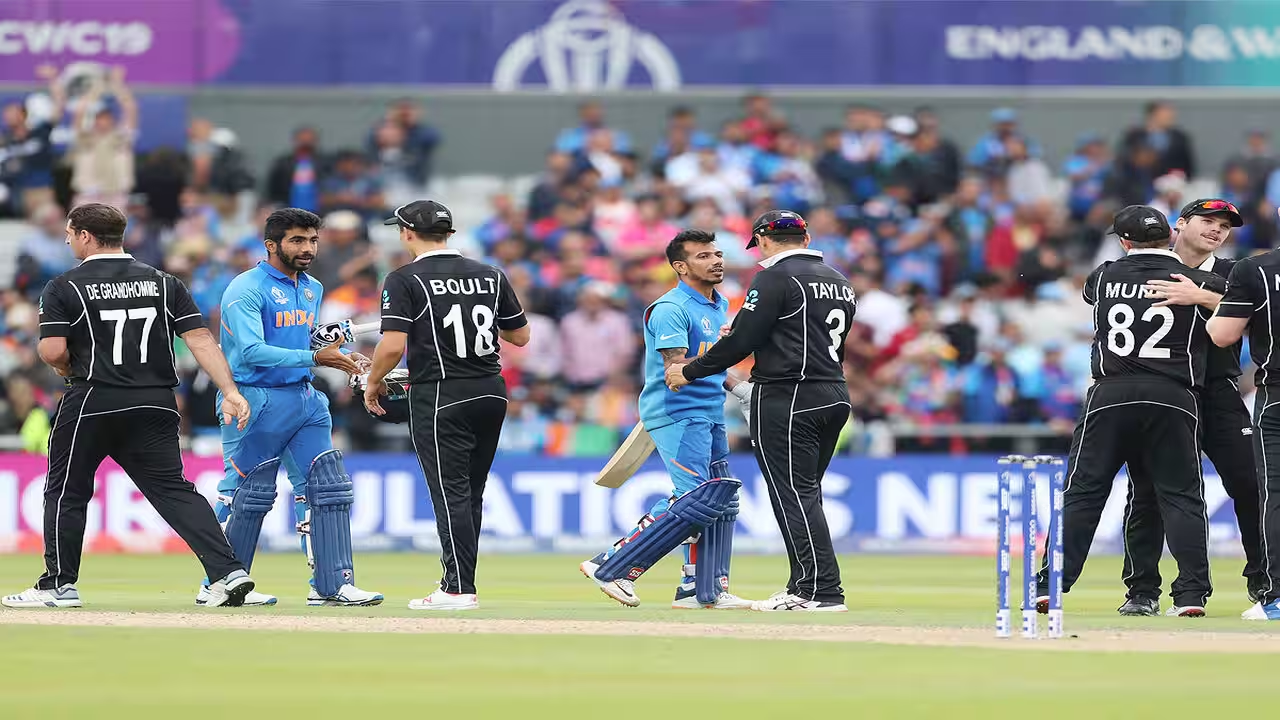
NZ Beat India by 7 Wickets in 5th T20I, Tim Seifert Shines with 93 Runs
India vs New Zealand 5th T20I Scorecard: New Zealand defeated India by seven wickets in the fifth and final T20 International of the India tour of New Zealand 2026 on November 1, 2026. The match was played at Seddon Park in Hamilton, where the home team produced an impressive batting performance to chase India’s target of 192 runs.
India scored 191/8 in 20 overs after being asked to bat first. Ishan Kishan delivered an outstanding innings of 61 runs from 32 balls, while captain Shreyas Iyer contributed a quick 50 off just 23 deliveries.
However, New Zealand responded brilliantly with the bat. Tim Seifert scored 93 runs from 50 balls, while Glenn Phillips remained unbeaten on 65 from 38 deliveries. Their partnership helped New Zealand reach 195/3 in just 18 overs.
Despite winning the fifth match, India finished the five-match T20I series with a 3-2 victory. The result gave New Zealand a consolation win after India had already secured the series by winning the first three matches.
Here is the complete India national cricket team vs New Zealand national cricket team match scorecard, batting performances, bowling figures, match highlights and series results.
India vs New Zealand 5th T20I Match Result
5th T20 International
November 1, 2026 · Seddon Park, Hamilton
New Zealand won by 7 wickets
Player of the Match: Tim Seifert (93 off 50 balls)
Series result: India won 3-2
India National Cricket Team Batting Scorecard
India’s innings did not start as expected. The team lost early wickets, putting pressure on the middle order during the powerplay.
Sanju Samson and Abhishek Sharma failed to make significant contributions. However, Ishan Kishan and Shreyas Iyer rebuilt the innings with an impressive attacking partnership.
Ishan played an aggressive knock, hitting five fours and five sixes. Shreyas also showed excellent timing and power, scoring four sixes and three boundaries

India Batting Scorecard
| Batter | Runs | Balls |
|---|---|---|
| Sanju Samson | 4 | 10 |
| Abhishek Sharma | 1 | 2 |
| Ishan Kishan | 61 | 32 |
| Shreyas Iyer (c) | 50 | 23 |
| Tilak Varma | 6 | 8 |
| Naman Dhir | 33 | 23 |
| Nitish Kumar Reddy | 22 | 17 |
| Bhuvneshwar Kumar | 6 | 4 |
| Prince Yadav | 0* | 1 |
| Arshdeep Singh | 1* | 1 |
| Total | 191/8 | 20 overs |
Ishan Kishan was India’s highest scorer with 61 runs, while Shreyas Iyer’s half-century helped the visitors reach a competitive total.
New Zealand National Cricket Team Batting Scorecard
New Zealand started the chase aggressively despite losing Finn Allen early. Tim Seifert and Daryl Mitchell kept the scoring rate high, putting pressure on India’s bowling attack.
Seifert was the standout performer. He smashed 93 runs from 50 deliveries, including 11 fours and five sixes. He narrowly missed his century after being dismissed by Nitish Kumar Reddy.
Glenn Phillips continued the attacking approach and remained unbeaten on 65 runs from 38 balls. His innings included eight boundaries and three sixes.
New Zealand Batting Scorecard
| Batter | Runs | Balls | 4s | 6s |
|---|---|---|---|---|
| Finn Allen | 2 | 3 | 0 | 0 |
| Tim Seifert | 93 | 50 | 11 | 5 |
| Daryl Mitchell | 29 | 16 | 0 | 4 |
| Glenn Phillips | 65* | 38 | 8 | 3 |
| Bevon Jacobs | 1* | 1 | 0 | 0 |
| Total | 195/3 | 18 overs |
Extras: 5
New Zealand chased down the 192-run target with 12 balls remaining, registering a convincing seven-wicket victory.
India vs New Zealand Bowling Scorecard
New Zealand’s batting performance made life difficult for the Indian bowlers. Although India managed to take three wickets, the bowling attack struggled to control the scoring rate.
Adam Milne was India’s biggest problem during the first innings, taking four wickets for New Zealand. During the chase, India’s bowlers could not consistently stop Seifert and Phillips.

New Zealand Bowling Figures Against India
| Bowler | Overs | Runs | Wickets |
|---|---|---|---|
| Adam Milne | 4 | 19 | 4 |
| Nathan Smith | 3 | 28 | 2 |
| Blair Tickner | 4 | 38 | 2 |
| Jacob Duffy | 3 | 27 | 0 |
| Mitchell Santner | 4 | 39 | 0 |
| Michael Bracewell | 2 | 38 | 0 |
India Bowling Figures Against New Zealand
| Bowler | Overs | Runs | Wickets |
|---|---|---|---|
| Bhuvneshwar Kumar | 4 | 41 | 0 |
| Arshdeep Singh | 4 | 40 | 1 |
| Prince Yadav | 3 | 35 | 0 |
| Varun Chakravarthy | 4 | 45 | 1 |
| Nitish Kumar Reddy | 2 | 19 | 1 |
| Abhishek Sharma | 1 | 13 | 0 |
Adam Milne delivered an excellent bowling performance, taking four wickets and restricting India’s batting lineup to 191 runs. On the other side, Glenn Phillips and Tim Seifert dominated India’s bowling attack during the second innings.
India vs New Zealand 5th T20I Match Highlights
The fifth T20I featured several important moments that decided the outcome.
India lost early wickets: Sanju Samson and Abhishek Sharma departed cheaply, leaving India under pressure at 19/2.
Ishan Kishan and Shreyas Iyer rebuilt the innings: Their 93-run partnership brought India back into the contest. Kishan scored 61, while Iyer added 50.
Adam Milne’s four-wicket performance: Milne picked up four important wickets, preventing India from finishing with an even bigger total.
Tim Seifert’s explosive innings: The New Zealand wicketkeeper-batter scored 93 runs and provided the foundation for the successful chase.
Glenn Phillips finished the match: Phillips remained unbeaten on 65 and helped the hosts cross the finish line in just 18 overs.
The partnership between Seifert and Phillips was particularly important because it shifted the pressure completely onto the Indian bowling unit.
India vs New Zealand T20I Series 2026: Complete Results
Although New Zealand won the final match, India had already secured the five-match series after winning the opening three games.
Here is the complete series result:
| Match | Result |
|---|---|
| 1st T20I | India won by 4 wickets |
| 2nd T20I | India won by 4 wickets |
| 3rd T20I | India won by 6 wickets |
| 4th T20I | New Zealand won by 87 runs |
| 5th T20I | New Zealand won by 7 wickets |
FINAL SERIES RESULT
India’s victories in the first three matches ensured that the visitors secured the series before the final two games. New Zealand responded strongly by winning the fourth and fifth T20Is.
What Went Wrong for India in the Fifth T20I?
India’s defeat highlighted a few weaknesses in the team’s bowling performance.
First, the Indian bowlers struggled to defend a target of 192 runs. Although the total was competitive, New Zealand’s aggressive batting made the chase look relatively comfortable.
Second, India’s bowling attack could not consistently control the boundaries. Seifert and Phillips took advantage of scoring opportunities and maintained an excellent run rate.
Third, the middle overs did not provide enough breakthroughs. Daryl Mitchell also contributed 29 runs from 16 balls, ensuring New Zealand maintained momentum.
However, India will take positives from Ishan Kishan’s attacking batting and Shreyas Iyer’s half-century.
What’s Next for India and New Zealand?
Following the conclusion of the T20I series, both teams will turn their attention towards the five-match ODI series.
The first ODI is scheduled for November 4, 2026, at Eden Park in Auckland.
India will look to carry its overall series-winning momentum into the 50-over format, while New Zealand will aim to build on its two consecutive T20I victories.
The upcoming ODI matches will provide another opportunity for both sides to test their combinations and prepare for future international competitions.
Final Words
The India national cricket team vs New Zealand national cricket team fifth T20I produced an entertaining contest at Seddon Park, Hamilton, on November 1, 2026.
India posted 191/8, with Ishan Kishan scoring 61 runs and Shreyas Iyer contributing 50. However, New Zealand successfully chased the target by scoring 195/3 in 18 overs.
Tim Seifert’s 93-run innings and Glenn Phillips’ unbeaten 65 proved decisive in the home team’s seven-wicket victory.
Despite losing the final two matches, India finished the five-match T20I series with a 3-2 victory. The teams will now prepare for their upcoming ODI series, beginning November 4.