


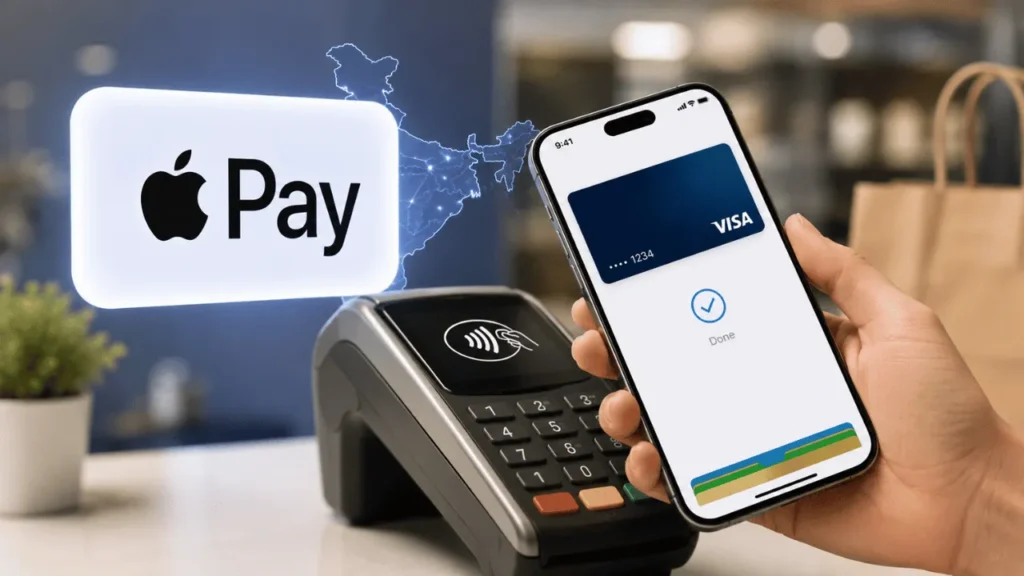
Apple Pay India Launch: Service Goes Live With Axis Bank Cards, Here’s How It Works
Apple Pay India has finally become a reality. Apple has officially launched its payment service in the country, bringing contactless payments to eligible iPhone, iPad and Apple Watch users. The service initially works with eligible Axis Bank Visa and Mastercard credit cards, giving Apple users another way to pay in stores, apps and on websites.
The arrival is significant because Apple Pay has been unavailable in India for more than a decade after its original international debut. However, the Indian rollout is different from markets where Apple Pay is deeply integrated into everyday payments. India’s digital-payment ecosystem is dominated by UPI, while Apple Pay is initially built around supported bank cards.
Apple says the service is designed to provide a secure and private payment experience without requiring users to repeatedly enter card details, PINs or OTPs at checkout.

Apple Pay India Launch: What Happened?
Apple has officially switched on Apple Pay in India as of September 30, 2026.
At launch, eligible customers can add supported Axis Bank Visa and Mastercard credit cards to Apple Wallet and use them for contactless transactions at supported payment terminals. Apple Pay can also be used for purchases within supported apps and on websites.
The launch initially remains limited. RuPay cards are not supported at launch, while Apple is expected to expand support to additional banks and card networks over time. Reuters reported that Apple has been discussing partnerships with other major Indian banks, including HDFC Bank and ICICI Bank, although agreements had not been finalized at launch.

Apple Pay India at a Glance
| Feature | Details |
|---|---|
| Service | Apple Pay |
| India launch | September 30, 2026 |
| Initial bank | Axis Bank |
| Supported cards | Eligible Visa and Mastercard credit cards |
| RuPay | Not supported initially |
| Supported devices | iPhone, iPad, Apple Watch |
| Mac | Coming soon |
| Payments | Stores, apps and websites |
| Authentication | Face ID, Touch ID or passcode |
| Main technology | Contactless/NFC |
| UPI replacement? | No, it is a card-based payment service |
Which Bank Cards Work With Apple Pay in India?

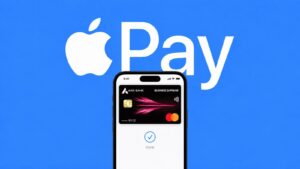
The initial rollout is focused on eligible Axis Bank-issued Visa and Mastercard credit cards.
This means simply owning an Axis Bank card does not necessarily mean every card variant will work. Users should check whether their particular card is eligible when attempting to add it through Apple Wallet.
Apple Pay currently does not support RuPay cards in India. This is an important difference from India’s wider card ecosystem, where RuPay has a substantial presence.
Apple’s model depends on agreements with individual banks and card networks, so additional institutions can be added separately.
How to Set Up Apple Pay in India
Setting up Apple Pay is designed to happen through the Wallet app.
Eligible users can generally follow these steps:
- Open the Wallet app on a compatible Apple device.
- Tap the option to add a card.
- Select the credit-card option.
- Add an eligible Axis Bank card.
- Follow the verification instructions provided by the bank.
- Complete the authentication process.
- Once the card is approved, it becomes available for Apple Pay transactions.
The exact verification process can depend on the bank and card.
Once the card has been added, users can select it when making a payment and authenticate using Face ID, Touch ID or the device passcode.
How Apple Pay Works at Stores
Apple Pay uses contactless payment technology, meaning users don’t necessarily need to hand over a physical card.
At a compatible payment terminal, the user can authenticate the transaction on the Apple device and hold it close to the contactless reader.
For an iPhone with Face ID, the payment process can involve double-clicking the side button and authenticating with Face ID before holding the phone near the terminal.
Apple Watch users can authenticate using the watch’s existing security mechanism and then bring the watch close to a compatible terminal.
This makes Apple Pay particularly useful for quick transactions where contactless card payments are already accepted.
Apple Pay for Online Shopping and Apps

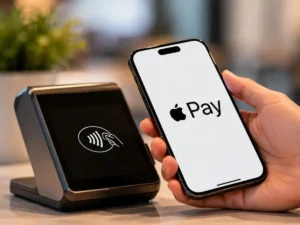
Apple Pay is not limited to physical stores.
Apple says the service can be used for payments in apps and on the web, allowing users to avoid repeatedly typing card numbers, expiry dates and other payment information.
Where Apple Pay is offered at checkout, users can select the service and authenticate the transaction.
This can make checkout faster, especially on an iPhone or iPad where the payment information is already stored in Wallet.
Apple’s broader Apple Pay platform also supports checkout experiences designed to display available payment information and make card selection easier.
Apple Pay India Supported Devices
At launch, Apple says Apple Pay is available in India across iPhone, iPad and Apple Watch, while Mac support is coming soon.
Reports on device compatibility indicate support starting with relatively recent iPhone and Apple Watch models. Users should also ensure that their devices are running compatible software and that their region and card issuer support Apple Pay.
The exact availability of features can vary by device and operating system.
Apple Pay vs UPI: What Is the Difference?
One of the biggest questions following the launch is how Apple Pay will fit into India’s already enormous UPI ecosystem.
The two services work differently.
UPI generally enables bank-to-bank payments, allowing customers to send money directly from a linked bank account. It has become deeply embedded in Indian retail payments, particularly through QR-code transactions.
Apple Pay, in its initial Indian form, is primarily a card-based wallet service. Users add an eligible bank card to Apple Wallet and use that card through Apple’s payment system.
This means Apple Pay does not replace UPI.
Instead, the two systems can coexist. An iPhone user could continue using a UPI app for QR-code payments while using Apple Pay when paying with an eligible credit card at a supported contactless terminal.
TechCrunch noted that India’s UPI ecosystem handles the bulk of digital payments, creating a very different environment for Apple Pay compared with card-heavy markets.
Apple Pay India Security Features
Security is one of Apple’s main selling points for Apple Pay.
Instead of repeatedly sharing the actual card number with merchants, Apple Pay uses a device-specific payment credential. Transactions are authenticated using Face ID, Touch ID or the device passcode.
Apple describes Apple Pay as a private payment method that is designed to keep card information protected.
This also means losing a physical card and losing an iPhone are different situations. Apple provides mechanisms through its account and device-management systems to help disable payment functionality if a device is lost.
Users should still follow normal security practices, including keeping their Apple Account secure and using a strong device passcode.
Where Can Apple Pay Be Used in India?


Apple Pay can be used wherever participating merchants and payment terminals support the relevant contactless payment technology.
At launch, acceptance is not necessarily universal.
TechCrunch reported that acceptance could vary depending on whether the merchant’s payment infrastructure has been enabled for Apple Pay.
This means an eligible Axis Bank card may work at one contactless terminal but not necessarily at every payment terminal in the country.
Apple Pay is also being integrated into online and app-based checkout experiences. Apple has highlighted payments across stores, apps and websites as part of its India launch.
Apple Pay India Merchant Support
Merchant acceptance will be an important factor in determining how widely the service is used.
Reports have identified several Indian businesses and platforms where Apple Pay support is being enabled, including online and retail merchants. The launch ecosystem is expected to expand as payment providers and merchants complete technical integrations.
PayU has also been reported as integrating Apple Pay into its merchant network, helping businesses support the service without creating completely separate payment infrastructure.
As more merchants enable contactless Apple Pay payments, users should find more opportunities to use their compatible cards.
Why Apple Pay India Launch Matters
India is already one of the world’s largest digital-payment markets, which makes the launch strategically important for Apple.
The company has been expanding its presence in India through iPhone sales, manufacturing and retail operations. Apple Pay adds another layer to that ecosystem.
Reuters reported that Apple held discussions with other major banks but initially launched with Axis Bank.
For Apple users, the biggest benefit is convenience: a supported credit card can sit inside Apple Wallet instead of requiring users to carry the physical card for every contactless purchase.
For banks, supporting Apple Pay can potentially provide another way to make their cards useful for Apple customers.
Apple Pay India: What Users Should Know

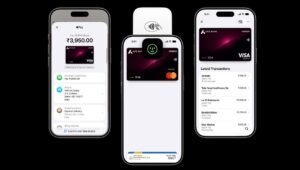
There are several important points to remember about the initial launch:
- Apple Pay is officially available in India.
- Axis Bank is the initial banking partner.
- Eligible Visa and Mastercard credit cards are supported.
- RuPay cards are not supported at launch.
- iPhone, iPad and Apple Watch are supported.
- Mac support is coming later.
- Apple Pay works for supported in-store, app and web purchases.
- It is different from UPI and does not replace UPI.
- Merchant acceptance can vary.
- More banks and cards may be added over time.
Final Word
The Apple Pay India launch marks a major change in Apple’s payment strategy in one of the world’s most important digital-payment markets. After years of waiting, Indian users can now use Apple Pay with eligible Axis Bank Visa and Mastercard credit cards on supported Apple devices.
The initial rollout is deliberately limited, with RuPay excluded and support for other major banks still developing. That means Apple Pay is unlikely to immediately replace the payment methods Indian consumers already use every day.
Instead, its initial role is more straightforward: give Apple customers a convenient way to use supported credit cards for contactless payments, apps and websites.
The real test will come as Apple adds more banks, cards and merchants. With India’s payment market heavily shaped by UPI, Apple’s card-based approach will have to find its own place within an already mature digital ecosystem.
For existing Apple users with an eligible Axis Bank card, however, Apple Pay India is now officially live, bringing Apple’s familiar Wallet-based payment experience to the country for the first time.