


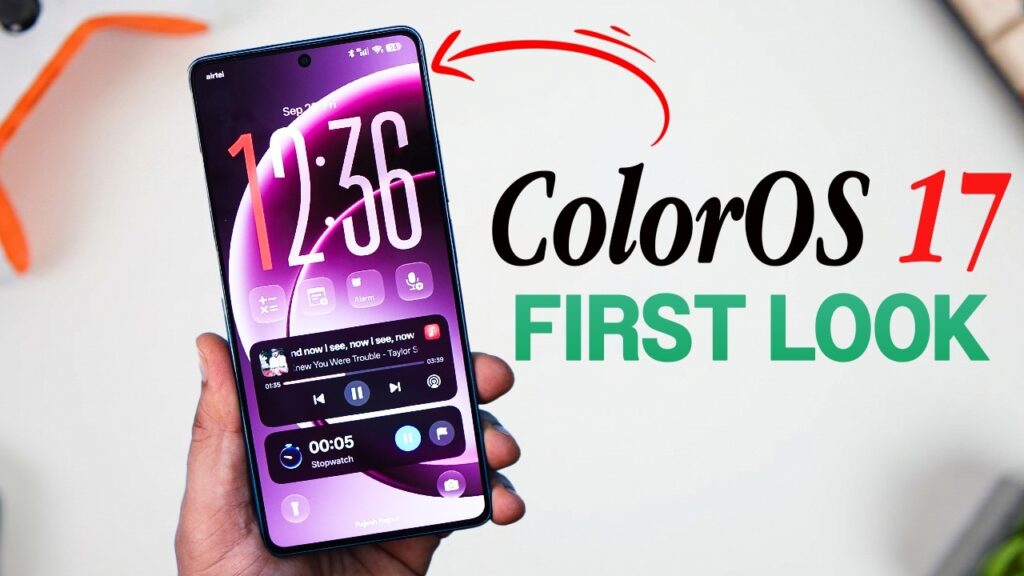
ColorOS 17 Update Launched: New AI Features, Android 17 Design, Eligible OPPO Phones and Rollout Schedule
OPPO has officially unveiled ColorOS 17, its next-generation smartphone operating system, bringing a major combination of artificial intelligence, smoother animations, redesigned visuals and improved privacy features. Based on Android 17, the latest software update aims to make everyday smartphone usage more intelligent, responsive and convenient.
The new ColorOS version introduces several exciting features, including AI Mind Pilot, AI Photo Agent, AI Mind Space, AI Mind Suggest and AI Call Guard. OPPO has also introduced a refreshed Living Flow Design, which focuses on smoother transitions, translucent visual elements and more natural touch interactions.
The ColorOS 17 announcement is particularly exciting for existing OPPO smartphone owners because the company has confirmed a phased rollout schedule for eligible devices. The update will reach selected Find and Reno series smartphones first, followed by additional models in November, December and early 2027.
With AI becoming an important part of modern smartphones, ColorOS 17 could be one of OPPO’s most significant software upgrades. Here is everything you need to know about its features, performance improvements, supported devices and India rollout timeline.

ColorOS 17 Launch: What’s New?
OPPO officially introduced ColorOS 17 globally on October 13, 2026. The software is based on Google’s Android 17 operating system and focuses on three major areas: artificial intelligence, visual improvements and system performance.
The upcoming OPPO Find X10 series is the first smartphone lineup announced to debut with the new software.
Unlike a regular software update that mainly introduces security patches and minor interface changes, ColorOS 17 brings deeper system-level improvements.
The company has redesigned the user experience through Living Flow Design and introduced AI-powered tools that can understand user instructions and perform multiple tasks.
ColorOS 17 Key Features and Specifications
| Feature | Details |
|---|---|
| Operating System | ColorOS 17 |
| Android Version | Android 17 |
| Main Design | Living Flow Design |
| AI Assistant | AI Mind Pilot |
| AI Photography | AI Photo Agent |
| AI Organisation | AI Mind Space |
| Smart Suggestions | AI Mind Suggest |
| Call Protection | AI Call Guard |
| Privacy | Transparency Report |
| Performance | Unified Rendering Architecture |
| First Devices | OPPO Find X10 Series |
| Rollout | October 2026 onwards |
1. Living Flow Design Brings a Fresh Interface

One of the biggest highlights of ColorOS 17 is its completely refreshed visual experience.
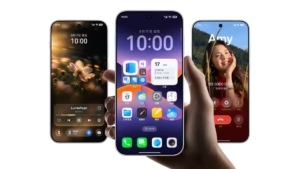
OPPO has introduced Living Flow Design, which makes smartphone interactions look more natural and responsive. The company has focused on three important elements: Luminous Effect, Fluid Motion and Flexible Feedback.
Luminous Effect introduces softer, translucent visual elements that create a sense of depth across the interface. These visual effects respond to user interactions and make menus and controls look more refined.
Fluid Motion improves transitions between different applications, menus and system elements. Instead of abrupt movements, the interface is designed to provide continuous animations.
Flexible Feedback makes touch interactions feel more responsive. Buttons, toolbars and other controls can compress, stretch and rebound when users interact with them.
The redesigned experience also extends to Fluid Cloud and other everyday system interactions.
Overall, the new interface aims to deliver a more premium experience without making navigation complicated.
2. AI Mind Pilot Introduces Agent Mode
Artificial intelligence is one of the biggest priorities in ColorOS 17.
OPPO has introduced AI Mind Pilot with a new Agent Mode that goes beyond answering basic questions. It is designed to understand instructions, access relevant information and complete multiple steps to achieve a requested task.
For example, users can ask the AI assistant to locate particular photographs, organise files or rename documents based on their content and dates.
It can also use information from different files to create useful outputs, including travel itineraries and webpages.
Another interesting capability is its ability to organise photographs from a particular trip into albums.
This approach makes AI Mind Pilot more than a conventional chatbot. Instead, it aims to function as an intelligent assistant that can help users complete everyday digital tasks.
However, the availability and capabilities of individual AI functions may vary depending on the device and region.
3. AI Photo Agent Improves Smartphone Photography
Photography is another area receiving significant attention in ColorOS 17.
The new AI Photo Agent is designed to make image editing easier through natural-language instructions and intelligent recommendations.
One of its interesting additions is Style Match.
With this feature, users can provide a reference photograph, allowing the AI system to understand its colour palette, overall mood and visual tone.
It can then apply a similar style to another image.
Users can also describe the changes they want to make using simple instructions rather than manually adjusting multiple editing settings.
For example, someone can request a warmer colour tone or a particular visual appearance.
AI Photo Agent can also analyse the photograph and suggest suitable adjustments based on the subject and surrounding environment.
This feature could make photo editing more accessible to people who do not have professional editing experience.

4. AI Mind Space Gets Smarter
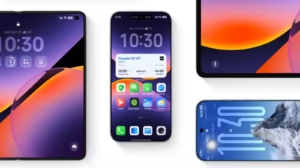
Another major addition is the upgraded AI Mind Space.
This feature works as a personal information hub where users can save useful documents, images, notes and video links.
The system uses AI to recognise saved information and organise it into searchable collections.
The new Memory Collections functionality automatically groups related information and creates useful summaries.
For example, users planning a holiday can save destination information, travel recommendations, photographs and other useful content.
AI Mind Space can connect these saved details and help create personalised travel plans.
This could be particularly useful for people who regularly save information but struggle to find it later.
Instead of searching through multiple applications, users can access related information through a more organised system.
5. AI Mind Suggest Offers Intelligent Recommendations
ColorOS 17 also introduces AI Mind Suggest, which aims to provide useful information at the right time.
The feature can deliver morning summaries, travel reminders and relevant information based on the user’s activities.
For example, flight and train information cards can help users keep track of important journey details.
The system can also surface relevant services and recommendations without requiring users to manually search for everything.
Certain capabilities, including travel-related information and music recommendations, depend on regional availability.
The overall objective is to make smartphones more proactive and reduce the effort required to access frequently needed information.
6. AI Call Guard Adds Protection Against Fraud
Online scams and fraudulent phone calls are becoming increasingly sophisticated.
To address this issue, OPPO has introduced AI Call Guard in ColorOS 17.
The feature uses on-device AI detection to monitor calls in real time and identify suspicious activities.
It is designed to detect emerging fraud risks, including synthetic voices and AI-generated face swaps.
If the system identifies suspicious activity, it can alert users during the interaction.
This could provide an additional layer of protection against increasingly advanced digital scams.
OPPO has also indicated availability in India, Indonesia and Thailand for this feature.
However, users should continue following basic security precautions and avoid sharing OTPs, banking details or passwords over suspicious calls.

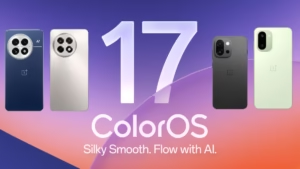
7. Better Performance With Unified Rendering Architecture
Apart from AI improvements, OPPO is also focusing on long-term performance.
ColorOS 17 introduces a Unified Rendering Architecture powered by the refreshed Luminous Rendering Engine.
The technology brings previously separate rendering processes into a unified pipeline.
According to OPPO, this approach reduces redundant rendering operations while supporting richer visual effects and smoother transitions.
The company also claims that in laboratory tests simulating six years of usage, ColorOS 17 retained more than 90% of its initial smoothness, even when storage was at 90% capacity.
These are manufacturer-reported test results rather than a guarantee of identical performance on every smartphone.
Nevertheless, the improvement could be important for users who want their devices to remain responsive over an extended period.
8. ColorOS 17 Privacy and Security Improvements
As AI becomes more deeply integrated into smartphones, privacy is becoming increasingly important.
OPPO has introduced a Transparency Report that gives users more information about how AI services process their data.
The report can show which AI services have been accessed, when they were used and what operations were performed.
Users can also view and export this information directly from their devices.
This gives smartphone owners greater visibility into AI-related activities.
ColorOS 17 also continues OPPO’s focus on secure data processing through its privacy-focused infrastructure.
These additions are important because users should have greater control and understanding of how personal information is handled by intelligent smartphone features.
9. ColorOS 17 Eligible Devices and Rollout Schedule in India
OPPO has confirmed that ColorOS 17 will reach compatible smartphones through a phased software rollout.
The India schedule begins in October 2026 and continues through November, December and the first quarter of 2027.
Here is the announced device list.
| Rollout Timeline | Eligible OPPO Devices |
|---|---|
| October 2026 | Find N6, Find N5, Find X9 Ultra, Find X9s, Find X9 Pro, Find X9, Find X8 Pro, Find X8 |
| October 2026 | Reno16 Pro 5G, Reno16 5G, Reno16c 5G, Reno16 FS 5G, Reno16 F 5G |
| November 2026 | Find N3, Find N3 Flip, Reno15 series, Reno14 series, K14 series, K13x 5G, F35 Pro 5G, F33 5G, F31 5G, F29 5G |
| December 2026 | Reno13 Pro 5G, Reno13 5G, Reno13 F 5G, Pad 5 Matte Display Edition, Pad 3 Pro, Pad 3 Matte Display Edition |
| Q1 2027 | Reno12 Pro 5G, Reno12 5G, Pad SE |
The October rollout has started, with selected devices scheduled from October 29 and additional models from October 30.
Importantly, the rollout schedule is approximate. Actual availability can depend on smartphone variants, region, carrier and software development progress.
Users should check the official OPPO update page for the latest information about their particular model.
10. How to Download the ColorOS 17 Update
Once the update becomes available for an eligible smartphone, users can check for it through their device settings.
Follow these steps:
- Open the Settings application on your OPPO smartphone.
- Scroll down and select About Device.
- Tap the Software Update section.
- Check whether the ColorOS 17 update is available.
- Download the update using a stable Wi-Fi connection.
- Install the software and restart your device if required.
Before installing a major software update, make sure your smartphone has sufficient battery power and back up important personal information.
If the update is not available, it may simply mean that the rollout has not reached your device yet.
Conclusion: Is ColorOS 17 Worth the Upgrade?
ColorOS 17 represents an important step forward for OPPO’s smartphone software ecosystem.
The combination of Living Flow Design, AI Mind Pilot, AI Photo Agent, AI Mind Space and AI Call Guard makes this update more ambitious than a conventional interface refresh.
The improved rendering architecture also shows that OPPO is focusing on long-term smoothness alongside new AI capabilities.
For existing OPPO users, the update could bring meaningful improvements to everyday smartphone usage. However, the actual experience will depend on the hardware, region and availability of individual features.
With the rollout beginning in October 2026 and continuing into 2027, compatible smartphone owners should keep checking their software update settings.
ColorOS 17 could become one of OPPO’s most important software releases, particularly as the company moves towards a more intelligent and AI-powered smartphone experience.