


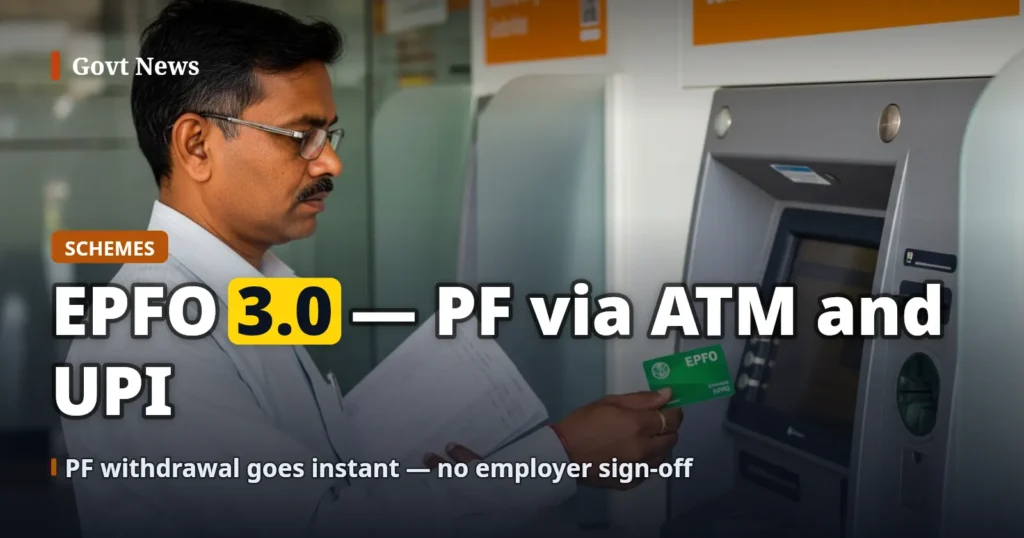
EPFO 3.0 New Rules: Can You Withdraw 100% of Your PF Retirement Corpus Through ATM? Here’s Everything You Need to Know
The Employees’ Provident Fund Organisation (EPFO) is undergoing one of its biggest digital transformations with the introduction of EPFO 3.0. The new system promises faster claim settlements, UPI-based withdrawals, ATM access to provident fund balances, and simplified withdrawal rules. As news about EPFO 3.0 spreads across India, one question is dominating discussions among salaried employees: Can you withdraw 100% of your PF retirement corpus through an ATM under EPFO 3.0?
The answer is not as straightforward as many social media posts suggest. While EPFO is moving toward a more flexible and digital withdrawal system, several conditions and safeguards remain in place to protect retirement savings.
the latest EPFO 3.0 rules, ATM withdrawal facilities, UPI integration, withdrawal limits, and whether employees can really access their entire PF balance instantly.

What Is EPFO 3.0?
EPFO 3.0 is a major modernization initiative by the Employees’ Provident Fund Organisation aimed at making provident fund services faster, simpler, and more user-friendly. The new framework focuses on digitization and automation, reducing paperwork and dependency on employers for claim approvals.
Key features expected under EPFO 3.0 include:
- ATM-based PF withdrawals
- UPI-linked PF withdrawal facility
- Faster claim settlement
- Higher auto-settlement limits
- Self-service account corrections
- Reduced paperwork
- Enhanced digital services
The objective is to make PF accounts function more like modern banking services while maintaining the retirement-focused nature of the fund.

Can You Withdraw PF Through an ATM?
One of the most talked-about features of EPFO 3.0 is the proposed ATM withdrawal facility. Under the new framework, EPFO members may receive PF-linked ATM cards that will allow eligible withdrawals directly from ATMs without lengthy claim processing procedures. Reports indicate that testing for the facility has been completed and rollout is expected soon.
The ATM system is expected to work similarly to a debit card. Instead of submitting withdrawal applications and waiting several days, members may be able to access approved PF amounts instantly through authorized ATMs.
However, the facility does not mean unlimited access to the entire PF corpus at any time.
Can You Withdraw 100% of Your PF Corpus Through ATM?
This is where confusion exists.
According to multiple reports discussing EPFO 3.0, ATM and UPI withdrawals are expected to be subject to limits. Most reports indicate that members may be allowed to withdraw between 50% and 75% of their PF balance through these instant withdrawal channels. A portion of the corpus will likely remain protected to ensure retirement security.
Some reports specifically mention that at least 25% of the PF balance must remain in the account and cannot be withdrawn through ATM or UPI facilities.
Therefore, under the proposed EPFO 3.0 ATM system:
- Instant ATM withdrawal of 100% PF corpus is generally not expected.
- Withdrawal limits may range from 50% to 75%.
- A minimum balance may need to remain in the PF account.
- Retirement protection remains a key objective.
Why Is EPFO Restricting Full ATM Withdrawals?


Provident Fund is primarily a retirement savings instrument.
If members are allowed unrestricted access to their entire retirement corpus through ATM withdrawals, many individuals may exhaust their savings prematurely. To prevent this, EPFO is introducing safeguards that balance convenience with long-term financial security.
The retained amount ensures that subscribers continue accumulating retirement savings while still gaining access to emergency funds when required.
What About the New 100% PF Withdrawal Rule?
Many people are confusing two separate developments.
In 2025, EPFO approved liberalized withdrawal rules allowing members to withdraw up to 100% of their eligible balance under specified circumstances and categories. The reforms simplified withdrawal provisions and merged multiple withdrawal categories into broader classifications.
However, these reforms relate to eligibility and withdrawal rules, not necessarily ATM-based instant access.
The ability to withdraw 100% of the PF corpus may still depend on:
- Retirement
- Permanent disability
- Migration abroad
- Extended unemployment
- Other eligible conditions specified by EPFO
These conditions differ from routine ATM withdrawals available under EPFO 3.0.
EPFO 3.0 UPI Withdrawal Facility
Besides ATM withdrawals, EPFO 3.0 is expected to integrate UPI-based PF withdrawals.
This means members may be able to:
- Initiate PF withdrawals online.
- Select UPI as the payout method.
- Receive funds directly into linked accounts.
- Complete transactions without visiting EPFO offices.
The UPI-based system is expected to significantly reduce claim processing time and improve accessibility for millions of subscribers across India.
Faster Claim Settlement Under EPFO 3.0


Traditional PF withdrawal often involves several steps, including verification and claim processing.
Under EPFO 3.0:
- A large percentage of claims may be processed automatically.
- Employer approval requirements may be minimized in many cases.
- Auto-settlement limits have reportedly been increased.
- Processing times could be reduced from weeks to a matter of days.
This represents one of the most significant benefits of the EPFO modernization initiative.
New Withdrawal Categories Simplify Rules
EPFO has simplified withdrawal rules by grouping earlier provisions into broader categories.
The three major categories include:
1. Essential Needs
This category covers:
- Medical emergencies
- Education expenses
- Marriage expenses
2. Housing Needs
This includes:
- Home purchase
- House construction
- Housing loan repayment
3. Special Circumstances
This may include:
- Natural disasters
- Long-term illness
- Exceptional emergencies
The simplified structure aims to make PF withdrawal rules easier to understand and access.
What Happens After Retirement?


For retired employees, EPF remains a crucial financial resource.
Once members meet retirement eligibility conditions, they may be allowed to withdraw the entire eligible corpus according to EPFO regulations. These retirement-related withdrawals differ from routine ATM-based transactions and continue to follow established EPFO guidelines.
Therefore, while ATM withdrawals may be capped, retirement withdrawals can still provide access to the full eligible balance when conditions are met.
Who Will Benefit Most from EPFO 3.0?
The new system is expected to benefit:
Salaried Employees
Faster access to funds during emergencies.
Young Professionals
Digital-first services compatible with UPI and mobile banking.
Retirees
Simplified withdrawal procedures and faster processing.
Employers
Reduced administrative burden and compliance complexity.
EPFO Subscribers in Rural Areas
Greater access through ATM networks and digital platforms.
Challenges and Concerns
While EPFO 3.0 has received positive reactions, experts have highlighted several challenges:
- Data security concerns.
- ATM infrastructure readiness.
- Fraud prevention mechanisms.
- Financial literacy among subscribers.
- Balancing convenience with retirement protection.
The success of the initiative will depend on how effectively these issues are addressed during nationwide implementation.

Final Verdict
EPFO 3.0 marks a major shift toward a digital and user-friendly provident fund ecosystem in India. Features such as ATM withdrawals, UPI integration, faster claim settlements, and simplified rules are expected to transform how millions of employees access their PF savings.
However, contrary to some viral claims, employees are unlikely to be able to withdraw 100% of their PF retirement corpus instantly through ATMs. Current reports suggest ATM and UPI withdrawals may be limited to 50%-75% of the available balance, while a portion of the corpus remains protected for retirement purposes. At the same time, existing EPFO rules still allow full withdrawal of the eligible corpus under retirement and certain special conditions.
As EPFO officially rolls out the final version of EPFO 3.0, subscribers should carefully review the latest guidelines before planning withdrawals. The modernization effort promises greater convenience, but preserving long-term retirement security remains at the heart of India’s provident fund system.