


Google’s Sundar Pichai Doubles Down on Solar Space Data Centers: The Future of Cloud Computing?
In a bold move that could redefine the future of global computing infrastructure, Sundar Pichai, CEO of Google, has once again emphasized the company’s long-term vision of solar-powered space-based data centers. The concept, once considered science fiction, is now gaining serious attention as tech giants explore sustainable solutions to meet the world’s growing data demands.
With artificial intelligence, cloud computing, and digital services expanding rapidly, traditional data centers are consuming massive amounts of energy. Google’s idea of placing data centers in space powered by solar energy could mark a revolutionary shift in how digital infrastructure operates.

What Are Solar Space Data Centers?
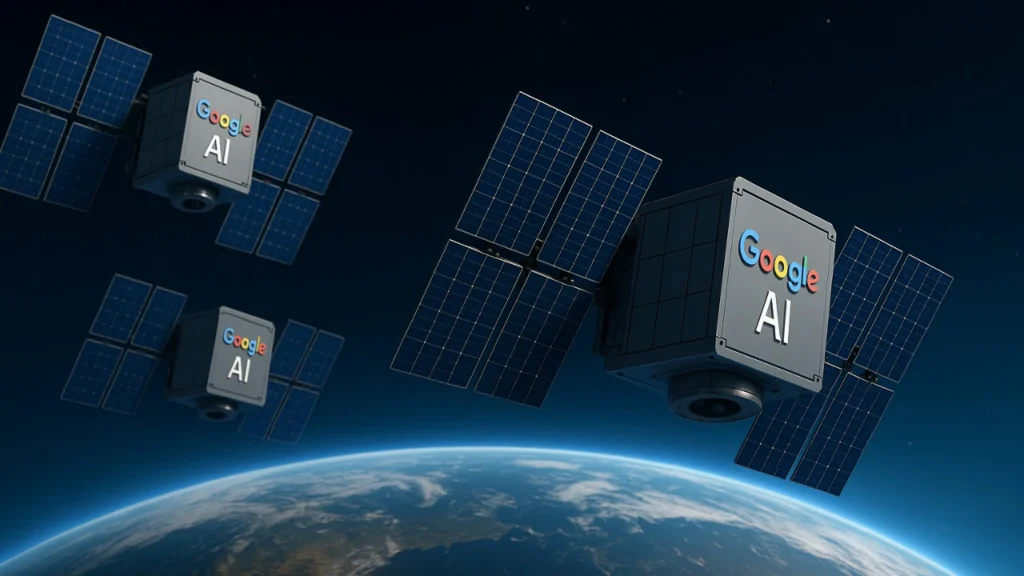
Solar space data centers are essentially computing facilities placed in orbit around Earth, powered by uninterrupted solar energy. Unlike terrestrial data centers, which rely on electricity grids and cooling systems, these space-based systems would harness solar power directly and operate in the cold vacuum of space.
According to Sundar Pichai, this concept aligns with Google’s long-term sustainability goals and its ambition to operate entirely on carbon-free energy.
Why Google Is Exploring Space-Based Data Centers

1. Rising Energy Consumption
Modern data centers require enormous power. As services like search, cloud computing, and AI models grow, companies like Google face increasing pressure to reduce their carbon footprint.
Space-based data centers could solve this problem by using continuous solar energy, unaffected by day-night cycles or weather conditions.
2. Sustainability Goals
Google has committed to operating on 24/7 carbon-free energy by 2030. Solar space data centers could play a key role in achieving this ambitious target.
Unlike Earth-based solar farms, space systems can generate energy without interruptions, making them far more efficient.
3. Cooling Efficiency
Cooling is one of the biggest challenges for traditional data centers. In space, the naturally cold environment could reduce or even eliminate the need for complex cooling systems.
This would significantly cut operational costs and energy usage.
How Would Space Data Centers Work?
The idea involves launching compact, high-performance data modules into orbit using advanced rockets. These modules would:
- Collect solar energy via large panels
- Process data in orbit
- Transmit data back to Earth using high-speed communication systems
Companies like SpaceX are already making space launches more affordable, which could make such projects viable in the near future.
Challenges Facing Space Data Centers


While the concept is exciting, several hurdles remain before it becomes reality.
1. High Initial Costs
Launching infrastructure into space is still expensive, despite advancements by companies like SpaceX.
2. Data Latency
Transmitting data between Earth and space could introduce delays, which may impact real-time applications.
3. Maintenance Issues
Repairing or upgrading hardware in space is far more complex than on Earth.
4. Space Debris Risks
Orbiting data centers would need protection from space debris and collisions.
Google’s AI Expansion Driving Demand
The push for space data centers is closely linked to Google’s rapid expansion in artificial intelligence. Tools like:
- Google Search
- Google Cloud
- Gemini
are becoming more powerful and resource-intensive.
AI models require massive computational power, which translates into higher energy consumption. Space-based infrastructure could provide a sustainable solution to support this growth.
Industry-Wide Interest in Space Computing


Google is not alone in exploring futuristic infrastructure. Other tech companies are also investing in sustainable and innovative data solutions.
- Microsoft has experimented with underwater data centers.
- Amazon continues to expand its renewable-powered cloud infrastructure.
However, Google’s space-based approach could give it a significant edge if successfully implemented.
Environmental Impact
One of the biggest advantages of solar space data centers is their potential to reduce environmental impact.
Benefits:
- Zero carbon emissions during operation
- Reduced land usage on Earth
- Lower energy waste
However, rocket launches themselves have environmental costs, which must be addressed for the solution to be truly sustainable.
Timeline: When Could This Become Reality?
While Google has not announced an official launch date, experts believe:
- Short-term (2026–2030): Research and prototype testing
- Mid-term (2030–2035): Limited deployment
- Long-term (2035+): Scalable commercial use
The timeline will depend heavily on advancements in space technology and cost reduction.
What This Means for the Future


If successful, solar space data centers could transform the digital world:
- Faster and more sustainable cloud services
- Reduced environmental impact
- Unlimited scalability for AI and data processing
This innovation could also pave the way for other space-based technologies, including satellite networks and orbital manufacturing.
Expert Opinions
Industry experts believe that while the idea is ambitious, it is not impossible.
Many compare it to earlier breakthroughs like cloud computing and smartphones, which once seemed futuristic but are now part of everyday life.
Final Thoughts

The vision of solar-powered space data centers highlights how far technology has come—and how far it can still go. With Sundar Pichai leading the charge, Google is positioning itself at the forefront of sustainable innovation.
While challenges remain, the potential benefits in terms of energy efficiency, scalability, and environmental impact are enormous.
As the world becomes increasingly dependent on digital services, solutions like space-based data centers may not just be an option—they could become a necessity.