


OnePlus–Realme Merger Rumours: What It Means for the Smartphone Market in 2026
The Indian smartphone industry is buzzing with speculation about a possible merger between OnePlus and Realme. While there has been no official confirmation, the growing chatter around a potential consolidation has sparked widespread interest among tech enthusiasts, consumers, and industry experts alike. we break down everything you need to know about the OnePlus–Realme merger rumours, including reasons behind the speculation, potential impact, and what it could mean for users in India and globally.

OnePlus–Realme Merger: What’s the Buzz?
Reports circulating across tech forums and industry insiders suggest that both brands could be exploring deeper integration under their parent ecosystem. Both OnePlus and Realme are already linked through BBK Electronics, which also owns OPPO and Vivo.
This shared lineage has led many to believe that a merger—or at least a strategic alignment—could be on the horizon.
However, it’s important to clarify: no official announcement has been made regarding a full merger.
Understanding the BBK Ecosystem

To understand the merger rumours, you need to look at how BBK operates.
BBK Electronics functions as a parent company managing multiple independent smartphone brands. Each brand targets different audiences:
- OnePlus → Premium and flagship segment
- Realme → Budget and mid-range segment
- OPPO → Camera-focused and design-centric users
- Vivo → Youth-oriented and offline market
Despite separate branding, these companies often share:
- R&D resources
- Manufacturing units
- Supply chains
This overlapping structure is one of the biggest reasons behind merger speculation.
Why Are Merger Rumours Gaining Momentum?

1. Increasing Internal Integration
In recent years, OnePlus has already integrated more closely with OPPO, especially in terms of software and hardware development.
- OxygenOS merged with ColorOS codebase
- Shared chipsets and design elements
This has set a precedent for further consolidation within the BBK group.
2. Market Competition in India
India, the world’s second-largest smartphone market, is highly competitive. Brands like Xiaomi and Samsung dominate across price segments.
A potential OnePlus–Realme merger could:
- Strengthen market share
- Reduce internal competition
- Improve cost efficiency
3. Cost Optimization
Running multiple brands requires significant investment in marketing, R&D, and distribution.
A merger could help:
- Reduce duplicate costs
- Streamline product portfolios
- Improve profitability
4. Changing Consumer Preferences
Consumers today demand:
- Better performance
- Longer software support
- Competitive pricing
A combined entity could deliver stronger products by pooling resources.
What Could a OnePlus–Realme Merger Look Like?

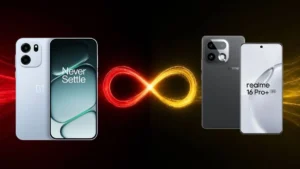
If the merger happens, it may not be a traditional merger but rather a strategic restructuring.
Possible scenarios include:
Shared Product Development
Devices may share similar hardware platforms while maintaining different branding.
Unified Software Ecosystem
A common OS experience combining OxygenOS and Realme UI could emerge.
Brand Repositioning
- OnePlus may focus strictly on premium devices
- Realme could dominate the budget and mid-range segments
Pros and Cons of the Merger
Potential Benefits
1. Better Technology Integration
Shared R&D could lead to faster innovation.
2. Competitive Pricing
Cost savings may translate into more affordable devices.
3. Improved Software Updates
Unified systems could ensure longer support cycles.
Possible Drawbacks
1. Loss of Brand Identity
OnePlus fans, in particular, value its “flagship killer” identity.
2. Reduced Competition
Fewer independent brands could mean less innovation.
3. Product Overlap Confusion
Consumers may find it harder to differentiate between devices.
🇮🇳 Impact on Indian Market


India is a key battleground for both brands.
A merger could significantly affect:
Market Share
Combined sales of OnePlus and Realme could challenge leaders like Samsung.
Pricing Strategy
More aggressive pricing could benefit Indian consumers.
Offline & Online Presence
Realme’s strong offline network combined with OnePlus’ premium retail strategy could create a powerful distribution system.
Future of OnePlus and Realme
Even if a full merger doesn’t happen, deeper collaboration is almost certain.
Industry experts believe:
- Shared technology will increase
- Brand identities will remain separate
- Product ecosystems will overlap more
This trend is already visible in recent smartphone launches.
Official Statement: What Companies Say
So far, neither OnePlus nor Realme has confirmed merger plans.
Executives have repeatedly stated that:
- Both brands will operate independently
- Collaboration is limited to backend efficiencies
Until an official announcement is made, merger news remains speculative.
Expert Opinion
Tech analysts suggest that instead of a merger, what we are seeing is a “soft consolidation” strategy within BBK.
This includes:
- Shared innovation
- Unified supply chains
- Cross-brand learning
Such strategies help companies stay competitive without losing brand value.
Should Consumers Be Concerned?


Not really.
For most users, a merger (if it happens) could actually be beneficial:
- Better value for money
- Improved device quality
- Faster updates
However, loyal fans of OnePlus may hope the brand retains its unique identity.
Conclusion
The OnePlus–Realme merger rumours highlight a larger trend in the global smartphone industry—consolidation for survival and growth.
While no official merger has been confirmed, the increasing collaboration between brands under BBK Electronics suggests that the lines between them are already blurring.
For consumers, this could mean better smartphones at competitive prices. But for the industry, it signals a shift towards fewer, stronger players dominating the market.
As the situation evolves, all eyes will remain on OnePlus and Realme for any official updates.