


Xiaomi HyperOS 4 Update Features: Android 17-Powered Upgrade Could Transform Xiaomi Phones in 2026
Xiaomi is preparing to introduce HyperOS 4, the next major version of its operating system that is expected to arrive alongside Android 17 later in 2026. While the company has not officially revealed all the details, multiple leaks and reports suggest that HyperOS 4 could be one of the most significant software upgrades Xiaomi has released in recent years.
The upcoming update is rumored to bring a redesigned interface, deeper AI integration, improved battery management, faster performance, enhanced privacy controls, and better connectivity across Xiaomi’s ecosystem of smartphones, tablets, wearables, and smart home devices. Industry reports indicate that Xiaomi is aiming to deliver a cleaner, more optimized experience by reducing legacy software components and modernizing the overall system architecture. we explore the expected Xiaomi HyperOS 4 update features, release timeline, eligible devices, and why this update is generating significant excitement among Xiaomi, Redmi, and POCO users worldwide.

What Is Xiaomi HyperOS 4?
HyperOS 4 is expected to be Xiaomi’s next-generation operating system built on Android 17. It will succeed HyperOS 3 and continue Xiaomi’s transition away from the older MIUI platform.
According to reports, Xiaomi wants HyperOS 4 to deliver a smoother and more intelligent user experience while strengthening integration across all Xiaomi devices. The update is expected to focus on performance, AI capabilities, visual design, security, and ecosystem connectivity.

HyperOS 4 Release Date: When Will It Launch?
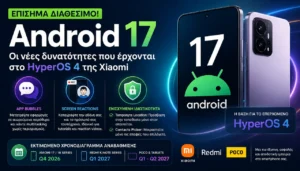
Although Xiaomi has not announced an official launch date, industry sources suggest that HyperOS 4 could debut between August and September 2026.
Several reports indicate that Xiaomi may start beta testing during mid-2026, followed by a stable rollout later in the year. Flagship smartphones are expected to receive the update first, while Redmi and POCO devices may get the software gradually in subsequent months.
For Indian users, the update rollout could begin around October or November 2026 after the initial global release.
Major Xiaomi HyperOS 4 Features

1. New Liquid Glass User Interface
One of the most talked-about HyperOS 4 features is the rumored Liquid Glass UI design.
Leaks suggest Xiaomi is working on a modern visual overhaul featuring:
- Frosted glass effects
- Enhanced transparency
- Dynamic blur animations
- Floating UI cards
- More immersive visual depth
- Refined iconography
The goal is to create a premium and fluid interface that feels modern while maintaining Xiaomi’s distinctive design language. Many observers compare the concept to the latest trends in mobile UI design.
2. Faster Performance and Smoother Animations
Performance improvements are expected to be a major focus of HyperOS 4.
Reports indicate users may experience:
- Faster app launches
- Reduced system lag
- Improved memory management
- Better background process optimization
- More responsive animations
Xiaomi is reportedly optimizing system resources to ensure smoother performance across flagship and mid-range devices.
3. AI-Powered Features Across the System
Artificial Intelligence is expected to play a central role in HyperOS 4.
Potential AI enhancements may include:
- AI writing assistance
- Smart productivity tools
- Intelligent battery optimization
- AI-powered photo editing
- Personalized recommendations
- Voice assistant upgrades
Android 17 itself introduces stronger AI capabilities, and Xiaomi is expected to build additional features on top of Google’s framework.
4. Better Battery Optimization
Battery life remains one of the biggest priorities for smartphone users.
HyperOS 4 is expected to improve power efficiency through:
- Smarter background app management
- Adaptive battery intelligence
- Improved charging optimization
- Reduced idle battery drain
- Better thermal management
These improvements could help devices deliver longer screen-on time without requiring larger battery capacities.
5. Enhanced Multitasking Experience
Android 17 introduces improvements aimed at multitasking, and Xiaomi is expected to expand on those capabilities.
Expected multitasking features include:
- Improved floating windows
- Smarter split-screen functionality
- Faster app switching
- Better large-screen optimization
- Enhanced tablet productivity tools
These upgrades could be particularly beneficial for Xiaomi tablets and foldable devices.
6. Improved Privacy and Security
Security enhancements are expected to be another major highlight of HyperOS 4.
Potential improvements include:
- Stronger permission controls
- Advanced privacy dashboards
- Enhanced data protection
- Improved device security mechanisms
- More secure cross-device communication
Android 17’s privacy improvements are also likely to be integrated into Xiaomi’s software experience.
7. Better Ecosystem Connectivity
Xiaomi continues to expand its ecosystem of devices, and HyperOS 4 is expected to strengthen interconnectivity.
Users may see improvements in:
- Device synchronization
- Cross-device file sharing
- Smart home integration
- Multi-device workflows
- Seamless connectivity between smartphones, tablets, and wearables
This ecosystem-first approach remains a core pillar of Xiaomi’s software strategy.
8. Android 17 Features Coming to HyperOS 4

Since HyperOS 4 is expected to be based on Android 17, users could benefit from several new Android features.
Rumored additions include:
- Smarter notifications
- Advanced voice typing
- Improved autofill systems
- Better RCS messaging security
- Enhanced AI assistants
- Improved large-screen support
These Android-level improvements will likely be customized further by Xiaomi.
9. Zero-Legacy Architecture
Some reports claim HyperOS 4 could become Xiaomi’s first “Zero-Legacy” software platform.
This approach reportedly involves:
- Removing older MIUI code
- Modernizing system components
- Faster updates
- Improved reliability
- Better software stability
If implemented successfully, it could represent one of the most important technical changes in Xiaomi’s software history.
Expected HyperOS 4 Eligible Devices
Although Xiaomi has not released an official compatibility list, leaks suggest many recent Xiaomi, Redmi, and POCO devices could receive the update.
Expected devices include:
Xiaomi Series
- Xiaomi 17 Series
- Xiaomi 15 Series
- Xiaomi 14 Series
- Xiaomi MIX Series
Redmi Series
- Redmi Note 15 Series
- Redmi Note 14 Series
- Redmi K Series
- Redmi Pad Series
POCO Series
- POCO F Series
- POCO X Series
- POCO M Series
The final list will depend on Xiaomi’s official software update policy and regional rollout plans.
Why HyperOS 4 Matters for Xiaomi Users


For years, Xiaomi smartphones have delivered excellent hardware at competitive prices. However, software consistency has often been a topic of discussion among users.
HyperOS 4 appears to address many long-standing concerns by focusing on:
- Better stability
- Cleaner software architecture
- Faster performance
- Improved animations
- Stronger AI integration
- Enhanced security
If Xiaomi delivers on these expectations, HyperOS 4 could significantly improve the user experience across its smartphone portfolio.

Final Verdict
The Xiaomi HyperOS 4 update is shaping up to be one of the company’s most ambitious software releases. With Android 17 at its foundation, the update is expected to introduce a redesigned interface, smarter AI tools, stronger privacy features, enhanced multitasking, and better ecosystem integration.
While many details remain unofficial, current leaks suggest that HyperOS 4 could represent a major step forward for Xiaomi, Redmi, and POCO devices. Users looking for a smoother, faster, and more intelligent smartphone experience should keep an eye on Xiaomi’s upcoming announcements throughout 2026.
As always, the final feature set and rollout schedule will be confirmed once Xiaomi officially unveils HyperOS 4 later this year.