

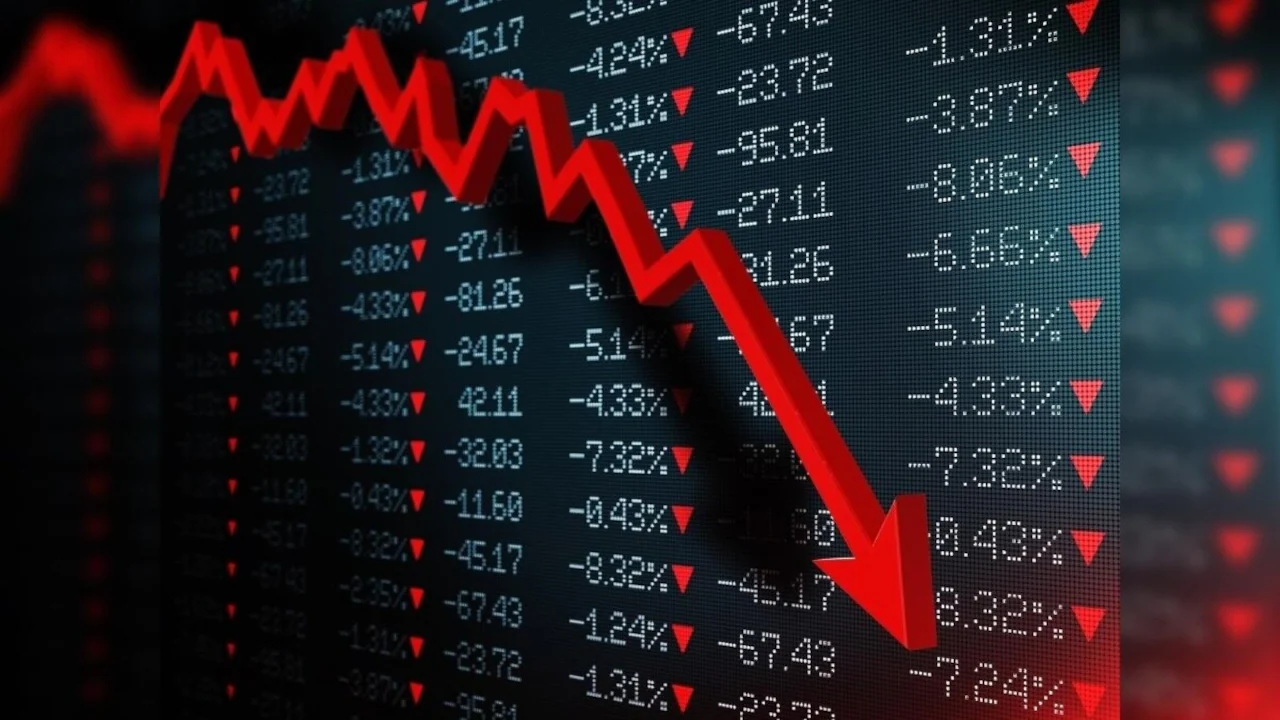
Stock Market Crash: Why Markets Are Falling, Key Reasons Behind the Sell-Off, and What Investors Should Do
Global Stock Market Crash Fears Intensify as Investors React to Economic Uncertainty
Stock markets across the world have come under significant pressure, triggering concerns about a potential stock market crash. Investors are closely monitoring economic indicators, interest rate decisions, geopolitical developments, and corporate earnings as major indices witness sharp declines.
The recent market volatility has wiped out billions in market capitalization, raising concerns among retail investors, institutional funds, and financial experts. While market corrections are a normal part of investing, sudden and steep declines often create panic and uncertainty.
The latest sell-off has sparked discussions about whether the market is experiencing a temporary correction or the beginning of a larger downturn. Analysts remain divided, but most agree that several economic and global factors are contributing to the current weakness.
What Is a Stock Market Crash?
A stock market crash refers to a sudden and significant decline in stock prices across major market indices.
Typically, a crash is characterized by:
- Sharp declines in major indices
- Widespread investor panic
- Heavy selling pressure
- Increased market volatility
- Significant loss of investor wealth
While corrections of 10% are relatively common, deeper declines can create concerns about broader economic impacts.
Stock market crashes often occur when investor sentiment rapidly shifts from optimism to fear.
Why Is the Stock Market Falling?
Several factors are currently influencing market sentiment.
1. Interest Rate Concerns
Interest rates remain one of the biggest drivers of market performance.
When central banks maintain higher interest rates or signal tighter monetary policies:
- Borrowing becomes more expensive
- Consumer spending may slow
- Corporate profits can come under pressure
- Valuations often decline
Investors closely monitor central bank statements because interest rate expectations significantly affect equity markets.
2. Inflation Worries
Inflation continues to be a major concern for global investors.
Higher inflation can:
- Increase business costs
- Reduce consumer purchasing power
- Impact corporate earnings
- Lead to tighter monetary policies
Persistent inflation creates uncertainty regarding future economic growth.
3. Global Economic Slowdown
Economic growth concerns are contributing to market weakness.
Investors are monitoring:
- GDP growth trends
- Manufacturing activity
- Consumer confidence
- Employment data
- International trade activity
Any signs of slowing growth can trigger market corrections.
4. Geopolitical Tensions
Global conflicts and geopolitical risks often create uncertainty in financial markets.
Political instability can affect:
- Energy prices
- Supply chains
- Trade relationships
- Investment flows
Markets typically react negatively when geopolitical risks increase.
Impact on Major Stock Market Indices
The recent decline has affected major indices worldwide.
Indian Stock Market
Indian markets have experienced increased volatility as investors respond to global developments and domestic economic data.
Key sectors under pressure include:
- Banking
- Information technology
- Capital markets
- Real estate
- Consumer discretionary
US Markets
Wall Street continues to influence global sentiment.
Major technology and growth stocks often experience heightened volatility during uncertain economic periods.
European Markets
European equities have also faced challenges due to economic growth concerns and inflation pressures.
Global market interconnectedness means weakness in one region often impacts others.
Which Sectors Are Most Affected?
Market crashes rarely affect all sectors equally.
Technology Stocks
Technology companies often experience larger declines because of their higher valuations.
Investors become more cautious about future growth expectations during uncertain periods.
Banking Stocks
Banks are sensitive to economic conditions and interest rate movements.
Investors carefully evaluate:
- Loan growth
- Asset quality
- Profitability trends
Real Estate Stocks
Higher interest rates can reduce housing demand and impact real estate activity.
Consumer Stocks
Consumer-focused businesses may face challenges if spending slows during economic uncertainty.
Why Investors Panic During Market Crashes

Market crashes are often driven by psychology as much as fundamentals.
Fear of Further Losses
When prices fall rapidly, investors may sell to avoid additional losses.
Negative News Flow
Continuous negative headlines can amplify fear and accelerate selling.
Herd Mentality
Many investors follow market trends rather than making independent decisions.
This behavior can intensify market declines.
Margin Calls
Investors using leverage may be forced to sell positions, increasing downward pressure.
Understanding these psychological factors is important for long-term investing success.
Historical Stock Market Crashes
Financial markets have experienced several major crashes throughout history.
The Great Depression (1929)
One of the most significant market crashes in history led to a prolonged economic downturn.
Black Monday (1987)
Global markets witnessed dramatic declines within a single trading session.
Dot-Com Crash (2000)
Technology stocks experienced substantial losses after years of speculative growth.
Global Financial Crisis (2008)
The collapse of major financial institutions triggered severe market declines worldwide.
Pandemic Market Crash (2020)
COVID-19 created unprecedented uncertainty, leading to rapid market sell-offs before a strong recovery.
History shows that markets eventually recover, although timing varies.
What Should Investors Do During a Market Crash?

Financial experts generally recommend avoiding emotional decision-making during periods of volatility.
Stay Focused on Long-Term Goals
Investing should be based on long-term objectives rather than short-term market fluctuations.
Avoid Panic Selling
Selling during periods of fear can lock in losses.
Many investors who panic during crashes miss subsequent recoveries.
Review Portfolio Allocation
Market declines provide an opportunity to evaluate portfolio diversification and risk exposure.
Continue Systematic Investments
Investors using SIPs often benefit from purchasing assets at lower prices during corrections.
Focus on Fundamentals
Strong businesses with healthy balance sheets often emerge stronger after market downturns.
Opportunities During Market Corrections
While crashes create uncertainty, they can also generate opportunities.
Attractive Valuations
Quality companies may become available at discounted prices.
Long-Term Wealth Creation
Historically, disciplined investors who remained invested during downturns often benefited from eventual recoveries.
Sector Rotation
Certain sectors may outperform others depending on economic conditions.
Investors often seek businesses with resilient earnings and strong competitive positions.
Role of Institutional Investors
Institutional investors play a major role during market declines.
These participants include:
- Mutual funds
- Pension funds
- Insurance companies
- Sovereign wealth funds
- Foreign institutional investors
Their investment decisions can significantly influence market direction.
Institutional buying often helps stabilize markets during periods of excessive pessimism.
Expert Outlook on Current Market Conditions
Market analysts generally believe investors should distinguish between:
- Short-term volatility
- Structural economic problems
While current challenges remain significant, many experts note that market cycles are a normal part of investing.
Factors supporting long-term optimism include:
- Economic innovation
- Corporate earnings growth
- Technological advancements
- Rising productivity
- Expanding global markets
Investors are encouraged to maintain perspective during periods of uncertainty.
Future Market Outlook

The future direction of markets will depend on several key developments:
Inflation Trends
Lower inflation could improve investor sentiment.
Interest Rate Policy
Central bank decisions will continue to influence market expectations.
Corporate Earnings
Strong earnings growth could support market recovery.
Global Economic Growth
Improved economic activity would likely boost investor confidence.
Analysts expect volatility to remain elevated until greater clarity emerges regarding these factors.
Conclusion
Stock market crashes and sharp corrections can be unsettling for investors, but they are an inevitable part of financial markets. The current decline reflects a combination of inflation concerns, interest rate uncertainty, economic slowdown fears, and geopolitical risks.
While short-term volatility may continue, history demonstrates that markets have repeatedly recovered from major downturns. Investors who remain disciplined, focus on long-term goals, and avoid emotional decision-making are often better positioned to navigate challenging market environments.
As global economies continue to evolve, market participants will closely monitor inflation data, central bank policies, and corporate earnings for signals regarding the next phase of market direction. For long-term investors, patience and strategic thinking remain essential during periods of market turbulence.