

RBI Policy 2026: Key Decisions, Economic Impact, and What It Means for Borrowers, Investors, and the Indian Economy
RBI Policy Announcement in Focus as Markets Track Interest Rate Outlook
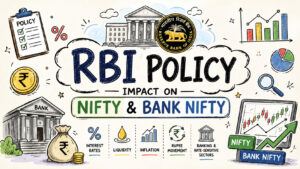
The latest policy decision by the Reserve Bank of India (RBI) has become one of the most closely watched events in the financial sector. Investors, businesses, borrowers, and economists across the country are analyzing the central bank’s stance on inflation, economic growth, liquidity management, and interest rates.
As India continues to navigate a rapidly changing global economic environment, the RBI’s monetary policy decisions play a crucial role in maintaining financial stability while supporting economic growth. The central bank’s latest policy announcement has generated significant discussion in financial markets, with experts evaluating its potential impact on loans, deposits, stock markets, and overall economic activity. the rationale behind the central bank’s decisions, and what the policy means for various sectors of the economy.
What Is the RBI Monetary Policy?
The RBI Monetary Policy is a framework through which the central bank regulates money supply, interest rates, and liquidity in the economy.
The main objectives of monetary policy include:
- Controlling inflation
- Supporting economic growth
- Maintaining financial stability
- Managing liquidity in the banking system
- Ensuring smooth functioning of financial markets
The RBI’s Monetary Policy Committee (MPC) meets periodically to review domestic and global economic conditions before making decisions regarding key policy rates.
These decisions influence borrowing costs across the economy and directly affect consumers, businesses, and investors.
Key Highlights of the Latest RBI Policy
The latest RBI policy announcement focused on balancing inflation concerns with the need to sustain economic growth.
Among the major areas discussed were:
Interest Rate Decisions
The policy rate remains the most closely monitored aspect of every RBI announcement.
Changes in the repo rate influence:
- Home loan interest rates
- Personal loan costs
- Auto loan rates
- Business borrowing expenses
- Corporate lending activity
Market participants carefully assess the RBI’s commentary to understand the future direction of interest rates.
Inflation Outlook
Inflation remains a critical factor in monetary policy decisions.
The RBI continues to monitor:
- Food inflation
- Fuel prices
- Core inflation trends
- Global commodity prices
- Supply chain developments
Maintaining price stability remains one of the central bank’s primary objectives.
Economic Growth Assessment
The RBI also evaluates India’s economic growth trajectory.
Important indicators include:
- GDP growth
- Industrial production
- Consumer spending
- Employment trends
- Investment activity
The central bank seeks to ensure that monetary policy supports sustainable economic expansion.
Why RBI Policy Matters
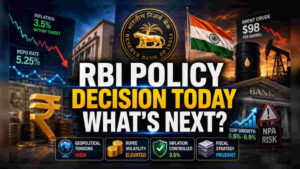
The RBI’s decisions affect nearly every segment of the economy.
Impact on Borrowers
When interest rates decline:
- Home loans become cheaper
- EMIs reduce
- Consumer borrowing increases
- Demand for housing may improve
On the other hand, higher interest rates increase borrowing costs and can slow credit demand.
Impact on Businesses
Corporate borrowers closely track RBI policy announcements.
Lower borrowing costs can:
- Encourage capital expenditure
- Support business expansion
- Improve profitability
- Boost investment activity
Businesses often adjust financial planning based on the interest rate environment.
Impact on Investors
Stock markets react significantly to RBI policy decisions.
Investors analyze:
- Rate changes
- Growth projections
- Inflation forecasts
- Liquidity measures
Certain sectors such as banking, real estate, automobiles, and financial services are particularly sensitive to policy announcements.
Inflation Remains a Key Priority
Inflation management continues to be one of the RBI’s biggest responsibilities.
Rising inflation can reduce consumer purchasing power and create economic challenges.
The central bank monitors multiple inflation drivers, including:
Food Prices
Food inflation often impacts household budgets directly.
Factors affecting food prices include:
- Weather conditions
- Agricultural output
- Supply chain efficiency
- Seasonal demand patterns
Energy Costs
Global crude oil prices remain an important inflation indicator for India.
Changes in energy prices can influence transportation, manufacturing, and consumer costs.
Global Economic Trends
International developments increasingly affect domestic inflation.
Geopolitical events, trade disruptions, and commodity price fluctuations can impact inflation expectations.
The RBI continuously adjusts its policy stance to address evolving inflation risks.
Banking Sector Impact
The banking sector is among the biggest beneficiaries of RBI policy decisions.
Banks adjust their lending and deposit rates based on changes in policy rates.
Loan Growth
A supportive monetary policy can stimulate:
- Retail lending
- Housing finance
- MSME credit
- Corporate borrowing
This contributes to economic growth and investment activity.
Deposit Rates
Policy decisions also influence returns available to savers.
Changes in interest rates affect:
- Fixed deposits
- Savings accounts
- Corporate deposits
Investors often reassess their savings strategies after major RBI announcements.
Impact on the Stock Market
The Indian stock market closely follows every RBI policy decision.
Banking Stocks
Banking shares often experience heightened volatility during policy announcements.
Investors evaluate:
- Net interest margins
- Credit growth prospects
- Asset quality trends
Real Estate Stocks
Lower interest rates generally support the real estate sector by improving housing affordability.
This can positively influence demand for residential properties.
Automobile Sector
Cheaper financing can increase vehicle purchases, benefiting automobile manufacturers.
Consumer-Focused Companies
Lower borrowing costs and improved consumer confidence often support consumption-driven businesses.
Global Factors Influencing RBI Decisions
The RBI does not operate in isolation.
Several global developments influence policy decisions:
US Federal Reserve Actions
Interest rate decisions by the Federal Reserve can impact capital flows and currency markets worldwide.
Global Inflation Trends
Inflation developments in major economies affect commodity prices and trade dynamics.
Currency Market Movements
Exchange rate fluctuations can influence import costs and inflation expectations.
Geopolitical Risks
Global conflicts and trade uncertainties remain important considerations for policymakers.
The RBI carefully monitors these developments while framing domestic monetary policy.
India’s Economic Growth Outlook
India remains one of the fastest-growing major economies globally.
Several factors continue to support growth:
Strong Domestic Demand
Consumer spending remains an important growth driver.
Infrastructure Investments
Government-led infrastructure projects continue to create economic momentum.
Manufacturing Expansion
Initiatives supporting domestic manufacturing have strengthened industrial activity.
Digital Economy Growth
India’s digital transformation continues to attract investment and boost productivity.
The RBI’s policy decisions aim to preserve these growth drivers while maintaining macroeconomic stability.
What Experts Are Saying
Economists generally believe the RBI faces a delicate balancing act.
The central bank must:
- Support growth
- Control inflation
- Maintain financial stability
- Manage liquidity efficiently
Many analysts believe policy flexibility remains crucial as global economic conditions continue to evolve.
Market participants will closely monitor future inflation readings and growth indicators for clues regarding upcoming policy decisions.
Challenges Ahead for RBI
Despite India’s strong economic fundamentals, several challenges remain:
- Volatile commodity prices
- Global economic slowdown risks
- Inflationary pressures
- Geopolitical uncertainty
- Financial market volatility
Addressing these challenges requires careful policy calibration and continuous monitoring of economic conditions.
Future Outlook
Looking ahead, the RBI is expected to maintain a data-driven approach to policymaking.
Future decisions will likely depend on:
- Inflation trends
- Economic growth performance
- Global interest rate developments
- Liquidity conditions
- Financial market stability
Investors, borrowers, and businesses will continue to watch policy announcements closely for signals regarding the future direction of interest rates and economic activity.
Conclusion
The latest RBI policy highlights the central bank’s commitment to balancing inflation control with sustainable economic growth. As India’s economy continues to expand amid global uncertainties, monetary policy remains a critical tool for maintaining financial stability and supporting development.
Whether it is borrowers seeking affordable loans, businesses planning investments, or investors assessing market opportunities, RBI policy decisions have far-reaching implications. The central bank’s measured approach reflects its effort to navigate a complex economic landscape while ensuring long-term stability.
As markets digest the latest policy announcement, attention will now shift to upcoming inflation data, growth indicators, and future Monetary Policy Committee meetings that will shape India’s economic trajectory in the months ahead.
SEO Keywords: RBI Policy 2026, RBI Monetary Policy, RBI Repo Rate, Reserve Bank of India Policy, RBI Interest Rate Decision, RBI MPC Meeting, Indian Economy News, RBI Inflation Outlook, Stock Market and RBI Policy, RBI Latest Updates.