

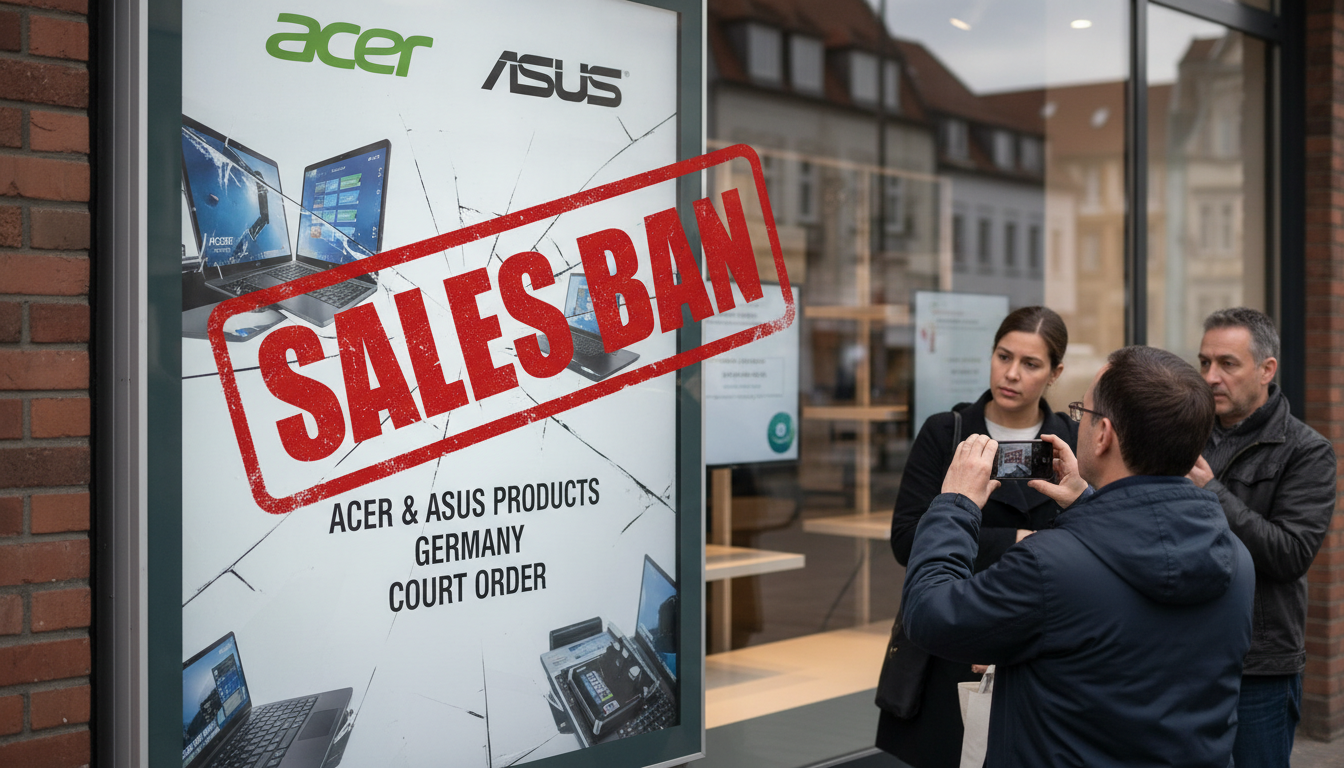
The European tech market was shaken recently after reports confirmed that Acer and Asus laptops and devices are facing a sales ban in Germany. This unexpected development has raised serious questions among consumers, retailers, and the global PC industry. Germany is one of the largest technology markets in Europe, and any restriction here can have ripple effects worldwide.
In this article, we break down why Acer and Asus are banned from selling in Germany, what legal issues triggered the move, how long the ban may last, and what it means for buyers, businesses, and competitors.
What Is the Acer–Asus Germany Sales Ban?
In early 2026, German authorities enforced a sales restriction on certain Acer and Asus products, preventing the companies from selling affected devices directly in the German market. The ban reportedly applies to specific laptop models and hardware categories, not the entire product lineup.
Both Acer and Asus are among the world’s leading PC manufacturers, making this move particularly significant.
Germany, being Europe’s tech and manufacturing hub, often sets regulatory trends that other EU nations may follow.
Why Did Germany Ban Acer and Asus Sales?

The ban is reportedly linked to patent infringement and intellectual property disputes. According to industry sources, a major technology patent holder filed a case in German courts, alleging that certain Acer and Asus devices violated essential hardware and wireless communication patents.
German courts are known for their strict enforcement of patent laws, especially in technology-related cases. Once infringement is proven, courts can immediately order:
-
Product sales suspension
-
Import restrictions
-
Retail bans
Unlike some countries, Germany does not require long delays to enforce such rulings.
Which Products Are Affected?
While full product lists have not been publicly disclosed, reports suggest the ban mainly affects:
-
Consumer laptops
-
Business notebooks
-
Devices using specific wireless or chipset technologies
Gaming laptops, Chromebooks, and older inventory may not be impacted, depending on hardware configuration.
Retailers in Germany have already started pulling affected models from online and offline stores to avoid legal penalties.
How Long Will the Ban Last?
At the moment, the Germany sales ban is temporary but open-ended. It will remain in force until:
-
Acer and Asus reach a licensing agreement with the patent holder, or
-
A higher court overturns the ruling, or
-
Devices are redesigned to avoid the disputed technology
In similar past cases, such bans have lasted anywhere from a few weeks to several months.
Official Response from Acer and Asus

Both companies have acknowledged the ruling and stated they are:
-
Reviewing legal options
-
Working with partners to minimize disruption
-
Exploring settlements or technical workarounds
However, neither company has confirmed an exact timeline for resuming full sales in Germany.
Industry analysts believe a settlement is the most likely outcome, as Germany is too important a market to abandon.
Impact on German Consumers
For German buyers, the ban has created confusion and uncertainty.
Key effects include:
-
Limited availability of popular Acer and Asus laptops
-
Potential price hikes on remaining stock
-
Delays in corporate and educational bulk orders
Consumers looking for budget laptops or gaming machines may need to consider alternative brands until the issue is resolved.
Impact on the European Tech Market
Germany’s decision could influence other European Union countries. If similar lawsuits are filed elsewhere, Acer and Asus may face broader EU-wide challenges.
Competitor brands could benefit, including:
-
Lenovo
-
HP
-
Dell
-
MSI
Germany often acts as a legal testing ground for patent enforcement in Europe, making this case closely watched by the global tech industry.
Could This Ban Spread to Other Countries?
So far, the restriction applies only to Germany. However, patent holders may use this ruling as precedent to pursue similar cases in:
-
France
-
Italy
-
Netherlands
-
Spain
If that happens, Acer and Asus could face significant revenue losses across Europe.
What Should Buyers Do Right Now?

If you’re planning to buy an Acer or Asus device in Germany, here’s what you should know:
-
Check if the model is still legally available
-
Avoid unofficial imports that may lack warranty
-
Watch for official announcements on resumed sales
For urgent needs, buyers may explore alternative brands until clarity emerges.
Past Examples of Tech Sales Bans in Germany
Germany has previously imposed sales bans on major tech companies over patent disputes. Similar cases in the past were eventually resolved through licensing deals, allowing products to return to shelves.
This suggests that the current Acer–Asus situation is serious but likely temporary.
SEO Keywords (Targeted)

-
Acer Germany sales ban
-
Asus laptop ban Germany
-
Acer Asus patent dispute
-
Germany laptop sales restriction
-
Acer Asus legal issue Europe
-
Tech patent ban Germany
Final Verdict
The Acer and Asus sales ban in Germany highlights how powerful patent laws can reshape the global tech market overnight. While the restriction is a setback for both companies, history suggests a resolution is likely through legal settlement or licensing.
For now, consumers and retailers in Germany must navigate limited availability, while the rest of Europe watches closely. The outcome of this case could set a major precedent for future tech patent battles in the EU.