

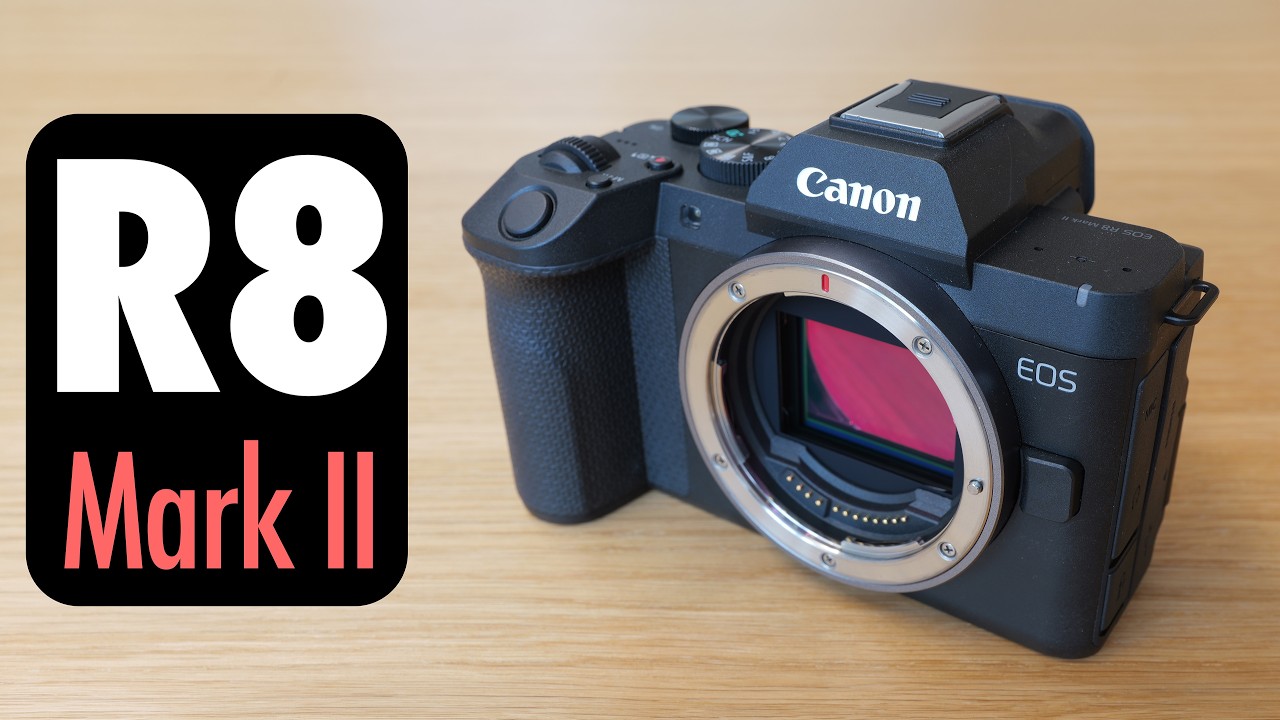
Canon EOS R8: Price, Specifications, Features, Camera Review and Latest News
The Canon EOS R8 continues to be an important model in Canon’s full-frame mirrorless camera lineup, particularly for photographers and content creators looking for high image quality without moving to a larger professional body. Introduced in 2023, the camera combines a 24.2-megapixel full-frame CMOS sensor with Canon’s DIGIC X processor and advanced autofocus technology.
Unlike some of Canon’s larger professional cameras, the EOS R8 focuses on keeping the body compact and lightweight while offering features designed for both photography and video. It can shoot at up to 40 frames per second using its electronic shutter and record uncropped 4K video at up to 60fps from a 6K readout.
The camera is therefore positioned as an entry-level full-frame option for enthusiasts, travel photographers, vloggers and hybrid shooters who want a modern Canon RF-mount camera without stepping up to the more expensive EOS R6-series bodies.
Canon EOS R8 Latest News
The Canon EOS R8 is not a new 2026 launch, but it remains relevant in the full-frame mirrorless segment because of its combination of size, image quality and video capabilities.
Canon introduced the EOS R8 alongside the EOS R50 in February 2023. The company positioned it as a compact full-frame camera aimed at advanced amateur photographers and video enthusiasts. Its 24.2MP sensor and DIGIC X processor are closely related to the technology used in the higher-end EOS R6 Mark II.
The camera’s compact design is one of its biggest attractions. It weighs approximately 461 grams with battery and card, making it considerably easier to carry than many full-frame alternatives.
Canon EOS R8 Price
At launch, the Canon EOS R8 had a recommended US price of $1,499 for the body only, while the camera bundled with the RF 24-50mm F4.5-6.3 IS STM lens was priced at $1,699.
The actual price in India can vary depending on the retailer, kit configuration, discounts and ongoing promotions. Buyers should therefore check the latest authorised Canon India pricing before purchasing.
Past Indian retail promotions have shown the EOS R8 body available at substantially discounted prices. For example, Gadgets 360 reported a promotional price of ₹99,990 during an Amazon sale in 2024, compared with a listed price of ₹1,42,995 at that time.
Because such sale prices are temporary, they should not be treated as the camera’s permanent official price.
Canon EOS R8 Specifications
The EOS R8 uses a 24.2MP full-frame CMOS sensor measuring approximately 36 × 24mm. It is paired with Canon’s DIGIC X image processor.
Key specifications
| Feature | Canon EOS R8 |
|---|---|
| Camera type | Full-frame mirrorless |
| Sensor | 24.2MP CMOS |
| Processor | DIGIC X |
| Lens mount | Canon RF |
| Electronic shutter burst | Up to 40fps |
| Mechanical/first-curtain shooting | Up to 6fps |
| Video | 4K up to 60fps |
| Video oversampling | 6K-derived 4K |
| Screen | 3-inch vari-angle touchscreen |
| Screen resolution | 1.62 million dots |
| EVF | 2.36 million dots |
| Weight | Approx. 461g |
| Stabilisation | Lens-based; no IBIS |
| Memory card | Single UHS-II SD slot |
| Battery | LP-E17 |
24.2MP Full-Frame Sensor
The 24.2MP full-frame sensor is at the heart of the Canon EOS R8.
A full-frame sensor provides photographers with the benefits of a larger imaging area, including strong low-light performance, shallow depth-of-field possibilities and a wide field of view when using compatible full-frame lenses.
The sensor also allows the camera to produce images at a maximum resolution of 6000 × 4000 pixels.
For travel, portrait, wedding, street and general enthusiast photography, the 24.2MP resolution provides plenty of detail without creating excessively large files.
Fast 40fps Continuous Shooting
One of the most impressive features of the EOS R8 is its high-speed electronic shutter.
The camera can reach 40fps continuous shooting using its electronic shutter. It also supports a 30fps RAW Burst mode with a pre-shooting function that can capture images before the shutter button is fully pressed.
This makes the camera useful for subjects involving movement, including pets, children, wildlife and selected sports situations.
However, users should understand that electronic shutter shooting can have limitations with very fast-moving subjects because of rolling-shutter effects.
Canon EOS R8 Autofocus
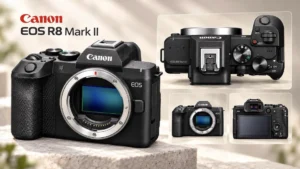
Autofocus is another major strength of the camera.
The EOS R8 uses Canon’s Dual Pixel CMOS AF technology and incorporates subject-recognition capabilities. It can detect and track people, animals and vehicles, with additional recognition modes for subjects such as birds and trains.
This autofocus system makes the EOS R8 particularly attractive to users who are moving from an older DSLR or entry-level mirrorless camera.
Face and subject tracking can also make video recording easier because the camera can continuously follow a recognised subject.
Canon EOS R8 Video Features
Video is one area where the EOS R8 performs particularly strongly for its class.
The camera can record uncropped 4K video at up to 60fps, with the 4K footage derived from a 6K readout. It also supports 10-bit C-Log 3 and HDR PQ recording, giving video creators more flexibility during post-production.
The camera supports Full HD recording at higher frame rates, including slow-motion modes.
For creators producing YouTube videos, travel films, interviews, short-form content and social-media videos, the combination of 4K resolution and Canon’s colour profiles gives the EOS R8 considerable flexibility.
The fully articulated screen is also useful for self-recording and shooting from unusual angles.
No In-Body Image Stabilisation
One important limitation of the EOS R8 is the absence of in-body image stabilisation (IBIS).
Instead, stabilisation depends on compatible lenses that include optical image stabilisation.
This is an important consideration for photographers who frequently shoot handheld in low light or video creators who want smoother footage without using a gimbal.
However, the lack of IBIS also contributes to the camera’s relatively low weight and compact body.
Compact and Lightweight Design
The Canon EOS R8 weighs around 461 grams, making it one of the more portable full-frame cameras in Canon’s lineup.
The body is based on a compact design philosophy similar to the EOS RP, but with significantly newer imaging and autofocus technology.
The lightweight construction can be particularly useful for travellers who want full-frame image quality without carrying a large professional camera body.
The camera also includes a fully articulated 3-inch touchscreen with approximately 1.62 million dots.
Battery Life Could Be Better
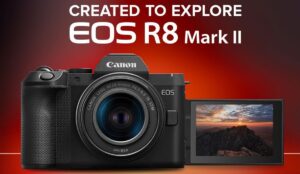
The compact design comes with a trade-off.
The EOS R8 uses the relatively small LP-E17 battery, and battery endurance is one of the main criticisms of the camera. DPReview highlighted the relatively short battery life compared with several competing cameras.
For longer photo sessions or video shoots, carrying an additional battery or using USB-C power can therefore be useful.
The camera supports USB-C charging and power delivery, which can make it easier to keep the camera running during extended shooting sessions.
Single SD Card Slot
Another compromise is storage.
The EOS R8 has one UHS-II SD card slot.
For casual photographers this may not be a major issue, but professional wedding or event photographers often prefer dual-card cameras so that images can be recorded simultaneously to two cards for redundancy.
This is one area where the more expensive EOS R6 Mark II has an advantage.
Canon RF Lens Compatibility
The EOS R8 uses Canon’s RF mount, allowing it to work with Canon’s RF full-frame lenses.
The compact RF 24-50mm F4.5-6.3 IS STM was introduced alongside the camera and was designed as a lightweight everyday zoom option. Canon positioned the lens as a compact travel-friendly companion for the EOS R8.
Photographers can also choose from Canon’s broader RF lens lineup, including wide-angle, telephoto, macro and professional L-series lenses.
However, lens costs can significantly increase the overall investment in a full-frame system.
Canon EOS R8 for Photography
For still photography, the EOS R8 offers a strong combination of resolution, autofocus and high-speed shooting.
The 24.2MP sensor is suitable for portraits, landscapes, travel, street photography and everyday shooting. Its high ISO capability and full-frame sensor also make it useful in low-light environments.
The 40fps electronic shutter is particularly impressive for a camera in this price category, although photographers shooting extremely fast action should understand the limitations of electronic shutter technology.
Canon EOS R8 for Vlogging
The EOS R8 can also work well as a vlogging camera.
Its fully articulated screen allows creators to see themselves while recording, while the microphone and headphone connections provide better control over audio. The camera also supports USB streaming.
The compact body makes it easier to carry while travelling.
However, the relatively short battery life and lack of IBIS are worth considering for creators who frequently shoot handheld video for long periods.
Canon EOS R8: Pros and Cons
Major Highlights
- 24.2MP full-frame sensor
- DIGIC X processor
- Up to 40fps electronic shutter shooting
- Advanced subject-detection autofocus
- Uncropped 4K/60p video
- 10-bit C-Log 3 and HDR PQ
- Fully articulated touchscreen
- Compact 461g body
- Canon RF lens compatibility
- USB-C charging and power support
Main Limitations
- No in-body image stabilisation
- Relatively small LP-E17 battery
- Single SD card slot
- No autofocus joystick
- Some advanced controls are simplified
- Full-frame RF lenses can become expensive
DPReview’s testing also highlighted the camera’s strong image quality and video specifications while identifying battery life and the lack of IBIS among its main compromises.
Is Canon EOS R8 Still Worth Considering?
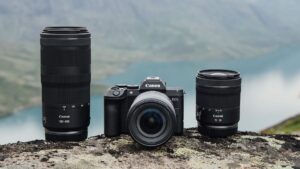
The Canon EOS R8 remains an interesting option for photographers who want to enter the full-frame mirrorless segment without buying a large professional camera.
Its strongest combination is the 24.2MP full-frame sensor, advanced autofocus, lightweight body and impressive 4K video capabilities.
For travel photographers and hybrid creators, the low weight can be a significant advantage.
On the other hand, professionals who need dual memory cards, long battery life or in-body stabilisation may want to consider higher-end alternatives.
The choice ultimately depends on shooting requirements, lens investment and budget.
Final Word
The Canon EOS R8 remains a compact full-frame mirrorless camera with a specification sheet that is particularly strong for hybrid photography and video.
Its 24.2MP sensor, DIGIC X processor, 40fps electronic shooting, advanced autofocus and uncropped 4K/60p video give it capabilities that extend well beyond what its relatively small body suggests.
At the same time, buyers need to account for the camera’s compromises, especially the absence of IBIS, single SD card slot and relatively limited battery capacity.
For enthusiasts, travel photographers, vloggers and creators who value portability, the EOS R8 remains a notable Canon RF-mount option. The final purchase decision should also take current India pricing, available lens offers and competing full-frame cameras into account.