


Dollar Index Today: What Is the U.S. Dollar Index (DXY) and Why It Matters for the Global Economy
The Dollar Index is one of the most closely watched indicators in global financial markets. It measures the strength of the U.S. dollar compared to a basket of major international currencies. Traders, investors, economists, and governments monitor this index to understand trends in global trade, inflation, and economic stability.
The U.S. Dollar Index (DXY) reflects how strong or weak the dollar is relative to other major currencies such as the euro, Japanese yen, British pound, Canadian dollar, Swedish krona, and Swiss franc. When the index rises, it indicates that the U.S. dollar is strengthening against these currencies. When it falls, the dollar is weakening.
The index plays a crucial role in financial markets, influencing commodities, stock markets, international trade, and investment decisions around the world.
What Is the Dollar Index?

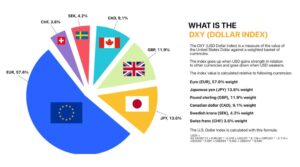
The U.S. Dollar Index (DXY) was introduced in 1973 after the collapse of the Bretton Woods monetary system. It measures the value of the U.S. dollar against a weighted basket of major global currencies.
The index uses the following currencies in its calculation:
| Currency | Weight |
|---|---|
| Euro | ~57.6% |
| Japanese Yen | ~13.6% |
| British Pound | ~11.9% |
| Canadian Dollar | ~9.1% |
| Swedish Krona | ~4.2% |
| Swiss Franc | ~3.6% |
Because the euro has the largest weight, movements in the euro often strongly influence the Dollar Index.
Financial markets often refer to the index by its trading symbol DXY.
Why the Dollar Index Is Important

The Dollar Index acts as a global benchmark for currency strength. Since the U.S. dollar is the most widely used currency in international trade and finance, its value affects economies worldwide.
Several important sectors depend on the movement of the Dollar Index:
Global Trade
Many commodities such as oil, gold, and agricultural products are priced in U.S. dollars. When the dollar strengthens, these commodities often become more expensive for countries using other currencies.
Inflation and Interest Rates
Central banks, including the Federal Reserve, monitor the Dollar Index to understand inflation trends and international capital flows.
Financial Markets
A strong dollar can influence:
-
Stock markets
-
Bond markets
-
Cryptocurrency prices
-
Commodity markets
Because of this, investors frequently track DXY when making financial decisions.
Factors That Influence the Dollar Index
Several economic and political factors can cause the Dollar Index to rise or fall.
Interest Rate Policies
Interest rate decisions made by the Federal Reserve significantly impact the strength of the U.S. dollar. When the Fed raises interest rates, the dollar usually becomes stronger because higher returns attract foreign investors.
Economic Data
Strong economic indicators in the United States, such as GDP growth, employment data, and manufacturing activity, often lead to a stronger dollar.
Important reports include:
-
Non-farm payroll data
-
Inflation reports
-
Consumer confidence
-
Retail sales figures
Global Economic Conditions
When economic uncertainty increases globally, investors often move their money into the U.S. dollar because it is considered a safe-haven currency.
Political Stability
Political stability in the United States and other major economies also affects currency markets and the Dollar Index.
Dollar Index and Gold Prices

One of the most well-known relationships in financial markets is the inverse correlation between the Dollar Index and gold prices.
When the dollar strengthens:
-
Gold prices often fall.
When the dollar weakens:
-
Gold prices usually rise.
This relationship exists because gold is priced in U.S. dollars globally.
Traders frequently monitor both the U.S. Dollar Index (DXY) and the Gold market to understand broader financial trends.
Impact of the Dollar Index on Global Markets
Because the U.S. dollar is the world’s dominant reserve currency, changes in the Dollar Index can have wide-ranging effects.
Emerging Markets
Many developing countries borrow money in U.S. dollars. When the dollar strengthens, their debt becomes more expensive to repay.
Oil Prices
Global oil markets are influenced by dollar movements. Oil, traded worldwide in U.S. dollars, often becomes more expensive for other countries when the dollar rises.
Stock Markets
A stronger dollar can impact multinational corporations listed on the S&P 500 because their overseas revenues may decline when converted back to dollars.
Recent Trends in the Dollar Index

In recent years, the Dollar Index has experienced significant volatility due to:
-
Global inflation concerns
-
Central bank interest rate policies
-
Geopolitical tensions
-
Economic slowdown fears
The monetary policy decisions of the Federal Reserve remain one of the biggest drivers of the index.
When the Fed signals tighter monetary policy or interest rate hikes, the dollar usually strengthens.
How Investors Use the Dollar Index
Investors use the Dollar Index for several purposes.
Currency Trading
Forex traders buy or sell currencies based on expected movements in the Dollar Index.
Portfolio Diversification
Investors often track the index when deciding to invest in commodities, international stocks, or bonds.
Economic Forecasting
Economists analyze the index to predict global economic trends and financial stability.
Dollar Index vs Other Currency Benchmarks
Although the U.S. Dollar Index (DXY) is widely used, some analysts also follow alternative currency indexes.
These include:
-
Trade-weighted dollar index
-
Broad dollar index used by central banks
-
Emerging-market currency indexes
However, the DXY remains the most widely referenced benchmark for the strength of the U.S. dollar.
Future Outlook for the Dollar Index


The future direction of the Dollar Index will depend on several key factors.
Federal Reserve Policy
Interest rate decisions from the Federal Reserve will likely remain the biggest influence.
Global Economic Growth
If global economies grow faster than the United States, the dollar may weaken. If the U.S. economy performs better, the dollar could strengthen.
Geopolitical Events
International conflicts, trade tensions, and political developments can create sudden movements in currency markets.
Why the Dollar Index Matters for Everyone
Even people who do not trade in financial markets are indirectly affected by the Dollar Index.
Changes in the strength of the dollar can influence:
-
Fuel prices
-
Imported goods
-
International travel costs
-
Inflation levels
Because of its influence on the global economy, the U.S. Dollar Index (DXY) remains one of the most important indicators in international finance.
Conclusion

The Dollar Index serves as a critical measure of the strength of the U.S. dollar in global financial markets. By tracking the performance of the dollar against major world currencies, the index provides valuable insight into international economic trends.
Movements in the U.S. Dollar Index (DXY) affect commodities, stock markets, inflation, and international trade. For investors, businesses, and policymakers, understanding the Dollar Index is essential for navigating the modern global economy.
As global economic conditions continue to evolve, the index will remain a key barometer for currency strength and financial stability worldwide.