

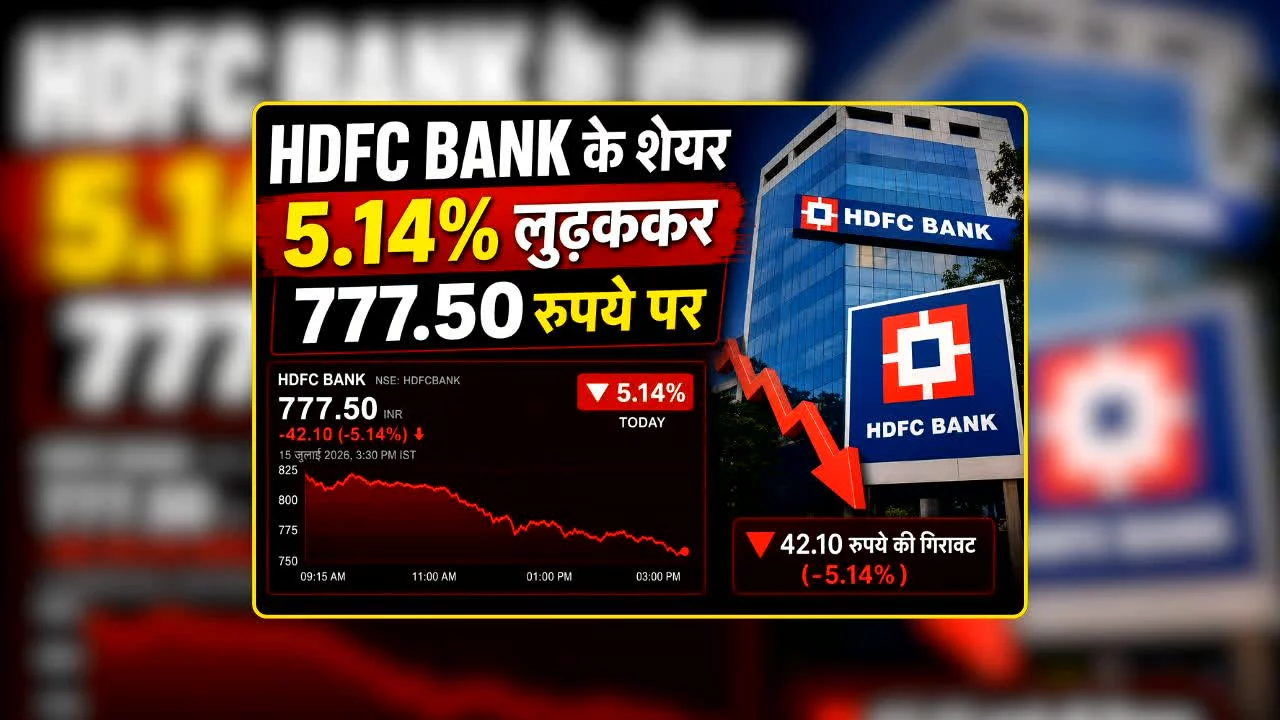
HDFC Share Price Today: Investors Closely Watch India’s Largest Private Sector Bank
HDFC Bank share price continues to remain one of the most searched topics among Indian stock market investors. As India’s largest private sector lender by market capitalization, HDFC Bank plays a crucial role in the banking and financial services sector. Every quarterly result, RBI policy announcement, lending update, or macroeconomic development tends to influence investor sentiment toward the stock.
Following recent market activity, investors are closely monitoring HDFC Bank for signs of sustained earnings growth, improving loan demand, and stronger profitability. Analysts also continue to view the bank as one of the key long-term players in India’s banking sector due to its strong fundamentals and extensive customer base.
Why HDFC Share Price Is in Focus
Several factors are currently driving investor attention toward HDFC Bank shares.
Key reasons include:
- Quarterly financial results
- Loan growth
- Deposit expansion
- Net Interest Margin (NIM)
- RBI monetary policy
- Foreign Institutional Investor (FII) activity
- Domestic Institutional Investor (DII) buying
- Overall market sentiment
- Banking sector performance
These factors collectively influence short-term price movements while also shaping long-term investor confidence.
Strong Business Fundamentals
HDFC Bank has built its reputation over decades through consistent execution and prudent risk management.
Its major strengths include:
- Large retail banking franchise
- Extensive branch network
- Strong digital banking ecosystem
- Healthy capital position
- Diversified loan portfolio
- Stable asset quality
- Consistent profitability
These strengths have made HDFC Bank one of the most trusted banking stocks in India.
Loan Growth Continues
One of the biggest indicators for any banking stock is loan growth.
HDFC Bank continues to expand lending across multiple categories, including:
- Home loans
- Personal loans
- Auto loans
- Business loans
- SME financing
- Corporate lending
- Rural banking
Higher credit demand supports revenue growth and strengthens the bank’s long-term earnings potential.
Deposit Growth Remains Important
Deposits are the backbone of every commercial bank.
HDFC Bank continues focusing on:
- CASA deposits
- Fixed deposits
- Savings accounts
- Retail deposits
- Digital account openings
A healthy deposit base helps reduce funding costs while supporting future lending growth.
Digital Banking Expansion

Technology remains one of HDFC Bank’s biggest competitive advantages.
The bank continues investing in:
- Mobile banking
- Internet banking
- AI-powered customer service
- Digital payments
- UPI integration
- Credit card ecosystem
- Merchant payment solutions
These initiatives help improve customer experience while lowering operational costs.
Asset Quality
Another key reason investors monitor HDFC Bank is its relatively strong asset quality.
Important indicators include:
- Gross NPA
- Net NPA
- Provision coverage
- Credit cost
- Recovery performance
Stable asset quality generally supports long-term profitability and investor confidence.
Earnings Growth Outlook
Analysts expect HDFC Bank’s future performance to depend on:
- Credit demand
- Interest rate environment
- Deposit mobilisation
- Margin stability
- Fee income
- Operating efficiency
If these metrics remain healthy, the bank could continue delivering consistent earnings growth over the coming years.
Factors That Can Influence HDFC Share Price
Several domestic and global developments can impact the stock.
Positive Factors
- Strong quarterly earnings
- Higher loan growth
- Better deposit growth
- Stable interest margins
- RBI policy support
- Economic expansion
- Digital banking growth
Negative Factors
- Global market volatility
- Slower credit demand
- Rising NPAs
- Regulatory changes
- Interest rate fluctuations
- Weak investor sentiment
Investors should monitor these factors before making investment decisions.
Technical Outlook
Market participants also track technical indicators while trading HDFC Bank shares.
Commonly monitored indicators include:
- Moving averages
- Relative Strength Index (RSI)
- MACD
- Volume trends
- Support levels
- Resistance levels
Short-term traders often combine technical analysis with market news to identify trading opportunities.
Why Analysts Remain Positive
Many brokerage firms continue to maintain constructive views on HDFC Bank due to:
- Strong management
- Consistent execution
- Large customer base
- Market leadership
- Robust profitability
- Healthy return ratios
- Long-term growth opportunities
However, target prices and recommendations vary among analysts based on their earnings estimates and valuation assumptions.
Competition
HDFC Bank competes with several major financial institutions, including:
- ICICI Bank
- State Bank of India (SBI)
- Axis Bank
- Kotak Mahindra Bank
- IndusInd Bank
Despite intense competition, HDFC Bank remains one of the leaders in India’s private banking sector.
Investment Risks
Like every equity investment, HDFC Bank shares are subject to risks.
These include:
- Market volatility
- Economic slowdown
- Credit risk
- Regulatory changes
- Interest rate cycles
- Competitive pressure
Long-term investors should assess these risks alongside the bank’s strengths.
Long-Term Outlook
India’s banking sector is expected to benefit from:
- Rising financial inclusion
- Higher digital adoption
- Increasing retail credit demand
- Infrastructure spending
- Growing middle class
- Expanding economy
As one of India’s largest private banks, HDFC Bank is well-positioned to benefit from these structural growth trends.
Final Verdict
HDFC share price remains a key focus for investors because of the bank’s strong fundamentals, consistent financial performance, and leadership in India’s private banking sector. While short-term stock movements may be influenced by market sentiment, quarterly earnings, and macroeconomic developments, the bank’s long-term growth story continues to attract both retail and institutional investors.
Before investing, individuals should evaluate their financial goals, risk tolerance, and investment horizon. Stock prices can fluctuate based on market conditions, and past performance does not guarantee future returns.