

Hyundai Bayon 2026: Expected Price, Launch Date, Design, Features, Engine and More
The Hyundai Bayon is a compact crossover that has attracted attention in international markets for its SUV-inspired styling, practical dimensions and modern technology. With growing demand for compact SUVs in India, speculation around whether Hyundai could bring a Bayon-based model to the country continues to generate interest among buyers looking for something smaller and more urban-friendly than conventional SUVs.
The Bayon sits in Hyundai’s European product portfolio as a compact crossover, positioned below larger SUVs such as the Kona. Its combination of a raised driving position, sharp exterior design, compact footprint and efficient powertrains makes it particularly relevant to city-focused customers.
However, one important point needs to be highlighted: there is no confirmed India launch announcement for the Hyundai Bayon at present. Therefore, any India-specific price, launch timeline or specifications should be treated as expected rather than officially confirmed.
Hyundai Bayon: What Makes It Special?
The Hyundai Bayon was developed primarily for the European market and takes its name from Bayonne, a city in southwestern France.
Unlike traditional hatchbacks, the Bayon offers a crossover-style body with a higher stance and SUV-inspired design elements. Its relatively compact dimensions make it suitable for narrow urban roads and crowded parking spaces.
The vehicle combines Hyundai’s modern design language with practical everyday usability. This positioning could make a Bayon-type product interesting for markets where buyers increasingly want SUV styling without moving to a large vehicle.
Hyundai Bayon Design
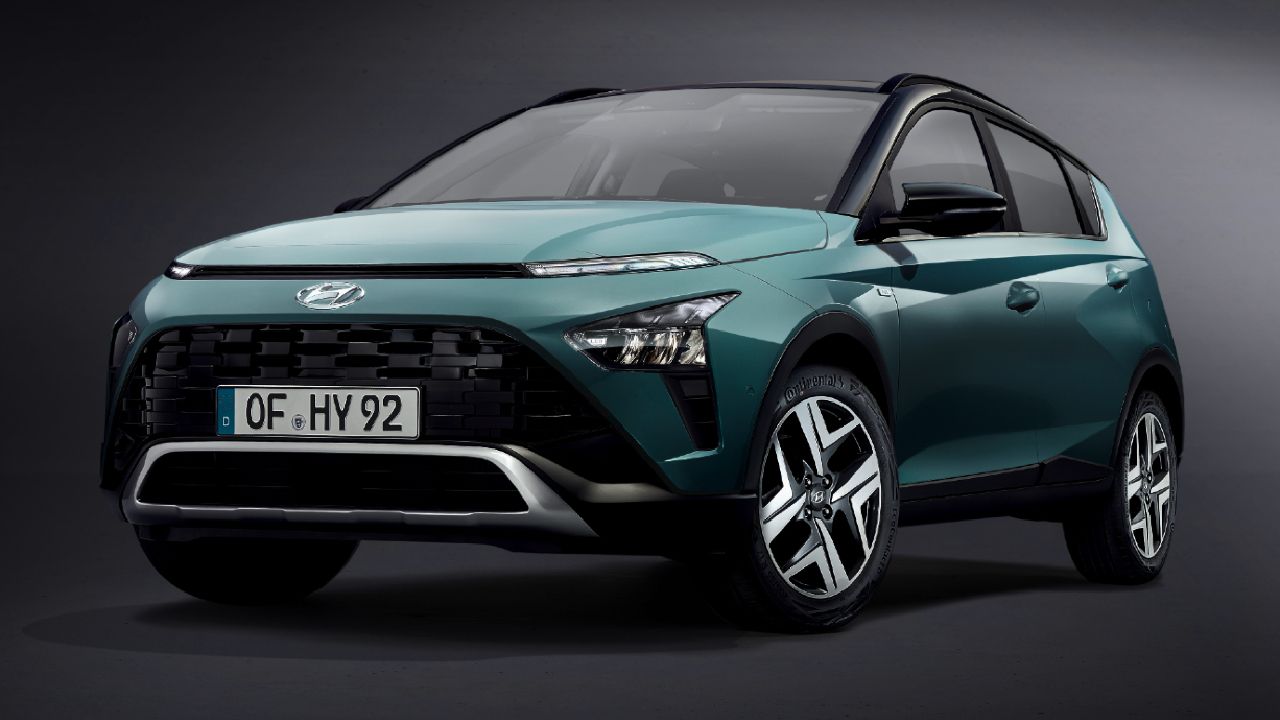
The exterior design is one of the strongest attractions of the Bayon.
At the front, the crossover features a distinctive grille, slim lighting elements and a modern bumper design. The split-lighting treatment gives the vehicle a futuristic appearance, while the sculpted bonnet adds visual width.
The side profile features prominent character lines, alloy wheels and black body cladding around the lower sections. These elements give the crossover a stronger SUV-inspired appearance.
At the rear, vertically positioned tail lamps connected visually by the rear design create a distinctive appearance. The tailgate and bumper have been designed to balance styling with practicality.
Overall, the Bayon looks more adventurous than a conventional hatchback while retaining a relatively compact footprint.
Hyundai Bayon Interior
Inside, the Hyundai Bayon focuses on practicality and technology.
Depending on the market and variant, the cabin can feature a digital instrument display, touchscreen infotainment system, smartphone connectivity and various convenience features.
The dashboard layout is designed around easy access to commonly used functions. Hyundai has also focused on providing a modern cabin without making the interior unnecessarily complicated.
The crossover’s compact dimensions do not mean the cabin has to feel cramped. Its body design allows Hyundai to make efficient use of available interior space, making it suitable for daily commuting and small-family use.
The boot area is another important consideration for buyers. A practical luggage compartment makes the Bayon more useful for weekend trips, shopping and everyday errands.
Hyundai Bayon Features
The feature list varies according to the market and trim level, but the Bayon has been offered with a range of modern equipment.
Potential highlights include:
- Digital instrument cluster
- Touchscreen infotainment system
- Apple CarPlay and Android Auto
- Smartphone connectivity
- Navigation on selected versions
- Automatic climate control
- Wireless charging
- Alloy wheels
- LED lighting
- Rear parking camera
- Driver-assistance technologies
- Multiple airbags
- Electronic stability-related safety systems
If Hyundai eventually introduces a Bayon-inspired vehicle in India, the exact equipment could differ substantially from the European specification.
Hyundai Bayon Engine and Performance
International versions of the Bayon have been offered with petrol engines, including turbocharged options depending on the market and model year.
The availability of different engine choices gives Hyundai flexibility to target customers seeking both efficiency and stronger performance.
Turbocharged petrol technology can offer a useful balance between city drivability and highway performance. Mild-hybrid technology has also been associated with some Bayon configurations, helping improve efficiency.
For India, however, engine specifications cannot be considered confirmed unless Hyundai announces a local version.
The company could potentially choose an engine and transmission combination based on Indian customer requirements, emission regulations and pricing considerations.
Hyundai Bayon Transmission Options

International specifications have included manual and automatic transmission choices depending on the engine and market.
For Indian buyers, an automatic transmission would be particularly relevant because demand for automatic cars has increased in major cities.
A compact crossover equipped with an efficient automatic gearbox could appeal to customers moving up from hatchbacks but who do not want the size of a larger SUV.
Hyundai Bayon Safety
Safety is increasingly becoming a major factor in the compact-car segment.
The Bayon has been developed with a range of active and passive safety technologies. Depending on the variant, features can include multiple airbags, electronic stability systems, parking assistance and driver-support technologies.
Advanced driver-assistance features may also be available in certain international versions.
If a future India-market model is introduced, its safety equipment and crash-test rating would depend on the final Indian specification.
Hyundai Bayon Expected Price in India
The biggest question for Indian buyers is the possible price.
At present, Hyundai has not officially announced an India-market Bayon price. Therefore, online estimates should not be treated as confirmed figures.
If Hyundai were to introduce a compact crossover positioned below the Creta, pricing would be a crucial factor. The company would need to balance the vehicle’s technology and premium positioning against strong competition from established compact SUVs.
A competitive price could make a Bayon-type crossover attractive to younger urban buyers.
Hyundai Bayon Expected Launch Date in India
There is currently no officially confirmed Hyundai Bayon launch date for India.
Hyundai already has a strong SUV portfolio in the country, ranging from compact models to larger vehicles. Bringing a European crossover would require the company to evaluate market demand, production costs and positioning within its existing lineup.
Therefore, claims suggesting a fixed Indian launch date should be treated cautiously until Hyundai makes an official announcement.
Hyundai Bayon Rivals

If introduced in India, the Bayon could potentially compete in the broader compact crossover/SUV space.
Depending on positioning and pricing, potential rivals could include:
| Model | Segment relevance |
|---|---|
| Hyundai Bayon | Compact crossover |
| Maruti Suzuki Fronx | Premium compact crossover |
| Toyota Urban Cruiser Taisor | Compact crossover |
| Tata Nexon | Compact SUV |
| Kia Sonet | Compact SUV |
| Hyundai Venue | Compact SUV |
| Mahindra XUV 3XO | Compact SUV |
The Bayon’s biggest challenge would be differentiating itself from Hyundai’s own Venue and other established products.
Why Hyundai Bayon Could Make Sense for India
India’s SUV market has expanded rapidly, but buyers are not necessarily looking only for large vehicles. Compact crossovers are becoming increasingly popular because they combine SUV styling with manageable dimensions.
The Bayon could potentially offer Hyundai another product between the hatchback and conventional SUV categories.
Its design could appeal to younger customers, while its compact footprint would make it suitable for metropolitan driving.
Another potential advantage would be Hyundai’s existing reputation for technology and feature-rich vehicles.
What Indian Buyers Should Expect
If Hyundai eventually confirms the Bayon for India, buyers should look closely at four major factors: pricing, powertrain, safety equipment and positioning.
The vehicle would need to offer enough differentiation from the Venue to justify its existence in Hyundai’s Indian portfolio.
An India-specific version could also receive design, feature and mechanical changes compared with the European model.
This means international Bayon specifications should not automatically be assumed to represent the final Indian vehicle.
Frequently Asked Questions
Is Hyundai Bayon coming to India?
Hyundai has not officially confirmed an India launch of the Bayon. Any reports about a launch should therefore be treated as speculation until the company provides official information.
What is the Hyundai Bayon?
The Hyundai Bayon is a compact crossover developed primarily for international markets, particularly Europe. It combines hatchback-sized dimensions with SUV-inspired styling.
What engine does the Hyundai Bayon use?
International versions have been offered with petrol and turbocharged petrol powertrains, with specifications varying according to market and variant.
What could be the Hyundai Bayon price in India?
There is no official India price. Any estimated figure currently circulating should be considered unofficial.
Is the Hyundai Bayon bigger than the Venue?
The two models occupy closely related compact categories, but their dimensions, positioning and specifications vary by market. An Indian Bayon specification could differ from the European model.
Will Hyundai Bayon be available with an automatic gearbox?
International Bayon versions have been offered with automatic transmission options depending on the engine and market. The transmission for any potential India version has not been confirmed.
Final Verdict
The Hyundai Bayon represents an interesting approach to the compact crossover segment, combining SUV-inspired styling, urban-friendly dimensions and modern technology.
For India, the vehicle could potentially fill an interesting space between hatchbacks and larger SUVs. However, Hyundai has not officially confirmed an India launch, price or local specifications.
For now, buyers should view the Bayon as an international Hyundai crossover rather than a confirmed upcoming India launch. If Hyundai eventually decides to bring the model or develop an India-focused derivative, pricing, engine choice and differentiation from the Venue will determine whether it can make a strong impact in the country’s highly competitive compact SUV market.