


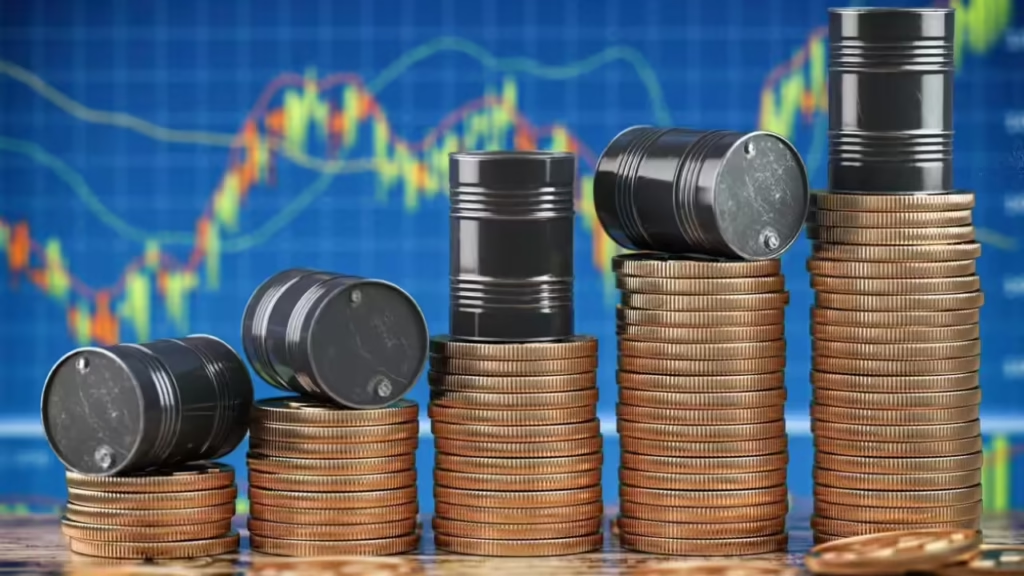
Iran War: Why Gold Prices Are Not Soaring Despite Rising Global Tensions (2026 Analysis)
The ongoing geopolitical tensions involving Iran have traditionally been expected to trigger a sharp rally in gold prices. Historically, during wars and global crises, investors rush toward gold as a safe-haven asset, pushing prices higher.
However, in 2026, the situation is different. Despite the Iran conflict escalating and oil prices surging, gold prices have not skyrocketed as expected. Instead, they have shown limited gains and even occasional declines, surprising many investors and analysts.
This article explains in detail why gold prices are not soaring during the Iran war, the economic forces at play, and what it means for investors.
Gold and War: The Traditional Relationship

Gold has long been considered a safe haven during geopolitical uncertainty. During events like wars or financial crises, investors usually move their money from risky assets (like stocks) into gold.
This happens because:
-
Gold retains value during economic instability
-
It is not tied to any specific country or currency
-
It acts as a hedge against inflation and uncertainty
In previous conflicts such as the Gulf War or global financial crises, gold prices surged significantly.
What’s Happening in 2026?

In the current Iran conflict, gold initially rose but has failed to maintain a strong upward trend.
Recent reports show that gold prices even dipped below key psychological levels, despite ongoing tensions.
This unusual behavior has raised an important question:
Why is gold not behaving like a classic safe-haven asset?
Key Reasons Why Gold Prices Are Not Soaring
1. Strong U.S. Dollar Is Limiting Gold Gains
One of the biggest reasons is the strength of the U.S. Dollar Index (DXY).
-
The dollar has strengthened significantly during the conflict
-
Investors are moving money into U.S. assets instead of gold
-
A stronger dollar makes gold more expensive globally
Since gold is priced in dollars, a rising dollar reduces demand for gold, keeping prices in check.
2. Rising Interest Rates Reduce Gold’s Appeal
Gold does not generate interest or yield. So when interest rates rise, investors prefer assets that offer returns.
Central banks like the Federal Reserve are expected to keep interest rates higher for longer due to inflation concerns.
-
Higher rates → better returns from bonds
-
Lower demand for gold
This has been a major factor behind the muted gold rally.
3. Oil Price Shock Is Driving Inflation

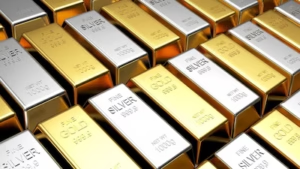
The Iran war has caused a surge in oil prices, with Brent crude rising sharply above $100 levels in some cases.
While higher oil prices usually support gold (due to inflation), the effect is mixed:
-
Rising oil → higher inflation
-
Higher inflation → central banks delay rate cuts
-
Delayed rate cuts → pressure on gold
This creates a conflicting market environment for gold prices.
4. Investors Are Choosing Multiple Safe Havens
In modern financial markets, gold is no longer the only safe-haven option.
Investors are now diversifying into:
-
U.S. Treasury bonds
-
U.S. dollar
-
Cryptocurrencies (like Bitcoin)
-
Cash reserves
In fact, some reports show that alternative assets have gained traction during the conflict.
This reduces the exclusive demand for gold.
5. Profit Booking After Previous Rally
Gold had already rallied strongly before the Iran conflict began.
-
Prices were near record highs
-
Investors started booking profits
-
This led to corrections instead of further gains
Market experts say that after a strong rally, profit-taking is natural, even during geopolitical crises.
6. Market Believes Conflict May Be Contained

Another important reason is investor perception.
Markets are currently assuming that:
-
The conflict may remain limited to specific regions
-
Global trade may not be heavily disrupted
Since the Middle East accounts for a relatively small share of global trade, the overall economic impact is considered manageable.
This reduces panic-driven buying of gold.
7. Liquidity Needs During Market Volatility
During market stress, investors sometimes sell gold to raise cash.
-
Gold is highly liquid
-
Easy to sell quickly
-
Used to cover losses in stocks or other assets
This can temporarily push gold prices down, even during crises.
Gold vs Oil: A Different Story
While gold has shown limited growth, oil prices have surged sharply due to supply concerns.
This highlights a key difference:
-
Oil reacts directly to war (supply disruptions)
-
Gold reacts indirectly (investor sentiment)
In the Iran conflict:
-
Oil = immediate supply shock
-
Gold = mixed signals
What Experts Are Saying


Financial analysts suggest that gold prices are currently in a “tug-of-war” situation between positive and negative factors.
Bullish Factors for Gold
-
Geopolitical tensions
-
Inflation concerns
-
Safe-haven demand
Bearish Factors for Gold
-
Strong dollar
-
High interest rates
-
Profit booking
-
Alternative investments
This balance is preventing a sharp breakout in gold prices.
Will Gold Rise Later?
Despite the current muted performance, experts believe gold could still rally under certain conditions:
Gold May Rise If:
-
The Iran war escalates further
-
Oil supply disruptions increase
-
Global recession fears rise
-
Central banks cut interest rates
Historical data shows that prolonged conflicts can eventually lead to strong gold rallies.
Impact on Indian Investors

For investors in India, gold remains an important asset.
Even though prices are not skyrocketing:
-
Gold still acts as a long-term hedge
-
Volatility may create buying opportunities
-
Diversification remains key
Experts advise investors to focus on long-term trends rather than short-term movements.
Final Thoughts
The Iran war has created a complex financial environment where traditional market behavior is not playing out as expected. While gold is typically a safe-haven asset, factors like a strong U.S. dollar, high interest rates, and shifting investor preferences are limiting its rise.
In 2026, gold is no longer the only refuge during uncertainty. Instead, it is part of a broader mix of safe-haven assets competing for investor attention.
As the situation evolves, gold prices may still react strongly—but for now, the market remains balanced between geopolitical risk and economic realities.