

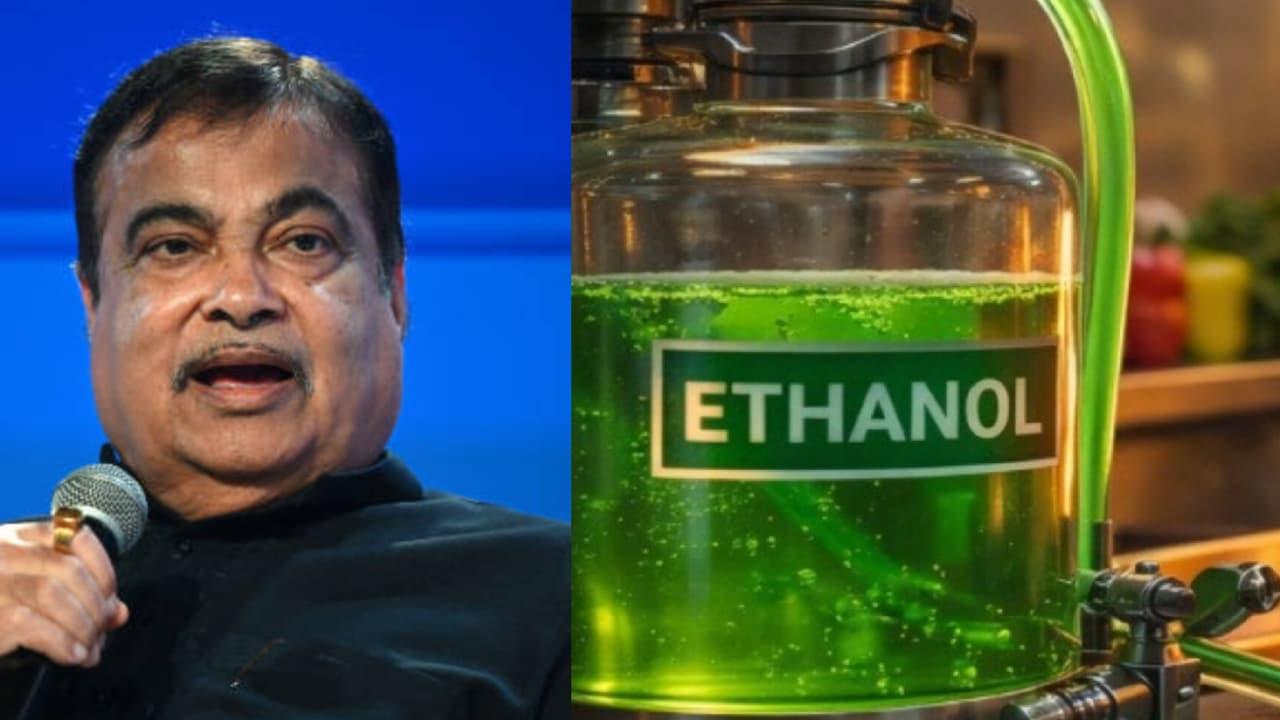
Nitin Gadkari Responds to E20 Petrol Controversy
The debate around E20 petrol has once again grabbed national attention after several social media posts and vehicle owners claimed that the fuel blend reduces mileage and could damage vehicle engines. Responding to the controversy, Union Road Transport and Highways Minister Nitin Gadkari clarified that while E20 petrol may cause a marginal reduction in fuel efficiency, there is no credible evidence that it damages engines designed for E20 compatibility.
His statement comes amid growing public concern, viral videos, and discussions involving several car brands. Gadkari urged people not to rely on misinformation circulating online and said that technical facts should guide the discussion rather than speculation.
What Is E20 Petrol?
E20 petrol is a blend consisting of:
- 20% ethanol
- 80% petrol
Ethanol is produced mainly from sugarcane, maize, and other agricultural feedstocks. The Indian government has promoted ethanol blending to reduce crude oil imports, improve energy security, support farmers, and lower vehicle emissions.
What Did Nitin Gadkari Say?
Addressing the ongoing debate, Gadkari acknowledged that ethanol contains less energy per litre than conventional petrol. Because of this, some vehicles may experience a small drop in mileage. However, he emphasized that this should not be confused with engine damage.
According to the minister:
- Mileage can reduce slightly in some driving conditions.
- Compatible vehicles are not damaged by E20 fuel.
- Many exaggerated claims circulating online are not supported by technical evidence.
- Consumers should follow the fuel recommendations mentioned in their vehicle owner’s manual.
Why Can Mileage Reduce?
Experts explain that ethanol has a lower calorific value than pure petrol. This means each litre contains slightly less usable energy.
As a result:
- Fuel economy may reduce by around 3% to 5% in certain vehicles.
- Actual mileage depends on driving style, traffic, road conditions, maintenance, tyre pressure, and engine tuning.
- The reduction is generally not as dramatic as some viral social media claims suggest.
Does E20 Petrol Damage Engines?

This has become the biggest question among car owners.
Recent studies and government statements indicate that E20-compatible vehicles are designed to safely use the fuel blend. Gadkari also rejected claims that E20 itself is responsible for widespread engine failures.
However, owners of older vehicles should always check the manufacturer’s recommendations before regularly using E20 petrol.
IIT Kanpur Study Supports Government’s Stand
The discussion gained further attention after an IIT Kanpur study reportedly found no evidence that E20 petrol damages engines when used in compatible vehicles. The research also highlighted that mileage varies because of multiple factors and cannot be attributed solely to ethanol blending.
Viral Mileage Claims Spark Debate
The issue became more controversial after several videos on social media claimed that E20 petrol caused severe mileage loss and mechanical issues.
One widely discussed case involved a luxury SUV owner who initially blamed E20 petrol for poor mileage. Later, it was clarified that the actual issue was related to the vehicle’s engine rather than the fuel itself.
This incident reinforced the importance of diagnosing mechanical problems before attributing them to fuel quality.
Benefits of E20 Petrol

The government continues to highlight several long-term advantages of E20 fuel:
- Reduced dependence on imported crude oil.
- Lower greenhouse gas emissions.
- Better support for Indian farmers through ethanol production.
- Higher octane rating compared to regular petrol.
- Cleaner combustion in compatible engines.
- Progress toward India’s clean energy and sustainability goals.
Concerns Raised by Vehicle Owners
Despite these benefits, some motorists remain concerned about:
- Slight reduction in mileage.
- Compatibility of older vehicles.
- Repair costs if incorrect fuel is used.
- Lack of alternative fuel options.
These concerns have triggered discussions among consumers, automobile manufacturers, and policymakers.
Government’s Position
The Centre has defended the nationwide rollout of E20 petrol, stating that offering multiple ethanol blends or pure petrol alongside E20 would not be practical on a large scale. Officials argue that the environmental and economic advantages outweigh the modest impact on fuel economy.
Tips for Vehicle Owners

If you plan to use E20 petrol:
- Check whether your vehicle is E20 compatible.
- Follow the fuel recommendation in the owner’s manual.
- Maintain correct tyre pressure.
- Service the vehicle regularly.
- Avoid relying solely on dashboard mileage readings for fuel-efficiency comparisons.
- Use fuel from authorised petrol stations.
Future of Ethanol-Blended Fuel in India
India’s ethanol blending programme is expected to remain a key part of the country’s energy strategy. Along with E20, the government is also encouraging flex-fuel technology and alternative fuels to reduce emissions and strengthen energy independence.

Final Verdict
Nitin Gadkari’s latest remarks aim to reassure vehicle owners amid growing debate over E20 petrol. While the minister acknowledged that fuel efficiency may decrease slightly, he maintained that there is no evidence of engine damage in E20-compatible vehicles. As the country continues expanding ethanol blending, consumers are advised to follow manufacturer guidelines and rely on verified information instead of viral claims.