

Tata New Car Aeris Launched in India: Price, Features, Engine, EV, CNG and Rivals
The Tata new car launch has created fresh buzz in India’s compact sedan segment. Tata Motors has introduced the Tata Aeris, a new sub-4-metre sedan that arrives as the successor to the Tigor facelift. The model made its India debut on September 25, 2026, bringing a redesigned exterior, an updated cabin and multiple powertrain options to the market.
The Aeris is particularly important for Tata Motors because the compact sedan segment continues to attract buyers looking for a combination of affordability, practicality, fuel efficiency and modern features. The new model is expected to compete with established names such as the Maruti Suzuki Dzire and Hyundai Aura.
Tata has also prepared the Aeris for a broader audience by offering petrol, CNG and electric versions. This gives the new car a wider positioning compared with many traditional compact sedans.
Tata New Car: Aeris Launch in India
The Tata Aeris officially arrived in India on September 25, 2026. Before its launch, Tata Motors released teasers showing the redesigned front and rear sections of the sedan.
The Aeris is essentially based on the updated Tigor but gets significant styling changes and a new identity. Autocar India reports that the car features revised sheet metal, a redesigned front fascia and several changes intended to give it a more modern appearance.
The new sedan continues with a notchback-style silhouette, retaining a design characteristic associated with the Tigor.
Tata Aeris Key Details
| Feature | Tata Aeris |
|---|---|
| Model | Tata Aeris |
| Segment | Sub-4-metre sedan |
| Launch date | September 25, 2026 |
| Fuel options | Petrol, CNG and EV |
| Petrol engine | 1.2-litre |
| Transmission | Manual and AMT expected |
| Seating | 5 passengers |
| Rivals | Maruti Suzuki Dzire, Hyundai Aura |
| Expected petrol price | Around ₹6-7 lakh* |
| EV expected price | Around ₹9.49-10.49 lakh* |
*Indicative/market estimates; final pricing and variants can vary.
Tata Aeris Design

The exterior design is one of the biggest changes introduced with the new Tata car.
The front-end gets a slimmer appearance compared with the outgoing Tigor. The official teaser showed slim LED headlamps, a thin DRL arrangement and LED fog lamps. The bumper has also received redesigned elements, including C-shaped detailing.
At the rear, Tata has introduced redesigned tail-lights and other styling revisions.
The overall silhouette continues to follow the compact sedan formula, allowing the Aeris to remain within the sub-4-metre category while providing a conventional boot.
A new exterior colour has also been showcased, adding to the visual differentiation between the Aeris and the outgoing Tigor.
Tata Aeris Interior
The cabin is expected to receive a more significant transformation than the exterior.
Reports ahead of launch indicated that Tata could borrow several design elements from the updated Tiago. The new dashboard is expected to feature a free-standing touchscreen infotainment system along with a digital instrument cluster.
The cabin is also expected to receive a two-tone treatment, creating a more contemporary appearance.
Other expected equipment includes:
- Touchscreen infotainment system
- Digital instrument cluster
- Automatic climate control
- Rear AC vents
- Powered ORVMs
- Fast-charging ports
- Six airbags as standard
- Updated dashboard design
The exact feature availability will depend on the selected variant.
Tata Aeris Engine and Performance
The petrol version of the Tata Aeris is expected to continue with Tata’s 1.2-litre three-cylinder petrol engine.
The existing Tigor powertrain uses a 1.2-litre petrol engine, and reports ahead of the Aeris launch indicated that the new sedan would carry over the core powertrain options. Manual and AMT transmissions are expected to be available.
For urban buyers, the AMT option could make the car more convenient for daily traffic.
The petrol engine is expected to focus more on everyday usability and efficiency rather than outright performance.
Tata Aeris CNG
One of the major highlights of the new Tata car is the availability of a CNG variant.
A showroom-ready Aeris iCNG was reportedly seen ahead of launch, confirming that Tata is preparing the compact sedan for customers who prioritise running costs.
The CNG version could become particularly relevant in cities where fuel prices and daily commuting expenses are major considerations.
Tata already has considerable experience with CNG passenger vehicles, and the Aeris allows the company to continue that strategy in the compact sedan category.
The exact mileage figures and variant-wise pricing should be checked against the final official specifications.
Tata Aeris EV

The Tata new car story does not end with petrol and CNG.
An Aeris EV is also part of the planned lineup. Autocar India’s current upcoming-car data lists the Aeris EV with an estimated price range of approximately ₹9.49 lakh to ₹10.49 lakh.
The electric version would give Tata another entry in the affordable electric sedan space.
Tata Motors already has a significant presence in India’s electric passenger-vehicle market, and adding an electric version of the Aeris could help the company offer an EV option to buyers who want a compact sedan instead of an SUV or hatchback.
More details regarding battery capacity, range, charging time and motor output depend on the final EV specification.
Tata Aeris Features
The new Tata sedan is expected to focus strongly on technology and convenience.
Some of the key features associated with the Aeris include:
Digital Instrument Cluster
The Aeris is expected to feature a digital instrument display, giving the driver access to speed, driving information and other vehicle data in a more modern format.
Touchscreen Infotainment
A free-standing touchscreen is expected to form the centre of the dashboard. This should provide access to entertainment, connectivity and vehicle functions.
Automatic Climate Control
Automatic climate control is among the features expected on higher variants.
Rear AC Vents
Rear passengers could benefit from dedicated air vents, improving cabin comfort during hot-weather driving.
Six Airbags
Safety equipment is another important area. Reports ahead of launch indicated that six airbags would be offered as standard.
Fast-Charging Ports
The updated cabin is also expected to feature modern charging connectivity for smartphones and other devices.
Tata Aeris Safety
Safety has become an increasingly important factor for Indian car buyers, and Tata Motors has continued to emphasise safety across its passenger-car portfolio.
The Aeris is expected to offer six airbags, along with other electronic and structural safety features depending on the variant.
The final safety rating, however, should not be assumed from the equipment list alone. Independent crash-test results would provide a more complete assessment once available.
Tata Aeris Price in India
The Tata Aeris price in India is expected to place the petrol version in the affordable compact sedan category.
Autocar India’s current data lists an expected ex-showroom range of approximately ₹6 lakh to ₹7 lakh for the petrol Aeris.
The EV version is listed separately at approximately ₹9.49 lakh to ₹10.49 lakh in current estimates.
However, buyers should check Tata Motors’ official price list because variant-wise prices, introductory offers and dealership charges can change.
Tata Aeris Rivals
The new Tata sedan will enter one of India’s most competitive passenger-car segments.
Maruti Suzuki Dzire
The Maruti Suzuki Dzire remains one of the strongest names in the compact sedan category. Its reputation for efficiency, practicality and a wide dealership network makes it an important competitor.
Hyundai Aura
The Hyundai Aura is another direct rival, offering a compact footprint, multiple features and petrol/CNG powertrain options.
The Aeris will therefore need to attract buyers through its design, equipment, safety package and pricing.
Tata New Car vs Tigor
The biggest question for many Tata customers is how different the Aeris is from the Tigor.
While the Aeris is effectively the successor to the Tigor facelift, Tata has given the new model a revised identity and substantially updated styling.
The front design is more contemporary, while the cabin is expected to receive newer technology and equipment. Reports also point to changes in sheet metal rather than merely cosmetic updates.
This approach allows Tata to refresh the compact sedan without abandoning the underlying platform and packaging.
Tata’s Wider New-Car Strategy
The Aeris is arriving at an interesting time for Tata Motors.
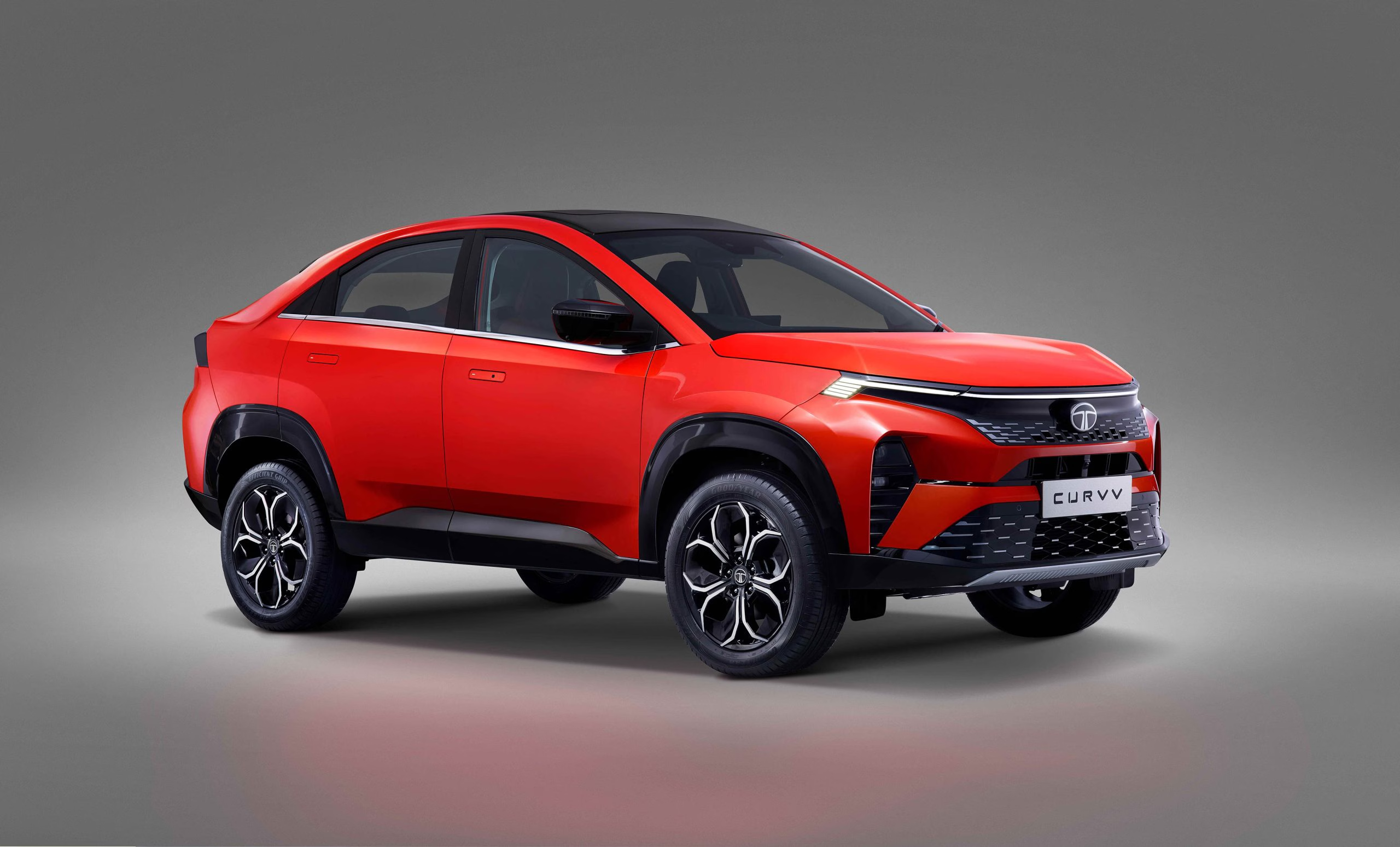
The company has been expanding its portfolio across petrol, CNG and electric vehicles. Its current lineup includes models such as the Tiago, Altroz, Punch, Nexon, Curvv, Sierra, Harrier and Safari.
The company also has additional upcoming products in development. Autocar India’s September 2026 list includes models such as the new Nexon, Sierra EV and Avinya among Tata’s upcoming products.
This shows that Tata’s product strategy is moving beyond a single segment, with SUVs and electric vehicles playing an increasingly important role.
Tata Cars Price Hike in September 2026
Tata Motors also revised prices across parts of its portfolio earlier this month.
According to Autocar India, Tata increased prices by up to ₹25,000 from September 1, 2026, citing inflationary pressures, input costs, foreign-exchange volatility and other cost factors. Rising battery costs were also highlighted as an issue for electric vehicles.
This makes the final pricing of the Aeris particularly important for buyers.
Tata’s pricing strategy will determine how aggressively the new sedan can compete against established models in the segment.
Tata Aeris September 2026 Offers
Tata’s September offers also cover several existing combustion-engine models.
For example, the Nexon is available with benefits of up to ₹75,000, while the Curvv has offers of up to ₹1.25 lakh during September, according to Autocar India. Offers vary according to model, city, dealership and available stock.
These promotions could influence buyers who are comparing an existing Tata SUV with the new Aeris sedan.
Is Tata Aeris a New Car or Tigor Facelift?
Technically, the Aeris is closely related to the Tigor facelift rather than an entirely new platform.
However, Tata has given the vehicle a new name and made several exterior and interior changes. It is positioned as a fresh product in Tata’s compact sedan portfolio.
The company appears to be using the Aeris name to create a new identity around the updated sedan rather than simply selling it as another Tigor facelift.
Tata New Car: What Makes Aeris Important?

The Aeris represents Tata Motors’ attempt to remain relevant in the compact sedan market at a time when Indian consumers are increasingly shifting toward SUVs.
SUVs dominate much of the new-car conversation, but compact sedans still offer advantages in boot space, highway driving, fuel efficiency and ease of ownership.
With petrol, CNG and EV versions, the Aeris can potentially appeal to different categories of customers.
The CNG version targets running-cost-conscious buyers, while the EV variant addresses customers looking for an electric alternative.
Conclusion
The Tata new car Aeris has officially entered the Indian market, bringing a fresh identity to Tata Motors’ compact sedan lineup. Launched on September 25, 2026, the model features a redesigned exterior, a modernised cabin and multiple powertrain possibilities.
The petrol and CNG versions are expected to carry forward the 1.2-litre engine family, while an electric version is also part of the Aeris lineup. The car is expected to feature a touchscreen infotainment system, digital instrument cluster, automatic climate control, rear AC vents, six airbags and other modern equipment.
With the Maruti Suzuki Dzire and Hyundai Aura as key rivals, pricing will be one of the most important factors for the Aeris.
For Tata Motors, the new sedan also arrives as part of a broader product strategy involving new SUVs and EVs. As the Indian car market continues to evolve, the Aeris gives buyers another option in a segment that remains relevant despite the rapid growth of SUVs.