

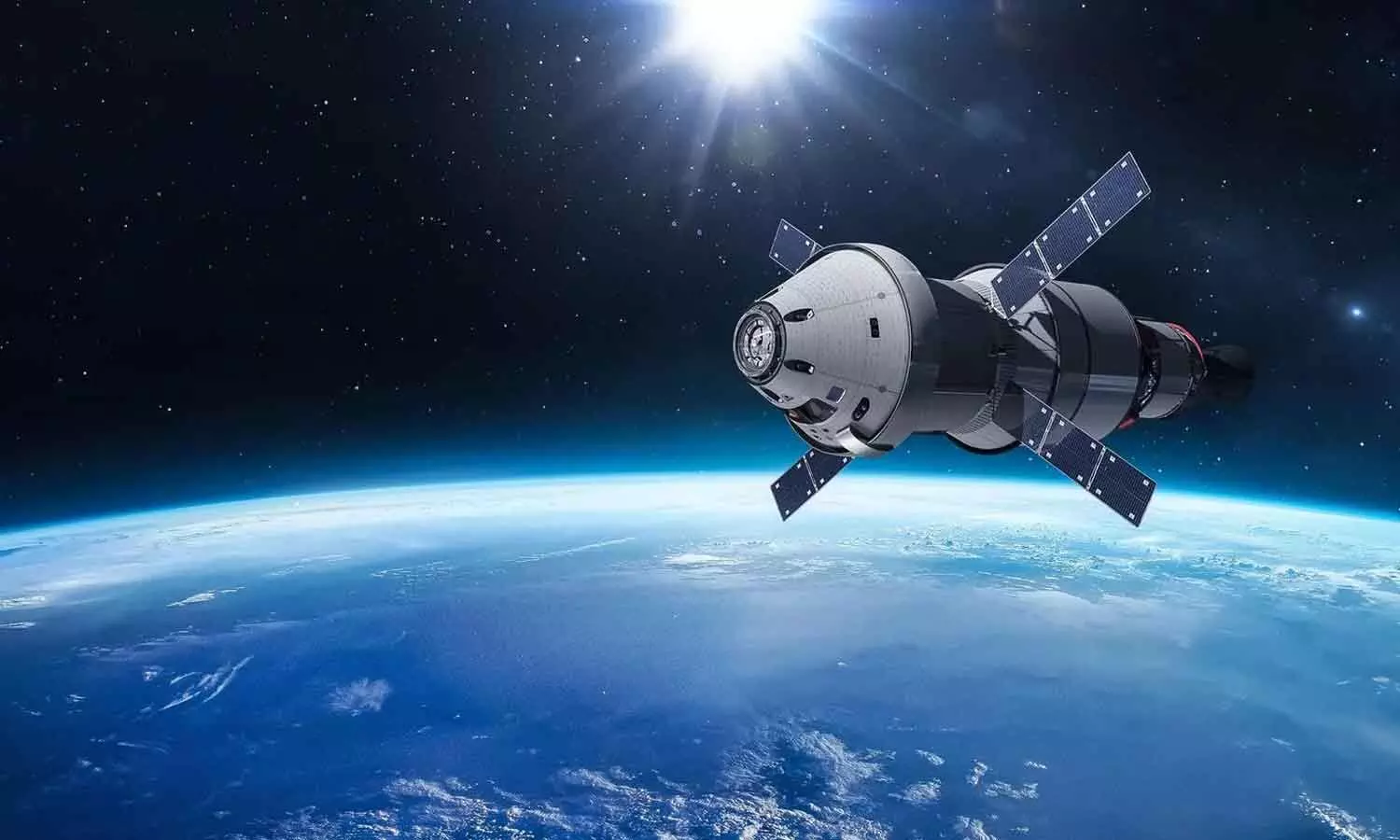
World Space Week 2026: Dates, Theme ‘Rocket Revolution’, History, Significance and India Connection
World Space Week 2026 is being celebrated around the world from October 4 to October 10, bringing space agencies, scientists, students, educators, companies and space enthusiasts together for a week focused on humanity’s achievements in space science and technology.
This year’s official theme is “Rocket Revolution”, highlighting the rapid transformation taking place in the global space-launch industry. The theme reflects how access to space is expanding beyond traditional government programmes, with commercial launch companies, reusable rockets, startups, universities and emerging space nations increasingly becoming part of the industry.
The annual celebration is particularly significant in 2026 as the space sector continues to move toward more frequent launches, commercial missions, reusable launch systems, lunar exploration and broader participation from private companies.
World Space Week 2026 Dates
World Space Week is observed every year from October 4 to October 10.
The United Nations officially recognises the week under General Assembly Resolution 54/68, adopted on December 6, 1999. The UN describes World Space Week as the largest annual space event in the world, with the celebration aimed at educating the public, inspiring students and encouraging international cooperation in space activities.
World Space Week 2026 Important Dates
| Event | Date |
|---|---|
| World Space Week begins | October 4, 2026 |
| World Space Week 2026 theme | Rocket Revolution |
| World Space Week continues | October 5–9 |
| World Space Week ends | October 10, 2026 |
| Duration | 7 days |
The seven-day period gives schools, universities, museums, science organisations and space agencies an opportunity to organise educational and public outreach programmes.
World Space Week 2026 Theme: Rocket Revolution
The official theme for World Space Week 2026 is “Rocket Revolution.”
The theme focuses on how dramatically the launch sector has changed in recent years. Space access was once dominated almost entirely by national governments and a small number of major space agencies. Today, commercial launch companies, private startups, university teams and new national players are contributing to a much more diverse space ecosystem.
According to the United Nations, this transformation is changing who can reach space, how frequently launches can take place and what space can be used for.
Reusable rockets are an important part of this transformation. Reusability has the potential to reduce launch costs and increase the frequency at which launch vehicles can be operated.
At the same time, the growing number of commercial players is creating new opportunities in satellite deployment, Earth observation, communications, scientific research and future human spaceflight.
Why Is World Space Week Celebrated?
World Space Week is not simply a celebration of rockets and astronauts.
Its larger objective is to highlight how space science and technology contribute to the improvement of life on Earth.
Satellite technology supports several activities that people use every day, including:
- Weather forecasting
- Navigation
- Telecommunications
- Television broadcasting
- Disaster management
- Agriculture monitoring
- Climate research
- Environmental monitoring
- Mapping
- Scientific research
The UN says World Space Week helps build the workforce of tomorrow by inspiring students, educating the public about space activities, demonstrating public support for space programmes and promoting international cooperation.
This makes the week especially important for young people considering careers in science, technology, engineering and mathematics.
Why October 4 Was Chosen
The beginning of World Space Week has a direct connection with one of the biggest milestones in space history.
On October 4, 1957, the Soviet Union launched Sputnik 1, the first human-made Earth satellite. Its launch is widely regarded as the beginning of the Space Age.
Sputnik 1 demonstrated that humans could place an artificial object into orbit around Earth.
The achievement triggered rapid developments in space science and technology and eventually contributed to the development of human spaceflight, planetary exploration, satellite communications and modern Earth observation.
Why October 10 Is Important
The final day of World Space Week also has historical significance.
On October 10, 1967, the Outer Space Treaty entered into force. The treaty established important principles governing the exploration and use of outer space and other celestial bodies.
The two dates therefore represent both technological achievement and the development of international rules for activities in space.
World Space Week 2026 Events
Events during World Space Week can vary from country to country and from organisation to organisation.
Typical programmes include:
- Space exhibitions
- Astronomy sessions
- Rocket demonstrations
- Planetarium shows
- Student competitions
- Science workshops
- Space lectures
- Satellite education programmes
- Astronomy observation events
- Robotics activities
- Space technology discussions
- Online webinars
The World Space Week Association says the annual celebration brings communities together across the globe. Its website reports more than 50,000 events worldwide across 102+ countries as part of the broader World Space Week network.
In 2026, the Rocket Revolution theme is expected to put particular attention on modern launch technologies and the changing economics of access to space.
World Space Week 2026 and India
India has become an increasingly important participant in the global space ecosystem, making World Space Week 2026 particularly relevant for Indian students and space enthusiasts.
The Indian Space Research Organisation (ISRO) continues to expand India’s capabilities in launch vehicles, Earth observation, lunar exploration, human spaceflight and space applications.
ISRO’s 2026 activities have also highlighted the growing importance of student participation and space technology applications. The organisation says it is committed to encouraging students to create awareness about space technology and applications and has several programmes designed to engage young people in STEM learning.
India’s space sector is also moving beyond traditional government-led activity, with private companies increasingly becoming part of the country’s space ecosystem.
That makes the “Rocket Revolution” theme particularly relevant to India as the country works toward expanding launch capabilities and strengthening its commercial space sector.
ISRO’s Growing Focus on Students
Education remains one of the most important aspects of India’s space outreach.
ISRO has been conducting programmes, workshops, competitions and educational activities designed to encourage students to explore space science and technology.
In September 2026, ISRO conducted a national meet focused on the scientific exploration of the Moon through the Chandrayaan missions. The three-day event brought together around 150 registered participants, including students and researchers from more than 45 academic and research institutions.
Such programmes demonstrate why World Space Week matters beyond public celebrations. They provide an opportunity to connect young researchers with India’s wider space ambitions.
India’s Space Vision and Future Opportunities
India’s space ambitions extend well beyond satellite launches.
The country is working toward greater capabilities in human spaceflight, lunar exploration, Earth observation and advanced space applications.
ISRO’s recent programmes also show an increasing emphasis on collaboration between government organisations, universities, researchers and the emerging private sector.
This aligns closely with the 2026 Rocket Revolution theme because the future of space is expected to involve a broader group of participants rather than only traditional government agencies.
For Indian students, this could translate into new career opportunities in aerospace engineering, satellite technology, robotics, artificial intelligence, astronomy, data science, remote sensing and space manufacturing.
Why Rocket Technology Matters
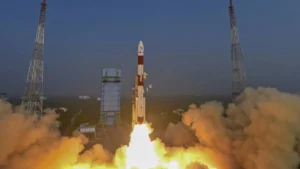
Rockets remain the gateway to space.
Without launch vehicles, satellites, spacecraft and scientific instruments cannot reach orbit or travel to other celestial bodies.
Modern launch technology is therefore becoming one of the most important areas of competition and innovation in the global space industry.
Reusable rockets could make launches more frequent, while smaller launch vehicles are opening opportunities for companies and research institutions that previously depended entirely on large government missions.
The development of new propulsion systems, autonomous flight technologies and advanced materials could further change how future missions are designed.
World Space Week and the Future of Space Exploration
The future of space exploration is no longer limited to sending astronauts into orbit.
The next phase could involve larger satellite networks, commercial space stations, lunar infrastructure, advanced robotic missions and eventually more ambitious human exploration.
The Moon is also receiving renewed attention from both governments and private companies.
As more missions are planned, questions about sustainable exploration, space debris, international cooperation and responsible use of orbital resources are becoming increasingly important.
World Space Week provides an opportunity to discuss these issues alongside the technological achievements that make space exploration possible.
How Students Can Celebrate World Space Week 2026
Students do not need access to a professional laboratory or observatory to participate.
They can celebrate World Space Week by:
- Learning about the history of Sputnik 1.
- Studying how rockets work.
- Building a simple educational rocket model.
- Learning about India’s Chandrayaan missions.
- Following space missions from official sources.
- Observing the night sky.
- Participating in astronomy or robotics activities.
- Exploring careers in aerospace and space science.
- Creating a school presentation about the Rocket Revolution.
- Joining online space-related educational events.
The main purpose is to turn curiosity about space into scientific learning.
World Space Week 2026 Significance
World Space Week 2026 arrives at a time when the global space sector is undergoing major change.
The “Rocket Revolution” theme captures this transition from a space industry dominated by a limited number of government agencies to a more diverse ecosystem involving private companies, startups, universities and emerging space nations.
For the public, the week provides an opportunity to understand how space technology affects everyday life. For students, it can open the door to careers that may shape the next generation of space exploration.
For countries such as India, the celebration also highlights the importance of investing in scientific education, research, innovation and international cooperation.
World Space Week 2026 FAQs
When is World Space Week 2026?
World Space Week 2026 is being observed from October 4 to October 10, 2026.
What is the theme of World Space Week 2026?
The official theme is “Rocket Revolution.” It focuses on the rapid transformation of launch technology and expanding access to space.
Why is World Space Week celebrated?
It celebrates the contribution of space science and technology to humanity while promoting education, public awareness, STEM learning and international cooperation.
Who declared World Space Week?
The United Nations General Assembly proclaimed World Space Week through Resolution 54/68 in December 1999.
Why does World Space Week start on October 4?
October 4 marks the 1957 launch of Sputnik 1, the first human-made Earth satellite.
Why does World Space Week end on October 10?
October 10 marks the date in 1967 when the Outer Space Treaty entered into force.
How can students participate in World Space Week 2026?
Students can participate through astronomy activities, science exhibitions, rocket and robotics projects, educational webinars, competitions and space-related school programmes.
What does Rocket Revolution mean?
The term refers to the rapid evolution of launch technology, including reusable rockets, commercial launch providers, startups and new national space programmes.
Conclusion
World Space Week 2026 is more than a celebration of rockets and astronauts. From October 4 to October 10, people around the world are being encouraged to look at how space science and technology are changing life on Earth and shaping humanity’s future beyond our planet.
With “Rocket Revolution” as this year’s theme, the focus is firmly on the changing launch industry and the expanding number of organisations capable of reaching space.
For India, the week comes at an important time as ISRO, researchers, students and private space companies continue contributing to the country’s growing space ambitions. The next generation could see space becoming more accessible, commercial and collaborative than ever before.
As World Space Week 2026 unfolds, its biggest message may be simple: the future of space is no longer only about reaching orbit—it is about making space science accessible to more people and using it to solve challenges on Earth.